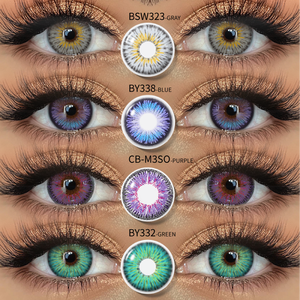
Export Catalog Morocco
Featured Six-Month & Extended-Wear Colored Contact Lenses
Direct-from-factory cast-molded cosmetic contact lenses and specialized bottling machinery formulated for Moroccan opticians, retail parapharmacies, and beauty wholesalers in Casablanca, Rabat, Marrakech, and Tangier.
Clinical Whitepaper & Trade Analysis
Navigating the Six-Month Colored Contact Lens Category in the Moroccan Kingdom
The Moroccan contact lens market is undergoing an unprecedented structural transition. While daily disposables dominate high-income European markets, the North African commercial axis—anchored by Morocco's dynamic optical retail landscape—exhibits an overwhelming consumer preference for biannual (half-year / 6-month) and annual replacement modalities. This preference bridges optical health compliance, socioeconomic affordability, and cosmetic transformation.
For B2B importers, optical purchasing groups, cosmetic distributors, and medical device suppliers operating in Casablanca, Rabat, Fes, Marrakech, and Tangier, the six-month wear cycle represents the definitive sweet spot of the optical industry. Biannual lenses minimize annualized replenishment friction for consumer patients while offering ophthalmic practices and optical boutiques higher gross retail margins compared to fast-moving single-use items. However, successful market penetration requires addressing unique biometric, ocular physiological, and climatological conditions prevalent across the Maghreb.
Moroccan end-users predominantly feature dark brown to near-black ocular irises (graded Fitzpatrick eye phototypes IV and V). Standard European cosmetic prints with semi-sheer translucency invariably fail in this demographic, resulting in muted, murky color shifts that underperform under natural Mediterranean sunlight. Furthermore, Morocco’s geographic diversity exposes wearers to extreme atmospheric variables—ranging from the high relative humidity of coastal Casablanca and Tangier to the desiccating, dust-laden continental microclimates and seasonal Chergui winds in Marrakech, Beni Mellal, and Oujda. Lenses formulated for this territory require rigorous tear-film stability, high non-evaporative water balance, and impermeable pigment encapsulation.
Pigment Encapsulation
Patented 3-layer micro-sandwich technology isolates mineral pigment layers between inert hydrogel strata, completely eliminating mechanical corneal abrasion and dye leeching.
Chergui-Resistant Matrix
Formulated with poly-HEMA and N-vinylpyrrolidone (NVP) copolymers (38%-42% equilibrium water content), resisting surface lipid deposition and tear film desiccation under dry winds.
Deep Iris Coverage
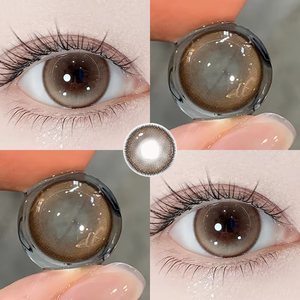
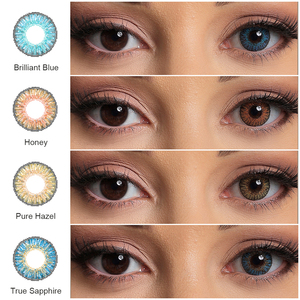
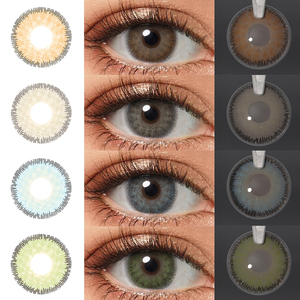
High-density dot-matrix chromatic layouts engineered with radial blending gradients that neutralize dark brown irises, rendering authentic Hazel, Gray, Honey, and Emerald Green aesthetics.
Market Realities & Use-Cases
Localized Application Scenarios in the Moroccan Landscape
Understanding the procurement velocity of colored contact lenses in Morocco mandates a deep immersion into localized sociological, bridal, festive, and demographic consumption models. Six-month colored lenses do not represent an occasional impulse item in Morocco; they function as a foundational element of modern Maghrebi aesthetic expression across diverse urban centers.
Bridal & Haute Couture
Moroccan Wedding & Caftan Ceremonies
The traditional Moroccan wedding ceremony—involving elaborate costume changes (Takchita, Caftan) overseen by the Neggafa—generates massive demand for transformative cosmetic eye wear. Brides and attendees in Casablanca and Fes demand natural honey, deep hazel, and luminous slate tones that harmonize with intense Kohl eye makeup, heavy gold ornamentation, and rich embroidery, requiring dependable 12-hour continuous comfort through warm banquet halls without vascular injection or conjunctival redness.
Seasonal Festivals & Social Life
Ramadan Evenings & Eid Gatherings
Following Iftar, social interaction surges across Morocco's upscale boulevards, cafes, and private salons. During the holy month of Ramadan and leading directly into Eid al-Fitr and Eid al-Adha, optical clinics and beauty retailer outlets experience 250% seasonal spikes in non-corrective (plano) and corrective cosmetic lens inquiries. A six-month replacement modality is overwhelmingly favored by young Moroccan women seeking a lens that lasts through Eid celebrations, summer festivities, and university semesters.
Digital Generation & Urban Optics
Casablanca & Tangier Social Media Influence
The booming digital creator ecosystem in Casablanca, Rabat, and Tangier has transformed colored lenses into daily digital essentials. Micro-influencers and beauty vloggers require realistic chromatic lenses that display zero pixelation or artificial halos under 4K macro lenses and ring lighting. Our six-month realistic blends (such as the Latin and Lumirere series) provide smooth transitional limbal borders that look completely organic both on smartphone screens and in broad Atlantic daylight.
Climatic Considerations Across Moroccan Municipalities
Distributing optical goods in Morocco requires distinct product tiering based on urban microclimates:
- Casablanca, Tangier & Rabat (Atlantic & Mediterranean Coastal Zones): High atmospheric salinity and humidity demand high lipid-resistant surface polymers with ultra-smooth edge geometry to prevent protein fouling during daily coastal breezes.
- Marrakech, Beni Mellal & Southern Regions (Pre-Saharan / Arid Inland): High ambient temperatures exceeding 42°C during summer alongside dust particles mandate moderate equilibrium water content (38%-40%). Higher water content hydrogels (e.g., 58%+) tend to dehydrate rapidly in these zones, drawing moisture directly from the wearer's precorneal tear film and inducing dry-eye discomfort. Our optimized 38% HEMA-matrix prevents this desiccation cascade.
- Fes, Meknes & Mountain Valleys: Sharp seasonal variations between winter cold and summer heat require thermal-stable hydrogels capable of enduring fluctuating storage warehouse conditions across regional transport routes.
Economic & Regulatory Strategy
Moroccan Optical Market Trends & Regulatory Dynamics
Entering the Moroccan optical import sector demands an acute understanding of statutory frameworks governed by the Ministry of Health and Social Protection (Ministère de la Santé et de la Protection Sociale) and the Directorate of Medicines and Pharmacy (Direction du Médicament et de la Pharmacie - DMP). Colored contact lenses, regardless of whether they incorporate refractive correction (myopic powers) or remain strictly non-corrective (plano), are categorized as Medical Devices (Dispositifs Médicaux) under Law No. 84-12.
68%
Moroccan Market Share for 6M/Yearly Modalities
14.2mm
Preferred Graphic Diameter for Maghreb Biometrics
100%
Cleanroom Inspection & Full Batch Traceability
DMP / CE
Registration Dossier Support Ready for Importers
Strategic Industry Evolution
1. Formalization of Optical Distribution: The traditional fragmentation of Moroccan optical boutiques is consolidating. Licensed opticians (opticiens-lunetiers) are increasingly organizing into unified purchasing banners and retail franchises across hypermarkets and prime shopping centers in Casablanca (Morocco Mall, Marina Shopping, AnfaPlace), Rabat (Agdal, Mega Mall), and Marrakech (Gueliz). These retail groups demand reliable private label manufacturers capable of supplying standardized barcode packaging, bilingual French/Arabic labeling, and guaranteed lot-to-lot color repeatability.
2. Parapharmacie & Beauty Retail Channels: The explosive growth of high-end parapharmacies across urban Morocco has carved out a secondary legitimate retail avenue for non-prescription cosmetic lenses. Consumers seek out these establishments for verified, sterile, dermatologically safe health and beauty consumables. Biannual lenses in tamper-evident sterile blister boxes are the highest-performing SKU format within this channel.
3. Regulatory Compliance: Customs & Casablanca Port Logistics: Moroccan customs (Administration des Douanes et Impôts Indirects - ADII) at Port of Casablanca and Tanger Med enforce stringent verification of CE certificates, ISO 13485 quality systems, and DMP registration numbers (Certificat d'Enregistrement). Shipments lacking authenticated Certificates of Free Sale (CFS), analytical test reports, or bilingual primary/secondary packaging are subject to quarantine and costly demurrage. Velalens provides comprehensive documentation suites aligned specifically with Moroccan customs protocols.
Comparative Engineering: 6-Month Replacement vs. Alternative Wear Modalities
| Evaluation Parameter | Six-Month (Biannual) Series | Monthly Disposable Series | Annual (Yearly) Traditional Vials |
|---|---|---|---|
| Moroccan Consumer Value Perception | Optimal Equilibrium (1 pair lasts 180 days) | Perceived as high cumulative annual expense | Economical, but risk of year-end lens fatigue |
| Material Equilibrium Water Content | 38% - 42% (Anti-Dehydration Hydrogel) | 45% - 55% (Vulnerable to hot inland wind) | 38% (Low hydration, rigid structure) |
| Edge Profile Design | Continuous Chamfered Rounded Edge | Ultra-thin cast edge | Traditional knife or chisel edge |
| Bacterial Biofilm & Lipid Resistance | High resistance with basic daily MPS care | Moderate; frequent disposal | Requires periodic enzymatic protein clearing |
| Distributor Profit Margin (Morocco B2B) | 65% – 78% Gross Margin | 30% – 42% Gross Margin | 50% – 60% Gross Margin |
| Packaging Compatibility | Double Blister Box or 2-Vial Presentation | Pack of 2 or 6 Blisters | Single Medical Glass Vial |
Manufacturing Excellence
Velalens Technology: Your Trusted Manufacturing & Export Partner
Velalens Technology Co., Ltd. is a specialized research-driven contact lens manufacturing enterprise. We integrate end-to-end production capabilities—from optical monomer synthesis and automated cast-molding to precision pad-printing, automated solution bottling, cleanroom sterilization, and private label packaging design.
For Moroccan importers, navigating foreign factory relationships often presents hurdles in communication, inconsistent batch tinting, inflexible MOQs, and deficient export compliance. Velalens bridges this gap by acting not merely as a supplier, but as an institutional manufacturing backbone for optical brands across the Middle East and North Africa (MENA) region.
Medical Device Certifications
Full ISO 13485:2016 quality management system compliance, CE-marked medical devices, and factory audit capabilities that streamline registration approval with Morocco's DMP.
Turnkey OEM / Private Label
Bespoke brand creation including luxury box packaging, tamper-proof blister foil stamping, multilingual patient inserts (French, Arabic, English), and localized barcodes.
Low Commercial MOQs
Scalable volume barriers starting from ~300 pairs per colorway for catalog designs, enabling Moroccan brand startups to test localized chromatic acceptance without excessive capital exposure.
Automated Sterile Filling & Packaging Capabilities
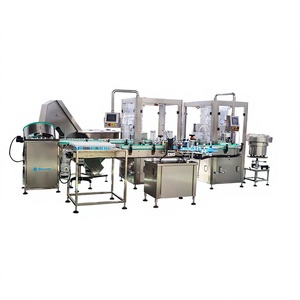
Beyond lens molding, Velalens operates automated contact lens solution filling lines and high-speed blister packing machinery. Each six-month lens unit is sealed in medical-grade buffered saline with polyhexamethylene biguanide (PHMB) or hyaluronic acid conditioning agents, followed by validated high-temperature terminal steam sterilization. Our production guarantees zero endotoxin contamination, stable pH balance (7.2 – 7.4 matching human tear film), and an uncompromised 5-year sterile shelf life.
Procurement & Import Intelligence
Frequently Asked Questions by Moroccan Importers & Optical Retailers
Direct technical and operational answers to facilitate smooth customs clearance, regulatory compliance, and brand deployment in Morocco.
Q: What documentation is required to clear colored contact lenses through Moroccan Customs (ADII)?
To clear cosmetic contact lenses through Casablanca Port or Tanger Med, Moroccan customs authorities require the commercial invoice, airway bill or bill of lading, packing list, Certificate of Origin (COO), CE Mark certificate under European Medical Device Directives or EU MDR, ISO 13485 manufacturer certification, and the product's Certificate of Analysis (COA) per batch. Importers must hold a commercial registration in Morocco authorizing medical device or parapharmaceutical distribution and initiate registration filings with the DMP.
Q: Which color formulations and graphic designs sell best across Moroccan optical shops?
Market sales data indicates that warm browns, golden hazels, honey blends (Miel), medium-contrast grays (Gris Perle), and soft olive greens achieve the highest turnover among Moroccan consumers. Lenses featuring a soft charcoal limbal ring with a 14.0mm to 14.2mm outer diameter and an inner starburst pattern provide the most flattering contrast on naturally dark brown irises, avoiding an artificial or protruding appearance.
Q: Why are 6-month lenses commercially superior to 1-day or 1-year lenses in Morocco?
The 6-month wear cycle perfectly fits the purchasing power and consumer lifestyle of the Moroccan middle class. Daily lenses require continuous, expensive monthly purchases, restricting them to high-end demographics. Conversely, traditional 1-year lenses often suffer from end-of-cycle lipid accumulation, microbial contamination, and discomfort in hot Moroccan summers. A 6-month modality ensures clinical safety, maintains optical clarity, and allows retail opticians to secure steady bi-annual repeat transactions.
Q: Can Velalens produce private label packaging with French and Arabic bilingual typography?
Yes. In full accordance with Moroccan consumer protection legislation and pharmaceutical labeling standards, our internal packaging design team creates fully customized primary blister foils, outer carton boxes, and product instruction leaflets in French and Arabic. This includes incorporating local importer coordinates, mandatory storage temperature symbols (15°C - 30°C), batch serialization, and international EAN-13 barcodes.
Q: What is the transit lead-time and recommended shipping method to Morocco?
For initial orders, sampling, and high-velocity seasonal replenishments, air express freight via DHL, FedEx, or Aramex to Casablanca Mohammed V International Airport (CMN) takes approximately 5 to 8 business days. For volume container shipments, ocean freight from Chinese major ports to Port of Casablanca or Tanger Med typically requires 28 to 35 transit days. Velalens handles export documentation, palletization, and temperature-controlled handling protocols.
Q: What are the minimum order quantities (MOQ) for launching an exclusive brand in Morocco?
For private label packaging using our proven cast-molded catalog colors, our starting minimum order quantity is approximately 300 to 500 pairs per color SKU. For standard unbranded stock series in factory blister packaging, orders start as low as 50 to 100 pairs per SKU, allowing Moroccan opticians and retail startups to validate customer color preferences prior to full commercial scale.