Featured White & Specialty Cosmetic Contact Lenses
Export-grade cast-molded cosmetic lenses, custom packaging architectures, and precision automation lines engineered for international optical distributors.
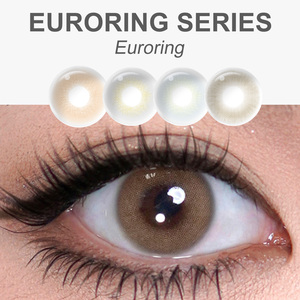
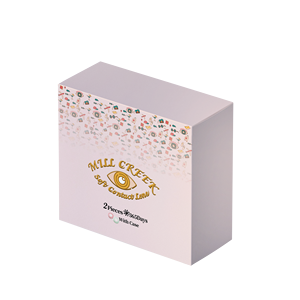
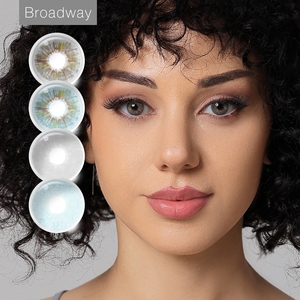
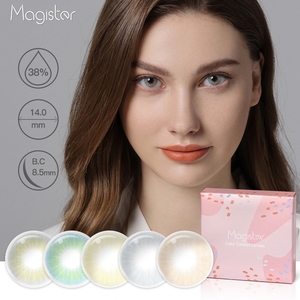

Enterprise Engineering Strengths: The Foundation of Reliable Export
Manufacturing cosmetic white contact lenses presents distinct biomedical engineering hurdles that do not exist with conventional colored contact lenses. In standard translucent tinted or multi-tone circle lenses, low-density pigment dispersion allows sufficient light transmission and maintains standard polymer flexural elasticity. White contact lenses, however—whether designed as total whiteout (all-opaque white with clear pupil), white mesh/screen (cross-hatched matrix over the pupil), or theatrical blind white—require dense, opaque concentrations of medical-grade Titanium Dioxide (CI 77891) and zinc oxide composites to mask the natural melanin of dark irises effectively.
As an industry-leading manufacturer and international exporter, our manufacturing base features ISO Class 7 (Class 10,000 cleanrooms) cast-molding automated facilities operating alongside Class 5 laminar flow workstations. We overcome ocular biocompatibility risks through proprietary Triple-Layer Sandwich Micro-Encapsulation Technology. Unlike substandard printing methods where pigment is applied directly onto the anterior or posterior surface of the lens (posing risk of pigment leaching, ocular abrasions, and microbial adherence), our process embeds the titanium dioxide pigment completely between two micro-thin layers of polymer matrix (HEMA hydrogel or advanced Silicone Hydrogel). This guarantees that the ocular epithelium and palpebral conjunctiva encounter only smooth, biocompatible polymer surfaces, maintaining lubricity and reducing mechanical friction upon every blink.
Technical Specification Framework: White Contact Lens Matrix
Professional B2B buyers require detailed parametric transparency before drafting commercial supply contracts. Below is our engineering parameter matrix across core white contact lens product families:
| Series Configuration | Base Curve (BC) | Diameter (DIA) | Water Content | Material Class | Pigment Technology | Permissible Wear Cycle |
|---|---|---|---|---|---|---|
| Classic Whiteout (Clear Pupil) | 8.50 – 8.70 mm | 14.0 – 14.5 mm | 38% – 42% | Poly-HEMA Hydrogel | Triple-layer Sandwich CI 77891 | Daily / Monthly / Yearly |
| White Screen / Mesh Matrix | 8.60 mm | 14.2 – 14.5 mm | 40% – 42% | Hydrogel PolyVue | Laser Perforated Micro-Dot Matrix | Daily Disposable / Monthly |
| Theatrical Blind White | 8.60 mm | 14.5 mm | 38% | HEMA + NVP Copolymer | Total Occlusion Encapsulation | Single-use / Photography Only |
| White Walker / Rimmed FX | 8.60 mm | 14.2 – 14.5 mm | 42% | Hydrogel / Si-Hy Hybrid | 2-Tone Black Limbal + White Fill | Daily / Monthly / Yearly |
| Mini-Sclera & Sclera White | 8.80 – 9.00 mm | 17.0 – 22.0 mm | 38% – 45% | Advanced High-Dk HEMA | Broad Zone Micro-Molding | Theatrical / Event Wear |
*Note: All medical-grade contact lenses undergo steam autoclave sterilization at 121°C for a minimum of 20 minutes in buffered saline containing sodium hyaluronate wetting agents for prolonged shelf-life stability up to 5 years.
Future Procurement & Sourcing Trends (2025–2030)
How the global specialty and white contact lens market is transforming through regulatory tightening, material evolution, and direct-to-consumer customization.
1. Transition Toward Daily Disposable FX Formats
Historically, the novelty and cosplay contact lens sector relied on yearly-wear vials due to low manufacturing costs. However, global health authorities and brand owners now demand 1-Day daily disposable blister packaging for theatrical white lenses. Daily disposables significantly mitigate bacterial keratitis, Acanthamoeba keratitis, and protein-lipid surface fouling caused by inadequate lens case sanitation. Sourcing directors are reallocating up to 60% of procurement budgets to daily disposable white SKUs.
2. Shift to Silicone Hydrogel Materials
Opaque titanium dioxide layers present a mechanical barrier that can restrict oxygen transmission (Dk/t) across standard HEMA hydrogel lenses. Forward-thinking distributors are demanding high oxygen transmissibility through silicone hydrogel fluoro-silicone monomers. This innovation ensures corneal oxygen consumption remains above the critical hypoxic threshold (>24 Dk/t), enabling comfortable 8-to-12 hour wear without inducing corneal edema, limbal hyperemia, or neovascularization.
3. Flattening of Theatrical Seasonality
Cosplay, cinematic production, gaming conventions, video-streaming content creators, and the alternative beauty economy have flattened the traditional seasonal Halloween spike. B2B procurement data shows that while August-to-October orders previously represented 80% of yearly revenue, steady baseline purchasing now occurs year-round across North America, the European Union, the Middle East, and Southeast Asia. Brand owners who order off-peak benefit from lower unit costs and rapid 15-day factory turns.
Ophthalmic Pigment Engineering: Why Supplier Selection Matters
The manufacturing of opaque white lenses is among the most demanding disciplines in optical polymer fabrication. Ordinary colored contacts utilize organic and phthalocyanine blue, red, and yellow dyes that easily disperse in the monomer mix. White contact lenses, conversely, rely entirely on inorganic Titanium Dioxide (TiO2). When improperly processed, TiO2 agglomerates into microscopic crystalline clumps, leading to irregular surface topography, edge warping, micro-porosity in the lens matrix, and high friction coefficients.
Our factory utilizes proprietary Sub-Micron Wet Bead Milling to achieve average pigment particle sizes below 200 nanometers. These ultra-fine particles are subsequently encapsulated within a hydrophilic vinyl pyrrolidone prepolymer matrix. We conduct rigorous automated optical inspection (AOI) with sub-pixel computerized cameras on 100% of finished lenses to screen for edge irregularities, surface voids, decentered pupil apertures, or micro-pinholes. Furthermore, every batch undergoes a 72-hour Soxhlet extraction assay and gas chromatography-mass spectrometry (GC-MS) to certify that residual unreacted monomers, photo-initiators, and heavy metals (lead, arsenic, mercury, cadmium) are strictly non-detectable, compliant with international USP Class VI biological safety criteria.
Global Regulatory Compliance & Export Documentation Support
Cosmetic and corrective white contact lenses are classified strictly as Class II medical devices by the United States Food and Drug Administration (FDA) under 21 CFR 886.5925 and as Class IIa/Class IIb devices under the European Union Medical Device Regulation (EU MDR 2017/745). Importing colored contacts without verified regulatory clearance exposes brand owners, distributors, and logistics partners to shipment seizures, punitive border fines, and catastrophic brand liability.
As an established global manufacturing and exporting partner, we provide all essential regulatory dossiers required for domestic registration and customs clearance:
- ISO 13485:2016 Certified Quality Management System ensuring end-to-end traceability from raw monomer synthesis to sterile package sealing.
- CE Marking Documentation (under EU MDR) with Notified Body conformity certificates, Technical Files, and Risk Management Files compliant with ISO 14971.
- US FDA 510(k) Premarket Notification Alignment and Device Master Files (DMF) covering biocompatibility testing (cytotoxicity ISO 10993-5, ocular irritation ISO 10993-10, and systemic toxicity).
- Certificates of Free Sale (CFS), Certificates of Analysis (COA), and comprehensive Material Safety Data Sheets (MSDS) with complete batch sterilization records (ISO 11137 / ISO 17665).
Frequently Asked Questions by Sourcing Teams
Essential guidance on minimum order quantities, private labeling, optical parameters, and lead times for retail chains and e-commerce importers.
What is the typical Minimum Order Quantity (MOQ) for custom private label white contact lenses?
Does the opaque white pigment obstruct wearer visual acuity?
Can white contact lenses be manufactured with corrective prescription powers (Myopia / Toric)?
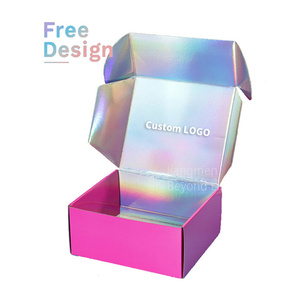
What packaging options and box designs can we customize for our brand?
What are standard production lead times from artwork confirmation to dispatch?
Partner With an Audited White Contact Lens Manufacturer
Launch or expand your private label line with factory-direct pricing, certified biomedical engineering safety, low entry minimums, and comprehensive global registration support. Our export specialists are available around the clock to review your design specifications, packaging requirements, and wholesale volume tiers.