Industry Benchmark in Semi-Annual Cosmetic Lenses
Navigating the international cosmetic lens market requires balancing chromatic vibrancy, physiological safety, and regulatory stringency. Semi-annual (six-month) replacement cycles represent the optimal economic equilibrium for consumer retention and distributor profitability, combining durable polymer geometry with high oxygen transmissibility.
Featured Engineering & Export Optical Series
Explore our precision-crafted optical portfolio, ranging from daily disposable cosmetic tints to highly durable semi-annual and annual matrices manufactured via robotic cast molding.
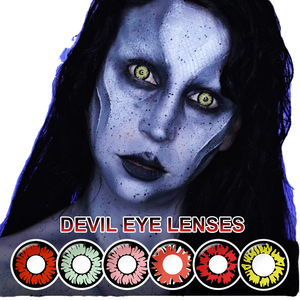
Hot Seller PSEYECHE Halloween Sharingan Cosplay Lenses
Ultra-vivid opaque pigment coverage engineered for theatrical applications, featuring isolated dye channels that prevent ocular micro-abrasion.
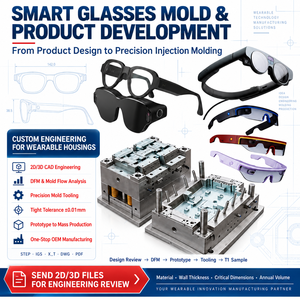
High-Precision Optical Injection Mould Engineering
Multi-cavity mold tooling designed for high-throughput contact lens casting and nanometer-scale surface smoothness control.
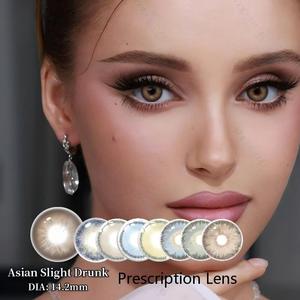
Soft Hydrogel Prescription Natural Hazel Eye Lenses
14.0mm natural cosmetic profile with diopter powers up to -8.00D. High oxygen permeability matrix for comfortable prolonged daytime wear.
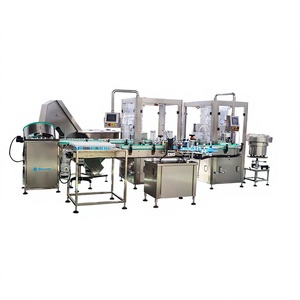
High-Speed Automatic Sterile Solution Filling Line
Intelligent PLC-controlled aseptic filling equipment for lens preservation fluids and blister packaging units, ensuring zero batch contamination.
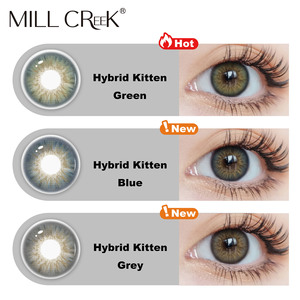
Haipurecon Soft 40% Water Cosmetic Contact Lenses
Dual-tone natural gradient iris patterns embedded via patented sandwich technology. Premium tear-film stability optimized for dry climates.
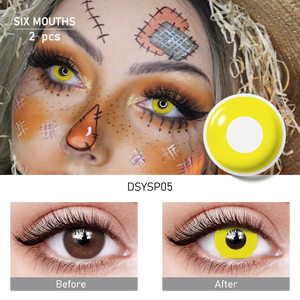
Factory-Manufactured Theatrical Cosplay Contacts
Full sclera and high-density circular prints manufactured under sterile ISO13485 standards for distributor seasonal campaigns.
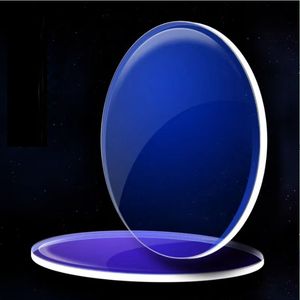
Rehoboth HD Tint Blue-Light Attenuating Optical Lenses
High-clarity polymer lenses featuring 95% light transmittance while absorbing selective high-energy visible (HEV) blue frequencies.
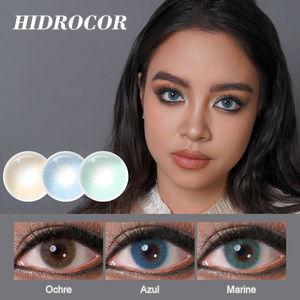
Freshgo Hidrocor Limbal-Free Natural Tone Lenses
Iconic limbal-ring-free aesthetic providing complete dark iris transformation. Available in multiple wearing schedules for global distributors.
Technological Architecture: The Six-Month Advantage
Why international ophthalmic distributors are increasingly shifting purchasing volume toward semi-annual replacement cycles.
Triple-Layer Pigment Sealing
Unlike budget alternatives that surface-print reactive dyes directly onto the corneal interface, our six-month matrices utilize sandwich encapsulation technology. The bio-compatible colorants are locked between micro-layers of Poly-HEMA hydrogel, ensuring pigments never contact corneal epithelial tissue or the inner palpebral conjunctiva.
Tear-Film Matrix Stability
The six-month cycle demands rigorous polymer longevity. Our proprietary formulations achieve an equilibrium water content of 38% to 42%, preventing the high evaporation rates and desiccation associated with thin daily disposables, while resisting lipid and protein deposition across 180 wear cycles.
Rotational Symmetry Optics
Utilizing high-precision optical multi-cavity injection molds, our lenses guarantee consistent edge geometry. The rounded bevel contour facilitates smooth tear exchange beneath the optic zone during every involuntary blink cycle, dramatically lowering foreign body sensations.
Procurement Specification Matrix
Standard parameters for OEM/ODM export contracts. Customized dimensional modifications are available upon engineering review.
| Optical Metric | Standard Production Specification | Tolerances & Quality Norms | Clinical & Commercial Significance |
|---|---|---|---|
| Base Curve (BC) | 8.50 mm – 8.70 mm | ± 0.05 mm (ISO 18369-3) | Ensures precise corneal drape without excessive apical tightening or lens lag. |
| Overall Diameter (DIA) | 14.0 mm – 14.5 mm | ± 0.10 mm | Delivers optimal limbal coverage and visual enlargement without limbal vascular compression. |
| Graphic Diameter (G.DIA) | 13.0 mm – 13.8 mm | Precision centering (≤ 0.05 mm shift) | Calibrated balance between cosmetic coverage and maintaining a transparent optical pupil zone. |
| Water Content (EWC) | 38% – 42% | ± 2.0% | Minimizes dehydration-driven shrinkage during long-term 6-month shelf and wear cycles. |
| Diopter Range | Plano (0.00) to -8.00D | ANSI Z80.20 compliant | Offers dual-purpose functionality: cosmetic enhancement and optical refractive correction. |
| Center Thickness | 0.07 mm – 0.09 mm (@ -3.00D) | ± 0.01 mm | Maximizes oxygen transmissibility (Dk/t) while providing structural resistance against tearing. |
Future Procurement & Market Dynamics (2025–2030)
Data-driven forecasts for procurement teams evaluating color lens portfolios, inventory turns, and shifting consumer demographics.
1. The Transition to Silicone Hydrogel
While traditional 2-HEMA polymers dominate semi-annual production due to proven manufacturing yields and mechanical robustness, the industry is entering an era of hybrid silicone-hydrogel colored matrices. The challenge has always been pigment binding within hydrophobic silicone domains. Emerging chemical compatibilizers are now enabling higher oxygen flux (>60 Dk/t) while retaining vibrant multi-tone coloration over six months.
2. Micro-Dot Layering & Hyper-Realism
Consumer demand has moved decisively away from flat, cartoonish pupil borders toward complex, biometric-matching iris micro-patterns. Procurement trends show explosive demand for 3-tone and 4-tone patterns with irregular radial striations and blended hazel-limbal perimeters. Our automated mold printing stations deploy microscopic dot diffusion that mirrors natural human melanin distribution.
3. Supply Chain Regionalization & MDR Compliance
Regulatory frameworks are hardening globally. The transition from the European MDD to EU MDR (Regulation 2017/745) mandates that even zero-power cosmetic lenses fulfill Class IIa medical device criteria. Importers must align with suppliers offering complete technical documentation, biocompatibility testing (ISO 10993), and full batch traceability.
Frequently Asked Questions for B2B Importers
Clear, definitive answers addressing regulatory compliance, private labeling requirements, and supply chain logistics.
Q: How do six-month lenses compare economically with daily or monthly wear?
Six-month lenses yield the highest per-unit margin for distributors while maintaining an affordable cost-per-day profile for end-users. Unlike daily lenses, which require significant packaging material per wearing day, semi-annual blister packs substantially reduce freight weight, lowering containerized shipping overhead by up to 68% per volume unit.
Q: What documentation is provided for national medical device clearances?
We supply comprehensive technical dossiers for every export batch: ISO 13485 quality system certificates, Certificate of Analysis (COA) per lot, ISO 10993 cytotoxicity and ocular irritation reports, stability testing data, and standardized labeling assets compliant with FDA 21 CFR and EU MDR requirements.
Q: What is the standard MOQ and lead time for private-label customization?
For custom blister foil and branded exterior packaging using our proven catalog colorways, initial MOQs begin at 300 to 500 pairs per color. Completely bespoke pattern developments require a mold setup run of approximately 2,000 to 5,000 pairs. Typical mass production turnover is completed within 30 to 45 working days.
Q: How is pigment encapsulation verified during incoming quality control?
We verify encapsulation integrity via ASTM F2179 and proprietary rub-testing protocols. Under high-magnification stereomicroscopy and optical coherence tomography (OCT), the chromatic layer is proven to sit at least 15 microns beneath the lens surface, ensuring zero pigment migration under continuous saline exposure.
Expand Your Private Label Lens Collection
Speak with our export specialists to request certified optical samples, review complete OEM/ODM technical dossiers, or discuss regional distribution rights.