Prescription Colored Contact Lenses Portfolio
Precision-cast cosmetic corrective lenses manufactured in medical-grade hydrogel matrices with physiological edge profiling.
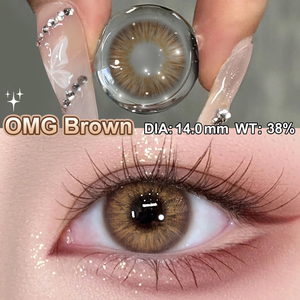
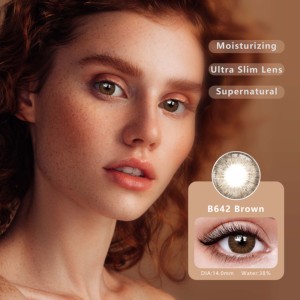
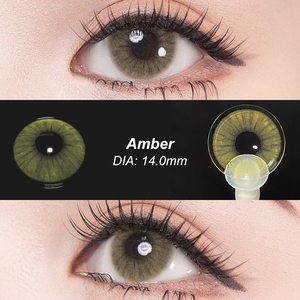
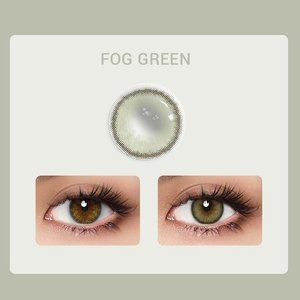
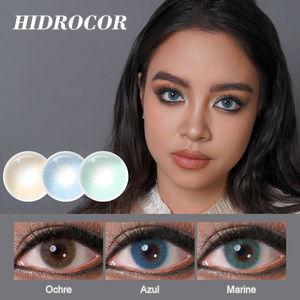
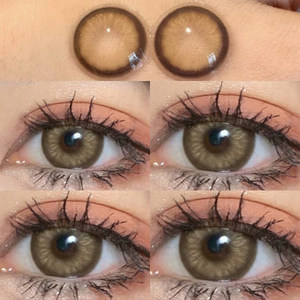
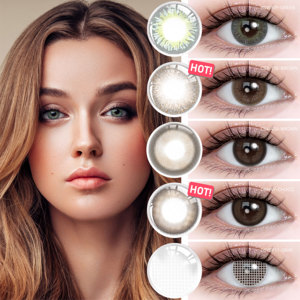
The State of Prescription Colored Contact Lens Manufacturing
Cosmetic contact lenses with refractive power sit at the demanding convergence of Class II/Class III medical devices and high-end aesthetic consumer goods. For global brand owners, optical dispensary chains, and cosmetic distributors, procuring prescription color lenses requires an engineering-first evaluation model. Lenses must not only provide authentic iris color transition but also ensure uninterrupted corneal oxygen flow, absolute pigment confinement, and precise spherical/toric corrective stability across powers from Plano (0.00D) down to -8.00D.
1. Color Realism Meets Optical Correction: The Micro-Encapsulation Paradigm
The primary vulnerability in inferior cosmetic contacts has historically been pigment exposure. When printing colorants directly onto the anterior or posterior surface of a lens, mechanical friction from involuntary blinking (occurring approximately 14,000 to 19,000 times daily) can cause corneal abrasion, cellular micro-trauma, and pigment leaching.
State-of-the-art contact lens production facilities utilize Sandwich Cast-Molding Technology. In this automated process, bio-compatible colorants (primarily cosmetic iron oxides, titanium dioxide, and phthalocyanine pigments) are pad-printed or digital-injected into an unpolymerized clear monomer layer. A secondary polymer layer is cast directly over the pigment matrix, followed by thermal or UV co-polymerization. The result is a fully embedded pigment layer sealed hermetically within the hydrogel core. The wearer's corneal epithelium and palpebral conjunctiva touch only mirror-smooth, biocompatible polymer surfaces.
2. Material Science Evolution: HEMA Hydrogel vs. Advanced Silicone Hydrogel
Historically, poly-2-hydroxyethyl methacrylate (poly-HEMA) has anchored the colored contact lens industry due to its wettability, dimensional stability during pad printing, and competitive production cost. Conventional HEMA matrices yield an oxygen transmissibility (Dk/t) ranging between 12 and 25 Barrer/cm, perfectly acceptable for intermittent or structured daily wear (8 to 10 hours).
However, high-volume procurement programs are increasingly pivoting toward Fluorosilicone Hydrogel polymers. By incorporating silicone macromers into the crosslinked matrix, the material creates dedicated oxygen transport channels independent of the lens's water fraction. This achieves a Dk/t value exceeding 60 to 100+ Barrer/cm. This breakthrough mitigates hypoxia-induced corneal edema, limbal hyperemia, and neovascularization, enabling cosmetic brand owners to capture clinical market share via eye-care professional (ECP) dispensary channels.
Comparative Specification Matrix for Commercial Procurement
| Parameter | Standard HEMA Cosmetic | Premium Silicone Hydrogel | Procurement Tolerance Standard |
|---|---|---|---|
| Refractive Index | 1.400 – 1.405 | 1.410 – 1.425 | ± 0.005 |
| Oxygen Transmissibility (Dk/t) | 15 – 28 × 10-9 | 65 – 110 × 10-9 | ISO 18369-4 / Polarographic |
| Water Content by Weight | 38% – 45% | 38% – 55% | ± 2.0% |
| Base Curve (BC) | 8.50 – 8.70 mm | 8.40 – 8.80 mm | ± 0.05 mm (Optical Spherometer) |
| Center Thickness (@ -3.00D) | 0.07 – 0.09 mm | 0.06 – 0.08 mm | ± 0.010 mm |
| Corrective Range (Diopters) | 0.00 to -8.00D (0.25D / 0.50D step) | Plano to -10.00D (Toric available) | ± 0.12D (ISO 18369-2) |
Product Procurement & Manufacturing Trends (2025–2030)
Structural shifts across consumer demand, environmental mandates, and regulatory oversight reshaping international supply chains.
The Shift from Yearly Vials to Daily Blisters
Regulatory bodies worldwide (including US FDA and EU MDR) are discouraging extended-use annual cosmetic lenses due to bio-film formation and improper hygiene compliance. Modern B2B sourcing is pivoting to daily disposable (1-Day) blisters and monthly replacement modalities. Daily disposables maximize recurring revenue models for brands while providing consumers with optimal ocular safety and zero maintenance overhead.
Democratization of Complex Optical Designs: Toric & Multifocal Colors
Historically, astigmatic and presbyopic consumers were excluded from the cosmetic colored lens market. Precision cast manufacturing now integrates dynamic stabilization zones (prism ballasting and peri-ballast designs) along with concentric multifocal power profiles directly into colored substrates. Sourcing lines that accommodate simultaneous cylinder correction (Cyl: -0.75 to -2.25) represent an untapped high-margin procurement niche.
Micro-Dot Layering & Photorealistic Iris Emulation
Consumer preference has shifted from unnatural, high-contrast flat rings to translucent multi-tone patterns mimicking authentic human trabecular meshes. Using high-resolution 3-tone and 4-tone dot matrix printing with irregular variable gradients, modern OEM exporters produce pigments that blend dynamically with both dark brown (Asian/Middle Eastern) and light (Caucasian) native irises without creating a visible "pupil tunnel" effect.
Stringent Regulatory Traceability & MDR Compliance
With the full implementation of EU Medical Device Regulation (MDR 2017/745), contact lenses without an intended medical purpose (plano cosmetic contacts) are now classified under Annex XVI, requiring the same rigorous clinical evaluations, Unique Device Identification (UDI), and Notified Body audits as corrective contact lenses. Exporters without ISO 13485:2016 cleanrooms and complete technical documentation are facing market exclusion.
Factory Direct Capabilities & Quality Engineering
End-to-end manufacturing sovereignty—from monomer synthesis to customized retail secondary packaging.
Fully Automated Cast Molding Lines
Our facility operates high-speed fully automated mold-injection and wet-demolding systems within a certified Class 100,000 cleanroom. Automated optical systems inspect mold tooling down to sub-micron accuracy, ensuring flawless surface roughness (Ra < 0.02 μm) and completely eliminating edge burrs, flash, and junction defects.
100% Comprehensive Optical Inspection
While commercial standards accept random batch sampling (AQL 1.0), our medical manufacturing lines run every single hydrated lens through advanced CCD machine vision sorting. Lenses are inspected for chromatic registration accuracy, bubble inclusions, edge notches, optical power centering, and central thickness before proceeding to ultrasonic saline washing.
Flexible Private Label (OEM/ODM) Agility
We empower emerging beauty brands, clinical private labels, and chain pharmacies through tailored production flexibility. With low minimum order quantities starting from 300 pairs per color for catalog lines and complete turn-key support across blister foil stamping, sterile buffer formulation, multilingual booklet authoring, and custom packaging, we shorten speed-to-market by up to 60%.
Global Regulatory Compliance Support
Navigating international cross-border clearance requires extensive compliance backing. We provide international procurement clients with complete technical dossiers, including ISO 13485:2016 audit reports, cytotoxicity assay validations (ISO 10993-5), ocular irritation test documentation (ISO 10993-10), accelerated shelf-life stability data (up to 5-year sterile validation), and pre-formulated documentation tailored for FDA 510(k), CE mark, and domestic registrations.
Frequently Asked Questions: B2B Contact Lens Sourcing
In-depth technical and operational answers to the most frequent procurement questions raised by enterprise buyers and brand directors.
What is the definitive minimum order quantity (MOQ) for custom private label colored contacts?
How does the factory prevent pigment leaching and ensure non-cytotoxic safety?
What corrective power distributions (SKU mix) can be achieved in standard wholesale production?
How do optical zones and graphic diameters (G.DIA) impact wearer visual acuity?
What are typical production lead times for sampling and enterprise volume fulfillment?
What regulatory documentation is supplied alongside export consignments?
Scale Your Prescription Colored Contact Lens Brand
Direct-from-factory pricing, certified cleanroom manufacturing, low custom MOQs, and comprehensive global registration support.
Get Catalog