Factory-Engineered Cosplay, Anime & Specialty Contact Lenses
Manufactured using cast molding and high-precision micro-pigmentation, our colored contact lenses deliver intense pigment saturation, exceptional corneal physiological tolerance, and crisp visual acuity for theatrical performers and everyday wearers alike.
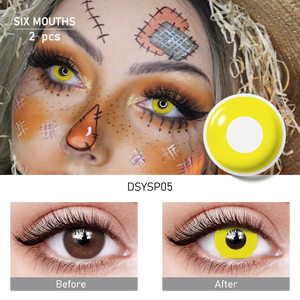
Halloween & Cosplay Colored Contacts: Factory - Manufactured for Optimal Effect
Ultra-saturated opaque pigment matrix specifically engineered for dark irises. Tri-layer sandwich lamination guarantees color brilliance without compromising oxygen permeability.
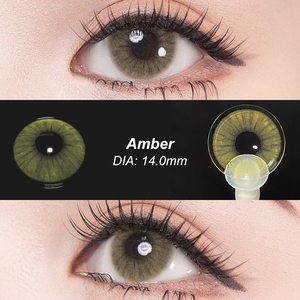
Free Shipping Hidrocor Natural Eye Contact Lenses Magister Queen Prescription Lens Cosmetic 14.00 mm Natural Colored Contacts
Micro-dot dot-matrix printing replicates endogenous iris patterns seamlessly. Suitable for dual-use cosplay transformations requiring accurate optical corrective diopters.
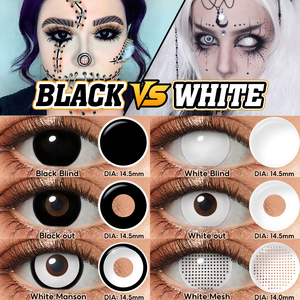
Wholesale Soft Halloween Crazy Black Color Contact Lens Glost White Scary Cosmetic Colored Contacts Cat Eye Contacts for Cosplay
Full-coverage theatrical crazy contact lenses including ghost white, pure blackout, and cat-eye slits. Features weighted stabilization to prevent in-eye pattern rotation.
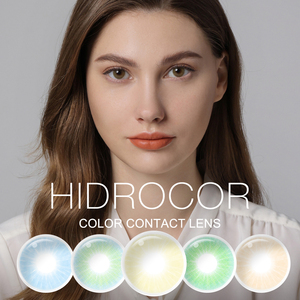
Free Sample Freshgo HIDROCOR Eye Contact Lenses Color Contact Lens Cosmetic Contact Lenses Lentes De Contacto Lentille Optique
Market-tested Hidrocor formula offering high light transmission and zero edge discomfort. High-tear exchange peripheral bevel design designed for extended 12-hour convention wear.
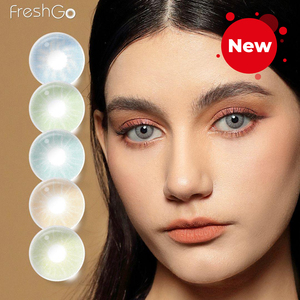
Free Shipping Freshgo Hidrocor Gen 3 Blue Color Contact Lens Colored Contacts Lenses Eye Contact Blue Lentes De Contacto
Vibrant anime azure coloration designed specifically for cosplay video production and studio flashes. Maintains color temperature consistency under intense stage illumination.
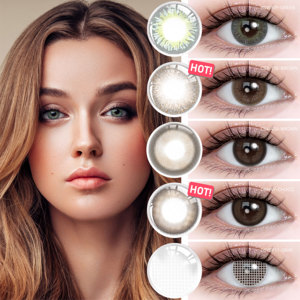
Free Sample Wholesale Soft Colored Contact Lenses Hidrocor Prescription Contact Lenses Natural Colored Eye Lenses
Custom private-label clinical series integrating high-definition aspheric optical geometries. Delivers balanced spherical aberration control while expressing rich anime tones.
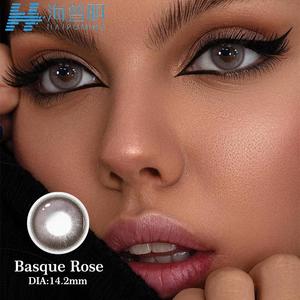
Haipurecon Fixed-Axis Highlight Contact Lenses Lentilles De Contact De Couleur Color Contacts Lenses for Eyes Non Prescription
Innovative gravity-stabilized rotational alignment lens. Eliminates the floating off-axis dilemma of asymmetric cosplay motifs such as moons, sharingan rings, and reptile slits.
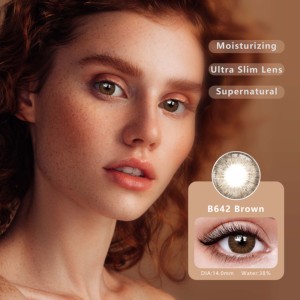
Hot Sale Half Year 6 Months Natural Brown Colored Contact Lens with Prescription
Durable biomimetic lens matrix designed for half-year cosmetic reuse. Features crosslinked hydrogel polymer that resists protein deposition while preserving vivid chroma depth.
Engineering Standards for Theatrical & Cosplay Contact Lens Manufacturing
Unlike regular cosmetic circle contacts, cosplay and special-effects (SFX) lenses require elevated pigment opacities, precise central optical clearances, and specialized dynamic ballast geometries to guarantee corneal safety and visual acuity.
1. The Triple-Layer Sandwich Encapsulation Architecture
The primary concern in cosmetic lens manufacturing is ocular safety, specifically avoiding direct contact between exogenous chemical colorants and the corneal epithelium. In inferior counterfeit or low-grade novelty contacts, pigments are often printed directly onto the anterior or posterior surface of the hydrogel, creating mechanical friction, toxic leachables, micro-ulcerations, and microbial keratitis risks.
Our OEM/ODM manufacturing protocols strictly utilize micro-encapsulated sandwich casting technology. Organic and inorganic pigments (USP-grade iron oxides, phthalocyanine blue, titanium dioxide, and chromium oxide greens) are isolated within a dedicated 5-micron core channel enveloped completely by clear, medical-grade 2-HEMA (hydroxyethyl methacrylate) or silicone-hydrogel polymers. As verified by rigorous swab elution and cytotoxicity assays (ISO 10993-5), zero colorant particulate ever touches ocular tissue or palpebral conjunctiva.
| Physical / Optical Parameter | Standard Theatrical Lens Specs | Velalens Advanced SFX Spec Range | Clinical Sourcing Significance |
|---|---|---|---|
| Total Diameter (DIA) | 14.0 mm – 14.2 mm | 14.0 mm – 14.8 mm (Mini-Sclera up to 17.0mm) | Determines outer limbal coverage and anatomical centering. |
| Base Curve (BC) | 8.5 mm – 8.6 mm | 8.4 mm, 8.6 mm, 8.7 mm Aspheric Bi-Curve | Controls sagittal depth to prevent corneal pinching or edge lift. |
| Clear Optical Pupil Zone | 4.5 mm – 5.0 mm | 5.2 mm – 5.8 mm Clear Aperture | Prevents tunnel vision and cloudy periphery in low-light conventions. |
| Water Content by Weight | 38% – 42% | 38% (Low-evaporation HEMA) / 45% (Hydrogel) | Preserves hydration stability in air-conditioned exhibition halls. |
| Center Thickness (CT) | 0.08 mm – 0.12 mm | 0.06 mm – 0.085 mm (Precision Ultra-Thin) | Maximizes oxygen flux (Dk/t) despite heavy pigment layers. |
| Pigment Encapsulation | Surface Pad Printing | True Dual-Matrix Sandwich Casting | 100% leach-proof; complies with ISO 13485 & CE MDR Class IIa. |
Furthermore, our precision cast molding lines maintain continuous in-process optical inspection. High-resolution CCD cameras verify concentricity, edge profile roundness, and aperture alignment for 100% of finished lenses, ensuring that every unit entering a sterile blister or vial provides maximum corneal tear exchange.
Class 100,000 Cleanroom
Automated molding, polymer hydration, and ultrasonic washing occur within strictly monitored cleanrooms adhering to ISO 14644 standards, eliminating particulate defects and bioburden.
- Automated high-speed demolding
- HEPA micro-filtered air systems
- Continuous microbiological batch monitoring
Full Regulatory Dossier Support
We provide full technical documentation to accelerate client import licensing and FDA 510(k), CE (MDR 2017/745), PMDA, and Health Canada registrations for B2B importers.
- Biocompatibility & toxicology audits
- Accelerated stability & shelf-life verification
- Sterilization validation (ISO 11137 / 17665)
Flexible OEM/ODM Scalability
From low initial trial runs (~300 pairs per SKU) to multi-million mass commercial manufacturing, we offer modular custom blister labeling, vial crimping, and box packaging.
- Customized pad & digital plate design
- Custom retail box & multi-lingual leaflets
- Barcode & UDI tracking compliance
Global Sourcing Trends in Cosplay & Theatrical Contact Lenses (2025–2030)
The global cosmetic and theatrical contact lens market is undergoing rapid evolution. Retailers and brand developers who grasp these structural market shifts gain commanding commercial advantages.
1. Transition from Yearly Vials to Daily Disposables
Historically dominated by 1-year glass vials, the cosplay sector is rapidly shifting to single-day blister packs. Con-goers, casual cosplayers, and Halloween enthusiasts prioritize hygiene, zero maintenance, and instant disposable convenience over long-term storage.
2. Prismatic Fixed-Axis Orientation for Complex Motifs
Cosplay characters often feature slit pupils (reptiles, demons, dragons) or specific graphic orientations (clock gears, crescent moons). Standard lenses rotate freely with every blink. Advanced prism-ballasted toric designs lock the motif at a calibrated 90° or 180° axis.
3. Silicone-Hydrogel (Si-Hy) Cosmetic Matrices
As regulatory scrutiny tightens across the EU and North America, higher Dk/t (oxygen transmissibility) is demanded. Moving beyond conventional poly-HEMA to silicone-hydrogel enables opaque cosplay lenses to be worn safely throughout prolonged 14-hour comic convention days.
4. Wider Optical Clear Apertures (Night-Vision Optics)
Early SFX contacts suffered from narrowed pupil apertures (under 4.0mm), triggering visual impairment and peripheral tunnel vision. Next-generation ODM designs expand pupil clearances to 5.2mm–5.8mm while maintaining vivid graphic borders.
5. Dual-Market Functionality (Plano + High Myopia)
Brands now demand complete corrective ranges from Plano (0.00) down to -8.00D or -10.00D. Cosplayers who require prescription correction represent over 58% of dedicated hobbyists, making power-inclusive inventory an absolute revenue driver.
6. Sustainable & Biodegradable Packaging Formats
With tightening environmental mandates globally, top distributors are eliminating excess secondary paper sleeves and adopting recycled polypropylene blister cups, water-soluble foils, and FSC-certified packaging cartons.
Frequently Asked Questions for Cosplay Contact Lens Buyers
Clear, direct, and technically sound answers regarding minimum order quantities, compliance protocols, testing parameters, and private label lead times.
What is the typical Minimum Order Quantity (MOQ) for custom private label orders?
For existing, factory-validated cosplay and colored patterns with custom outer packaging (OEM private label), our standard starting MOQ is approximately 300 to 500 pairs per color variant. For fully customized graphic development (ODM), involving new printing plate tooling and color matching, minimums typically range from 1,000 to 3,000 pairs depending on the complexity of the pattern and diopter distribution.
How do you prevent pigment migration and toxicity in cosplay lenses?
All lenses are manufactured using our proprietary cast-molding sandwich technology. Color micro-pigments are completely embedded between two distinct layers of cross-linked polymer. No pigment ever touches the external lens surface. Every production batch undergoes extractable chemical analysis, accelerated leachability tests, and in-vitro cytotoxicity evaluations in accordance with ISO 10993.
Can you supply corrective prescription powers (diopters) for crazy and cosplay styles?
Yes. While many low-tier suppliers only provide plano (0.00 diopter) novelty lenses, our manufacturing lines produce optical-grade prescriptions ranging from -0.50D to -8.00D (in 0.25D or 0.50D increments) for all our major Halloween, cosplay, and anime series. We also offer custom toric parameters for astigmatic wearers upon request.
What packaging configurations are available for private label programs?
We provide two primary medical-grade packaging formats: sterile polypropylene blister packs sealed with medical aluminum foil (ideal for 1-day, 1-month, and 3-month replacement schedules), and traditional 5ml or 10ml borosilicate glass vials with tamper-evident aluminum tear-off caps (common for 6-month and 1-year wear cycles). We also provide full custom design and printing for outer paper boxes, multi-packs, and instruction leaflets.
What documentation do you provide for customs clearance and medical device import?
Because contact lenses are classified as Class II (or Class IIa/III depending on jurisdiction) medical devices, we supply our partners with complete regulatory registration packages. This includes ISO 13485:2016 Quality Management System certificates, CE Declaration of Conformity, Certificates of Analysis (COA) per lot, sterilization validation reports, stability testing data, and factory audit documentation.
What are the lead times for samples and mass production runs?
In-stock catalog samples for visual and fit evaluation ship within 3 to 5 business days via express courier. Custom pattern rapid prototyping typically takes 2 to 3 weeks for plate fabrication and trial mold casting. Full-scale commercial mass production runs generally require 4 to 6 weeks from artwork approval and deposit confirmation, depending on order size and packaging customization.
From Initial Concept to Global Retail Distribution
Whether launching an independent direct-to-consumer cosplay optics brand, expanding a specialized costume boutique chain, or fulfilling wholesale theatrical contracts, our factory provides end-to-end manufacturing certainty.
Ready to Initiate Your Sourcing Program?
Consult with our international engineering and trade specialists. We will analyze your target market regulations, provide digital proofing for your custom graphics, and provide itemized wholesale quotation schedules within 24 hours.