Global Contact Lens OEM/ODM Procurement Whitepaper
In today's rapidly maturing international vision-care and beauty sectors, sourcing contact lenses transcends mere price negotiation. As regulated Class IIa / Class IIb medical devices under global jurisdictions (such as the United States FDA 510(k), European Union Medical Device Regulation MDR 2017/745, and PMDA), the selection of an original equipment manufacturer (OEM) and original design manufacturer (ODM) acts as the fundamental pillar of your brand's clinical safety, customer retention, and commercial viability.
This comprehensive industry procurement manual explores the complete lifecycle of polymer contact lens production: from hydrogel (HEMA, Polymacon) and silicone hydrogel matrix synthesis to 3-layer micro-sandwich pigment encapsulation, optical edge beveling, automated sterile packaging, and export regulatory dossier clearance. Whether launching a disruptive direct-to-consumer (D2C) cosmetic eye-color brand, expanding clinical optical dispensary lines with toric and multifocal modalities, or stocking niche cosplay and pop-culture collections, our end-to-end manufacturing infrastructure empowers brands to scale with definitive technical confidence.
Featured OEM/ODM Product Collection
Discover our flagship product portfolio spanning cosplay novelty, natural iris enhancements, ultra-breathable daily disposables, and turnkey packaging solutions.
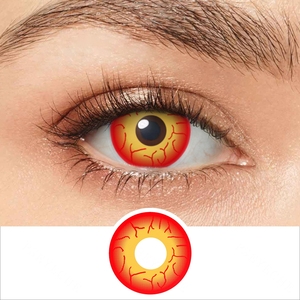
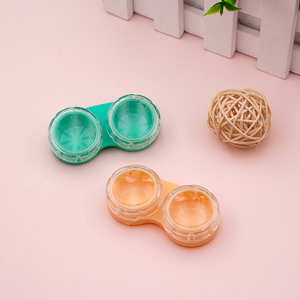
High Quality Durable Colorful Eco-Friendly Luxury Contact Lenses with Accessory Cases
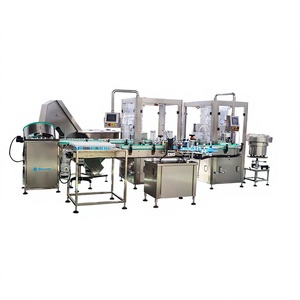
High Efficient Automatic Contact Lens Solution Filling Production Line With Intelligent Control Solutions Filling Machine
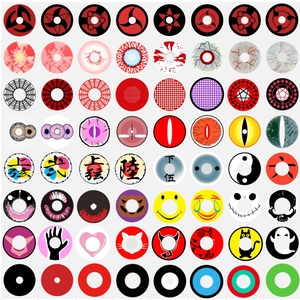
Free Shipping Items Pseyeche Halloween Contacts Crazy Sharingan Eye Lens Anime Cosplay Contact Lenses Lentes De Contacto
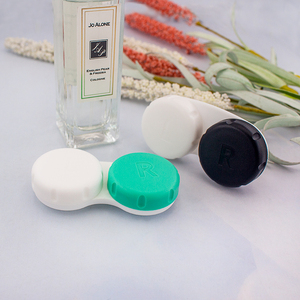
Custom Colored Contact Lenses for Eyes Daily Contact Lens Putting Box Packaging Clear Contact Lenses Prescription Factory OEM
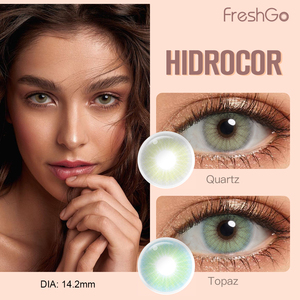
Free Freshgo HIDROCOR Eye Soft Lens Natural Colored Contact Lenses Wholesale Cosmetic Contacts Lentille De Couleur Naturel
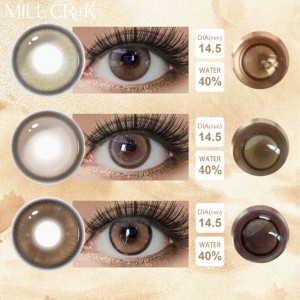
Haipurecon 14.5mm Soft HEMA Material Colored Contact Lenses Cosmetic Contact Lenses New Brown Natural Style Factory Direct
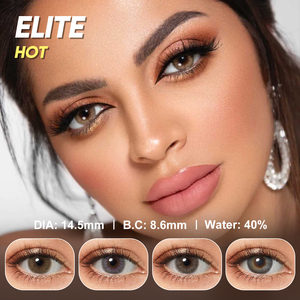
Free Shipping Elite Soft Natural Cosmetic Contacts Dia 14.5mm Colored Contact Lenses Lentes De Contacto for OEM Private Package
Enterprise Manufacturing Advantages
How our proprietary polymer technologies, precision tooling, and stringent pharmaceutical-grade compliance shield your brand from recall liabilities.
Sandwich Encapsulation Process
Unlike budget manufacturers that pad-print pigments directly onto the external polymer surface, our patented 3-layer cast-molding system encapsulates organic bio-compatible pigments entirely inside the optical matrix. Dyes never contact the corneal epithelium or palpebral conjunctiva, eliminating chemical leaching, pigment flaking, and mechanical abrasion.
High Oxygen Transmissibility (Dk/t)
We formulate specialized HEMA hydrogel (40%–58% equilibrium water content) alongside advanced fluoro-silicone hydrogel matrices offering oxygen transmissibility values reaching up to 138 Dk/t. This satisfies physiological corneal metabolic demands during prolonged 12-to-16-hour daily wear cycles, preventing hypoxia-induced neovascularization and conjunctival hyperemia.
Sub-Micron Precision Tooling
Our CNC lathe-cut master inserts and high-speed robotic injection moulding platforms achieve sub-micron dimensional reproducibility (surface tolerances ±0.002mm). Each lens presents a tapered, rounded peripheral bevel design that facilitates uniform tear film exchange, prevents lens adherence, and dramatically eases insertion and removal.
Comprehensive Regulatory Dossiers
We provide full-spectrum registration support documentation: Material Safety Data Sheets (MSDS), Biocompatibility Profiles (ISO 10993 cytotoxicity, ocular irritation, systemic toxicity), Accelerated Stability Shelf-Life Reports (3 to 5 years), and technical summary documentation required by the US FDA, CE Notified Bodies, TGA, and Saudi FDA.
Low MOQ & Agile Private Label
Scale seamlessly from regional boutique launches to mass retail distribution. Our agile packaging lines accommodate custom PP blister packs, pharmaceutical glass vials, foil foil-seal printing, serialized barcode printing, multi-pack boxes (2-pack, 10-pack, 30-pack), and customized instruction inserts starting from as low as 300 to 500 pairs per SKU.
Proprietary Chromatic Color Matching
Our creative optical engineering studio transforms Pantone swatches, mood boards, or character references into high-definition 1-tone, 2-tone, 3-tone, and 4-tone dot matrices. We precisely control the graphic diameter (G.DIA) and clear optical pupillary zone (from 3.8mm to 4.5mm) to balance visual field clarity with intense, vibrant cosmetic pigmentation.
100,000-Grade Purification Cleanroom & Automated Optics
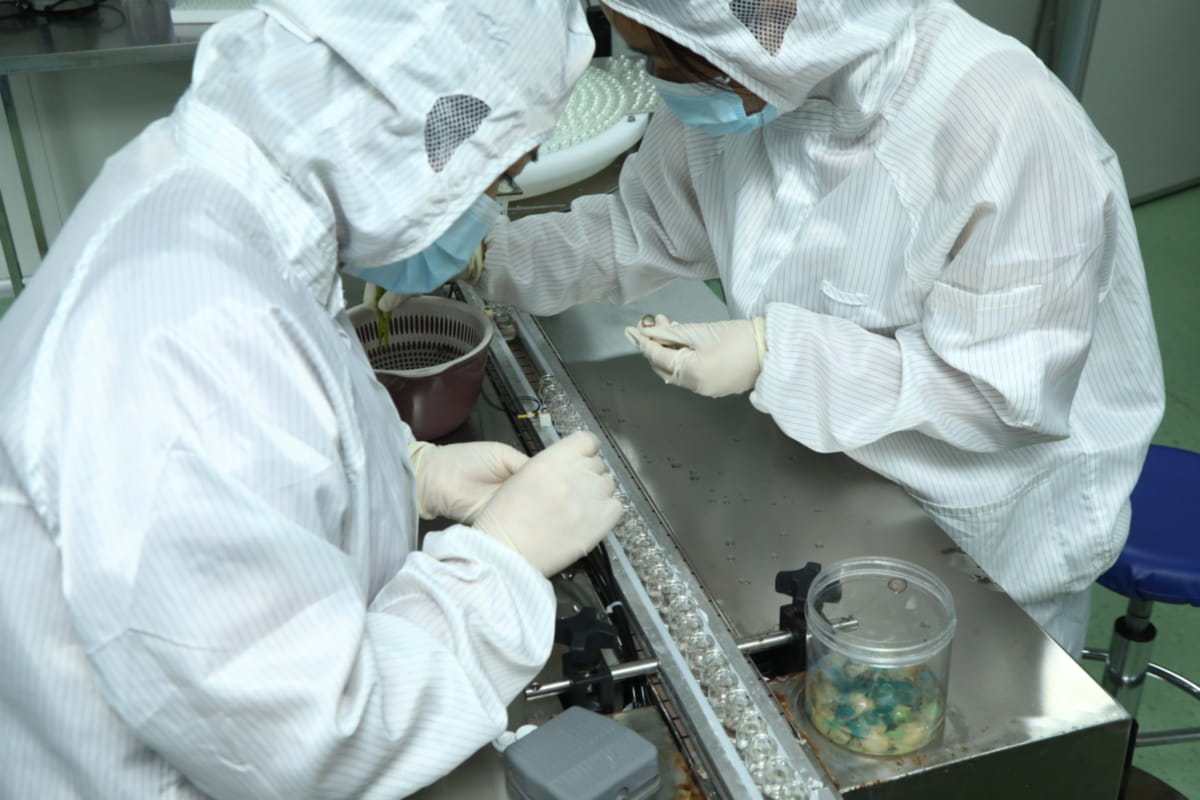
Operating in strict compliance with ISO 13485 medical device quality systems, our automated manufacturing hubs deploy class-100k cleanrooms equipped with laminar air-flow hoods, automated vision inspection cameras, and validated steam autoclaves.
Every single lens produced undergoes 100% optical verification: automatic high-speed CCD sensors verify edge profile integrity, diameter tolerances, optical centering, and color registration within milliseconds before blister thermal sealing.
Engineering & Manufacturing Specification Standard
Below is our standard manufacturing capability matrix. All mechanical and photometric parameters can be fine-tuned during our collaborative OEM/ODM prototyping phase:
| Parameter | Hydrogel Series (HEMA / Polymacon) | Silicone Hydrogel Series | Cosplay / Novelty Series |
|---|---|---|---|
| Base Curve (BC) | 8.40 mm – 8.70 mm (±0.05 mm) | 8.50 mm – 8.80 mm (±0.05 mm) | 8.60 mm standard |
| Overall Diameter (DIA) | 14.0 mm – 14.5 mm | 14.1 mm – 14.3 mm | 14.2 mm, 14.5 mm, 17.0 mm (Sclera Mini) |
| Graphic Diameter (G.DIA) | 13.0 mm – 13.8 mm | 12.8 mm – 13.5 mm | 13.5 mm – 14.2 mm (Full iris opacity) |
| Water Content | 38% – 55% | 42% – 48% | 38% – 42% (Shape retention priority) |
| Oxygen Permeability (Dk) | 10 – 25 × 10-11 | 65 – 120 × 10-11 | 12 – 18 × 10-11 |
| Center Thickness (@ -3.00D) | 0.06 mm – 0.08 mm | 0.07 mm – 0.09 mm | 0.08 mm – 0.10 mm |
| Diopter Power Range | Plano (0.00) to -10.00D (0.25D/0.50D steps) | Plano (0.00) to -12.00D; Toric/Multifocal | Predominantly Plano (0.00) / Custom Diopters |
| Replacement Lifecycle | Daily / Monthly / Half-Yearly / Annual | Daily Disposable / Monthly Disposable | Daily / 3-Month / Yearly |
| Sterilization Method | Moist Heat Autoclave (121°C ≥ 20 min) | Moist Heat Autoclave (121°C ≥ 20 min) | Moist Heat Autoclave (121°C ≥ 20 min) |
Future Procurement Trends in the B2B Contact Lens Sector
Market intelligence derived from optical trade exhibitions (MIDO, Silmo, Vision Expo) and high-volume e-commerce purchasing indicators reveals several defining procurement trends that every brand buyer, distributor, and sourcing director must anticipate:
Ascendance of Daily Disposable Modalities
Consumers are rapidly pivoting away from annual lenses toward 1-day single-use daily disposables. Driven by heightened awareness of microbial keratitis, contact lens papillary conjunctivitis (CLPC), and compliance hygiene, buyers in Europe, North America, and Tier-1 Asian markets report an annual demand shift of >22% toward daily blister packaging. Daily disposables maximize customer lifetime value (LTV) through predictable recurring reorders.
Silicone Hydrogel Material Standardization
Where traditional HEMA hydrogels once dominated cosmetic color categories, regulatory authorities and eye-care professionals (ECPs) increasingly advocate for silicone hydrogels. Brand owners proactively reformulating their product lines to silicone hydrogel matrices capture clinical endorsements, lower dropout rates from digital eye fatigue / dry-eye symptoms, and command premium retail pricing.
Optical Convergence: Cosmetic Plus Astigmatic & Presbyopic Correction
Cosmetic lenses are no longer restricted to spherical plano wearers. Approximately 32% of vision-corrected consumers exhibit ≥0.75D astigmatism, and the aging millennial demographic is entering presbyopia. Sourcing colored toric (prism-ballasted or peri-ballasted) and cosmetic multifocal contact lenses provides an immense unexploited moat with virtually zero saturated competition.
Subtle Iris Mimicry Over High-Contrast Blocks
Aesthetic preferences have permanently evolved from harsh anime cartoon rims to micro-dot gradient blending that respects natural dark-brown stromal anatomy. Sophisticated buyers seek multi-layered translucent undertones (hazel, olive-green, slate-gray) with light-scattering limbal boundaries that allow daylight illumination without showing pixelation or edge borders.
Rigorous EU MDR 2017/745 Compliance Audits
With the full expiration of transitional Directives (MDD 93/42/EEC), custom authorities across the European Economic Area (EEA) have heightened scrutiny over imported cosmetic contact lenses (Annex XVI aesthetic devices without medical claim). Importers must verify that their OEM supplier maintains a certified Quality Management System under MDR, supported by an authorized EU Representative (EC REP) and UDI (Unique Device Identifier) compliance.
Sustainable & Low-Carbon Supply Chains
Major optical retail chains are actively auditing suppliers for ESG performance. Innovations such as bio-sourced polymer raw materials, minimized blister plastic weight, recyclable polypropylene casings, and solvent-free cast-molding operations represent essential differentiators during enterprise procurement tenders and corporate vendor evaluations.
Technological Milestones & R&D Horizons
The future of ophthalmic contact lens manufacturing is being rewritten by cross-disciplinary innovation at the intersection of nanotechnology, surface photochemistry, and smart diagnostics. As an OEM/ODM pioneer, our R&D pipeline actively explores these emerging frontiers:
Moisture-Gradient Surface Chemistry
Transitioning from uniform polymer water content to biomimetic moisture gradient structures, where the core consists of an ultra-breathable low-water silicone polymer (providing exceptional structural stability and Dk/t), while the outermost surface reaches >80% water content. This mimics the natural corneal mucin layer, yielding negligible blink friction.
Selective Spectral Light Filtering
Integrating functional reactive monomers into the polymer backbone to deliver Class I UV-blocking (absorbing >90% UVA and >99% UVB) alongside high-energy visible (HEV) blue-light attenuation (380nm – 450nm). This offers ocular photoprotection for digital device power users and outdoor sports enthusiasts without tinting color perception.
Smart Sensor Matrix Compatibility
Laying the groundwork for next-generation smart contact lenses. Our micro-molding laboratory is perfecting micro-cavity sandwich construction designed to embed transparent micro-circuits, micro-LED displays, and electrochemical biosensors for continuous non-invasive tear glucose monitoring and intraocular pressure (IOP) tracking for glaucoma management.
Frequently Asked Sourcing & Procurement Questions (FAQ)
Detailed, authoritative responses to the regulatory, logistical, and commercial inquiries most frequently raised by corporate procurement officers and brand founders.
What is the baseline Minimum Order Quantity (MOQ) for custom private label packaging versus catalog stock designs?
For our ready-to-ship, catalog-proven aesthetic designs (including our natural and cosplay lines), private label branding with your customized outer paper carton and blister back-sealing foil begins at an accessible 300 to 500 pairs per color. If your project entails developing an entirely exclusive, bespoke printing cylinder/mould (ODM proprietary dot-matrix pattern or specialized non-standard graphic diameter), the typical tooling initiation volume is approximately 2,000 to 5,000 pairs across selected diopter steps. This structure ensures that both emerging boutique labels and multi-national pharmaceutical distributors optimize setup economies of scale.
How do you ensure zero pigment leakage and total ocular surface safety during wear?
Ocular surface safety is governed by our rigorous Three-Layer Sandwich Encapsulation Technology. The color layer is embedded between two virgin optical polymer layers via automated precision double-cast molding. At no point does raw organic or inorganic pigment reside on the exterior anterior or posterior lens surfaces. Our products undergo routine solvent extraction assays, surface wipe tests, and rub-off friction testing under stereomicroscopes at 40× magnification in accordance with ISO 18369 ophthalmic standards to guarantee complete physical isolation from corneal tissue.
Which regulatory documentation and technical files are supplied for national medical device import clearance?
As an ISO 13485:2016 audited facility, every batch shipped is accompanied by a comprehensive Certificate of Analysis (COA) specifying base curve, diameter, center thickness, diopter accuracy, water content, sterility confirmation, and residual monomer levels (<0.05%). For national device registrations (e.g., FDA 510(k), CE under MDR, Health Canada, TGA, Cofepris, SFDA), we provide complete Device Master Files (DMF), biological safety evaluations (ISO 10993 cytotoxicity, sensitization, and ocular irritation), accelerated shelf-life aging study reports validating 3-to-5-year sterile integrity, and steam sterilization validation reports (SAL 10-6).
What are the precise differences between HEMA hydrogel and Silicone Hydrogel lenses for brand positioning?
HEMA (Hydroxyethyl Methacrylate) hydrogel is the industry benchmark for cosmetic vibrancy and tactile softness. It possesses a lower modulus (0.3 – 0.5 MPa), providing instant silky on-eye comfort, ideal for occasional or daily cosmetic wearers. However, oxygen transmissibility is inherently limited by water content (typically 15 – 25 Dk/t).
Silicone Hydrogel incorporates siloxane macromers, enabling oxygen to diffuse freely through the polymer network independently of water content, reaching 80 – 138 Dk/t. This is ideal for premium daily-wear and extended-wear optical brand lines targeted at wearers who experience dry eye symptoms or spend long hours in front of screens, though it requires specialized surface wettability treatment to maintain a stable pre-lens tear film.
What is the standard production lead time for pre-production prototypes and bulk repeat orders?
Stock catalog samples for clinical evaluation or visual assessment are dispatched via international courier (DHL/FedEx/UPS) within 3 to 5 business days. For custom ODM print pattern development and color-matching pilot prototypes, the sample turnaround window is approximately 2 to 3 weeks. Mass production of private-label orders typically requires 25 to 35 calendar days depending on packaging complexity (blister vs. glass vial, bespoke rigid boxes, instruction leaflet translation), with repeat forecasting production slots compressed to 18 to 21 days.
Can you manufacture corrective powers for astigmatism (Toric) and presbyopia (Multifocal) in cosmetic colored lines?
Yes. We are one of the few high-precision Asian manufacturing hubs capable of engineering dual-technology lenses that combine cosmetic pattern printing with complex non-spherical optics. Our Cosmetic Toric lenses employ dynamic peri-ballasting and back-surface toric geometries to ensure rapid rotational stabilization (≤5° recovery in <3 blinks) while keeping the visual aperture precisely aligned. Our Cosmetic Multifocal series utilizes simultaneous-vision center-near or center-distance progressive aspheric zones with additions up to +2.50D.
What packaging options are supported for private label cosmetic brands?
We provide full turnkey packaging adaptability:
- Medical Grade Blister Packs: High-barrier polypropylene blisters with customized printed multi-layer peelable aluminum foil lids. Packaged in custom retail boxes containing 2, 10, 30, or 90 blisters.
- Pharmaceutical Glass Vials: Hermetically sealed amber or transparent USP Type I borosilicate glass vials with flip-off crimped aluminum closures, widely preferred for annual cosplay and specialty lenses.
- Complete Accessory Kits: Custom injection-molded travel kits containing lens cases, hygienic insertion wands, soft-tipped tweezers, and private-labeled companion multipurpose lens solutions.
How is international cold-chain and temperature-controlled shipping handled for export?
Finished contact lenses are buffered in sterile, isotonic saline solution stabilized with pharmaceutical-grade buffering agents (borate or phosphate buffer systems, pH 7.2 ± 0.2, osmolality 290 – 310 mOsm/kg). They are stable under ambient export conditions (1°C to 30°C). For bulk sea-freight containers transiting equatorial shipping routes, we employ temperature-controlled refrigerated reefer containers (set to 15°C – 22°C) equipped with real-time data loggers to protect sterile packaging seals from extreme thermal pressure oscillations.
Step-by-Step OEM/ODM Manufacturing Workflow
From concept inception to customs bonded export, our structured 6-phase engineering lifecycle guarantees total operational transparency and on-time market delivery:
Design & Optical Blueprint
Definition of target demographic parameters: base curve selection, overall diameter, graphic ring intensity, water percentage, diopter array, and replacement lifecycle.
Prototype Sampling
Precision cast-moulding of pilot batches, micro-printing of chromatic layers, saline hydration equilibrium, and physical fit verification on biometric optical eyes.
Regulatory File Preparation
Finalizing artwork compliance (warnings, symbols, CE marks, barcodes, UDI codes, batch lot formatting) and providing technical documentation for import approval.
Automated Mass Production
High-speed polymer injection, multi-color sandwich printing, polymer curing in UV/thermal ovens, automated de-molding, and full hydration extraction.
Automated Inspection & Autoclaving
100% CCD vision analysis, blister filling with balanced buffered saline, heat sealing with foil, and terminal steam sterilization at 121°C for 20+ minutes.
Global Bonded Logistics
Batch testing release by QA, final secondary packing into export master cartons, customs documentation clearance, and express air or sea freight dispatch.
Ready to Engineer Your Contact Lens Brand Portfolio?
Request our comprehensive product catalog, complete physical sample swatch rings, material specification dossiers, and factory-direct OEM pricing schedules today.