Engineered Plano Formulations & Optical Packaging Lines
Source verified plano aesthetic lenses, secondary custom paper packaging, and fully automated sterile packaging production systems configured for export scalability.
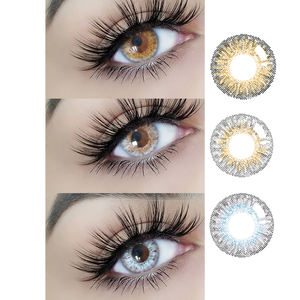
Private Label 3-Tone Colored Contact Lens Custom Box
Rigid-grade recyclable paper packaging calibrated for three-tone plano lenses with specialty finishes, UV barriers, and custom unboxing structures.
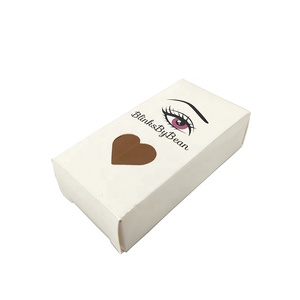
Wholesale Custom Logo Natural Colored Lens Box
Matte and glossy lamination options designed for high-density shelf visual identity, certified barcoding, and automated production lot numbering.
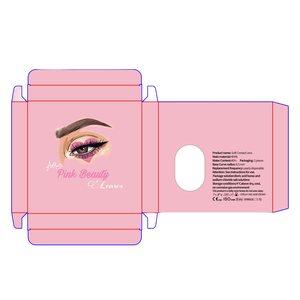
Self-Erecting Recyclable Color Lens Box Packaging
Engineered for fast-fill automated packout setups, featuring FSC-certified pulp substrates and precise 4-color pigment reproduction.
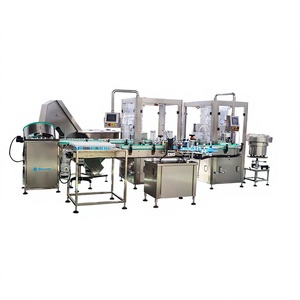
High-Efficiency Contact Lens Saline Filling Line
Intelligent control sterile dosing machinery providing aseptic filling for blister packs and vials with micro-tolerance volume control.
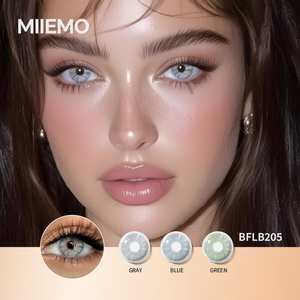
DSC Small Pupil Soft Blue Plano Lenses
Engineered with an ultra-concentrated iris structure, ISO-compliant stabilization, and a 5-year shelf-life stability rating.
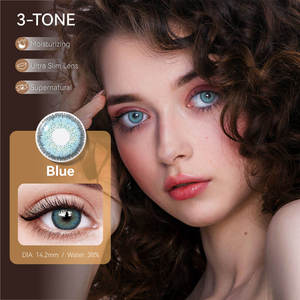
DSC Eye-Enlarging Natural Blue Cosmetic Lenses
Enhanced limbal ring architecture designed to create subtle, authentic iris enlargement while maintaining maximum oxygen permeability.
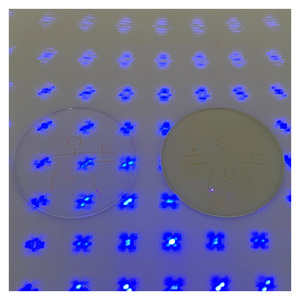
1.56 Anti-Blue Light Protective Ophthalmic Lenses
Complementary visual technology integrating blue-light filtering polymers to safeguard wearers exposed to heavy digital display environments.
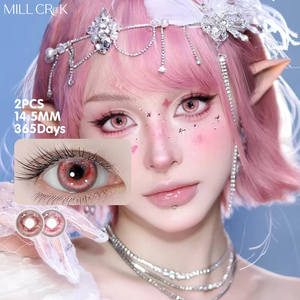
Cosplay 14.2mm Anime Crazy Circle Lenses
Vivid non-prescription lenses built with high-opacity pigments, offering edge-to-edge pattern clarity for entertainment and theatrical segments.
Technical Benchmark: Cast Molding vs. Lathe-Cutting for Plano Color Optics
In high-throughput cosmetic contact lens manufacturing, achieving consistent plano performance (0.00 diopter accuracy with neutral refractive deviation) demands precise control over polymer shrink dynamics. Traditional lathe-cutting presents tool wear variances that can alter base curve radii and trigger marginal astigmatism. China's top cleanroom factories employ fully automated closed-loop cast molding utilizing ultra-pure Poly-HEMA (2-hydroxyethyl methacrylate) and silicone hydrogel matrices.
Crucially, high-performance plano colored contact lenses require specialized micro-encapsulated sandwich printing. Rather than depositing colorant onto the front or posterior boundary surfaces, automated pad-printing transfers the color pigments into an intermediate hydrogel stratum. This ensures the eye's corneal endothelium and tarsal conjunctiva only come in contact with fully hydrated, biocompatible polymer surfaces—mitigating mechanical abrasion and pigment leaching risks.
| Evaluation Parameter | Cast Molding Standards (Velalens / Tier-1) | Legacy Lathe-Cut Manufacturing |
|---|---|---|
| Refractive Uniformity (Plano) | ±0.05D across 100,000+ unit batches | ±0.25D variation due to tooling friction |
| Color Layer Placement | Sandwich Encapsulation (Sub-surface isolated) | Surface pad transfer / Chemical imprint |
| Oxygen Permeability (Dk/t) | Hydrogel (20–25) / Si-Hy (80–120) | Hydrogel (8–15) |
| Edge Profile Morphology | Bi-curved contour, microscopic smooth beveling | Variable edge finishing requiring mechanical polishing |
| Hydration Retention Factor | 38% – 55% water content retention profiles | Inconsistent hydration equilibrium |
Through closed-loop automation, China's contract manufacturing facilities provide international brand owners with reliable optical stability, rapid SKU changeovers, and comprehensive technical documentation necessary for commercial clearance across North America, Europe, and the Middle East.
Future Procurement Trends in Plano Colored Contact Lenses
Sourcing strategies in the global cosmetic contact lens sector are shifting. Enterprise buyers evaluate suppliers using specific engineering and operational metrics.
Shift Toward High-Dk Daily Disposables
Market volume is moving away from extended-wear annual lenses toward single-use daily hydrogels and silicone hydrogels. Brand buyers prioritize low moisture-decay curves, sterile blister sealing integrity, and sustainable, streamlined packaging formats.
Multi-Frequency Iris Printing Formats
Consumer aesthetics demand natural iris layering. Future procurement programs favor 3-tone and 4-tone variable dot matrix layouts that mimic physiological stromal fibers and delicate limbal margins rather than flat, opaque graphic rings.
MDR & 510(k) Ready Compliance Data
Supply chain security requires turnkey audit documentation. International distributors increasingly mandate biocompatibility reports (ISO 10993), chemical leachables analysis, and automated optical inspection (AOI) verification from their OEM partners.
Enterprise Advantages: Integrated Manufacturing Infrastructure
Velalens combines clinical safety controls with consumer-focused brand design. Our factory floor operates automated cast-molding systems within certified cleanrooms, ensuring uniform production runs from boutique runs of 300 units to enterprise orders of several million pairs.
Key strengths include:
- Proprietary Micro-Encapsulation: Pigments remain sealed inside inert polymer, ensuring zero direct corneal contact.
- Full Replacement Spectrum: Production lines configured for Daily, Monthly, Semi-Annual, and Annual replacement cycles.
- Integrated Secondary Packaging: In-house production of custom paper boxes, sterile blisters, vials, and multilingual inserts.
- Turnkey Registration Files: Comprehensive batch release test certificates, sterilization reports, and technical dossiers ready for regulatory submission.
Frequently Asked Questions on Plano Lens Sourcing
Essential guidance covering regulatory compliance, minimum orders, and production logistics for international sourcing teams.