Export-Certified Contact Lenses & Precision Optical Accessories
Manufactured in ISO 13485 cleanroom facilities with full technical documentation for Japan PMDA notification and Class II/III medical device distribution.
Navigating Contact Lens Manufacturing for the Tokyo & Japan Market
The contact lens marketplace in Tokyo represents one of the most commercially lucrative yet technologically and legally demanding optical territories in the world. Governed strictly under the Pharmaceuticals and Medical Devices Act (PMDA) and supervised by the Ministry of Health, Labour and Welfare (MHLW), contact lenses—both corrective and purely cosmetic plano variants—are classified under Japanese law as Highly Managed Medical Devices (Class III). Sourcing products for distribution across the Kanto metropolitan area demands far more than basic wholesale transactions; it requires a deep institutional alignment with Japanese Industrial Standards (JIS T 7330), rigorous Good Manufacturing Practice (GMP), and audited biological safety parameters.
For Japanese optical chain directors, cross-border e-commerce brand founders in Shibuya, and medical device Marketing Authorization Holders (MAH / Seizou Hanbai Gyousha), establishing a reliable overseas factory partnership is critical. Sourcing failure often results in container impoundment at Yokohama or Tokyo Port, costly product recalls due to dye elution, or disastrous reputational damage. This comprehensive B2B procurement white paper systematically unpacks the ten non-negotiable criteria for identifying, auditing, and partnering with world-class contact lens factories equipped to deliver market-leading hydrogel and silicone hydrogel products into Japan.
Top 10 Sourcing Rules for Selecting a Lens Factory for Tokyo
A methodical operational roadmap designed for procurement directors, regulatory affairs specialists, and optical OEM buyers.
Foreign Manufacturer Registration (FMR)
The factory must possess active Foreign Manufacturer Registration (FMR / Gaikoku Seizougyousha Touroku) issued directly by the Japanese PMDA. Without this fundamental registration number, no Marketing Authorization Holder in Tokyo can legally file for product pre-market approval (Shonin) or certification (Ninsho).
Cast Molding & Automated Lathe Tooling
Reject suppliers utilizing outdated spin-casting techniques. Modern Tokyo consumers demand consistent sagittal depth, base curve precision (typically 8.5 to 8.7 mm), and zero edge flare. Premium suppliers use high-precision CNC tool-machined inserts and robotic cast-molding lines capable of repeatability within ±0.02 mm.
Sandwich Pigment Encapsulation Integrity
Cosmetic colored lenses must pass the strict Japanese ISO 10993 cytotoxicity and rub-off resistance test. Color pigments must be chemically locked between transparent polymer matrices (sandwich structure). Pigment must never directly contact corneal epithelium or palpebral conjunctiva.
QMS Ordinance 169 Audit Readiness
Suppliers must operate under ISO 13485:2016 while exhibiting full readiness for Japanese MHLW Ministerial Ordinance No. 169 (Medical Device Quality Management System). This requires complete batch records, raw material batch traceability (HEMA/NVP monomer sourcing), and validated D-value sterilization logs.
1-Day Daily Disposable High-Speed Lines
The Tokyo retail market is overwhelmingly driven by 1-Day disposable wear cycles (accounting for over 72% of domestic revenue). A supplier lacking high-volume automated strip-packaging blister sealing capabilities cannot sustainably fulfill peak commercial replenishment across Kanto optical chains.
Aesthetic Pattern Design Tailored to East Asian Irises
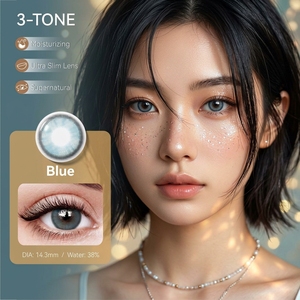
Western lens patterns featuring stark, opaque color blockings perform poorly in Tokyo. Japanese consumers favor micro-dot radial gradation, delicate limbal softening, and graphic diameters (G.DIA) between 13.0 mm and 13.4 mm that create the desired natural translucent (toumeikan) visual effect.
Low Test-Batch MOQ for Incubator Brands
Developing niche beauty lenses in Tokyo requires fast iteration. Sourcing from mega-factories that demand 30,000 pieces per SKU stifles agile testing. Elite exporters offer starting MOQs around 300 to 500 pairs per SKU for private label stock designs, allowing multi-color palette verification with contained capital risk.
Silicone Hydrogel Material Engineering
As Tokyo office workers experience prolonged digital screen time and air-conditioned dry eye conditions, high oxygen permeability (Dk/t > 80) is becoming mandatory. Exporters must possess validated silicone hydrogel polymerization lines that balance lubricity, low modulus, and high wettability without surface deposits.
Japanese Labeling, JAN Barcoding & Eco-Packaging
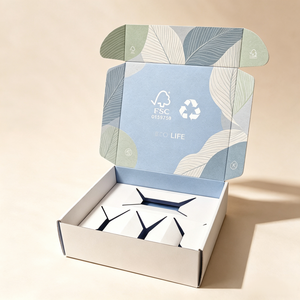
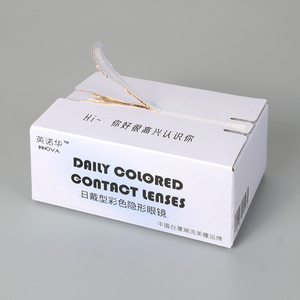
Secondary packaging must strictly reflect Japanese statutory labeling: ingredient disclosures, expiry symbols, lot tracking, warning leaflets, and JAN (Japanese Article Number) barcodes. Advanced factories offer zipper-tear cartons, FSC paper stock, and compact blister strips preferred by Tokyo metropolitan drugstores.
100% Automated Optical Inspection (AOI) & Pre-Shipment Release Protocols
Zero tolerance for visual defects is the golden rule of Japanese consumer culture. Premium factories employ 100% automated machine vision cameras paired with high-magnification human secondary review. Every individual lens is verified for edge tears, foreign particulate inclusion, bubble formations, and color concentricity before undergoing terminal autoclave sterilization.
Where Contact Lenses Converge with Tokyo Lifestyle & Demographics
Strategic product positioning tailored to micro-markets across Tokyo's 23 Special Wards.
Corporate "Bare-Eye" Naturalism
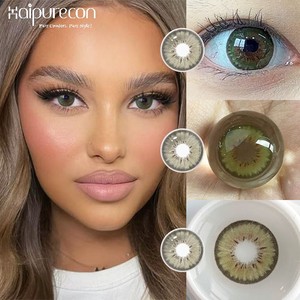
Tailored for business professionals demanding invisible enhancement. Micro-dot limbal rings in olive-brown, hazelnut, and soft gray that blend naturally with native dark brown irises under strict office dress codes.
Trendsetter Youth & Influencer Fashion
High-contrast, dual-tone translucent hues designed for flash photography and social media streaming. Featuring light beige, icy lavender, and aqua tones with subtle enlargement that complement vibrant Japanese street fashion.
Subculture, Cosplay & Character Optics
Vivid, high-opacity yearly and monthly lenses catering to the international anime and cosplay exhibition circuit. Strict color reproduction in electric crimson, amber yellow, and violet that covers dark natural irises completely.
Premium Clinical & Presbyopic Aesthetics
High-end optical boutique clientele seeking premium silicone hydrogel formulations, UV-blocking class 1 filters, and multifocal cosmetic lenses combining presbyopic reading correction with sophisticated eye coloration.
Emerging Procurement Trends Shaping the Japanese Contact Lens Ecosystem
The Japanese optical sector is currently undergoing a structural transformation driven by health awareness, environmental concerns, and shifting consumer demographics:
1. Dominance of Daily Disposables (1-Day): Unlike several Western markets where monthly or bi-weekly modalities maintain sizable market shares, Tokyo consumers place supreme value on hygiene and convenience. The single-use daily disposable segment accounts for the vast majority of volume in drugstores like Matsumoto Kiyoshi, Don Quijote, and optical chains like Megane Top and Zoff. Importers are progressively phasing out older yearly SKUs in favor of ultra-clean 1-day blister packs.
2. The "Nude Eye" Micro-Diameter Trend: The era of oversized 14.8 mm theatrical "circle lenses" has evolved. In 2026 and beyond, Tokyo demand centers on Graphic Diameters between 12.8 mm and 13.3 mm. Consumers prefer subtle pixel density over harsh outer rings, generating organic pupil depth that passes unnoticed in university classrooms and professional work settings.
3. Transition to Silicone Hydrogel: While poly-HEMA remains cost-effective, premium brands are accelerating R&D into third-generation silicone hydrogel colored lenses. Tokyo consumers prioritize ocular surface health, demanding lower incidence of hypoxia-related corneal neovascularization during 14-hour urban commute and office cycles.
4. Eco-Conscious Packaging Architecture: In line with Japan's strict municipal waste sorting protocols, secondary and tertiary packaging must minimize plastic blister weight, eliminate non-recyclable metallic foils where possible, and incorporate easy-tear cardboard perforations for effortless flattening and recycling.
Factory Parameter Capabilities vs. Tokyo Market Acceptance
| Physical / Chemical Parameter | Standard Factory Range | Tokyo / Japan Regulatory Preference | Technical Significance |
|---|---|---|---|
| Base Curve (BC) | 8.50 mm – 8.70 mm (±0.05 mm) | 8.60 mm optimized for Asian cornea | Prevents lens decentration, tight fit, and limbal pinching |
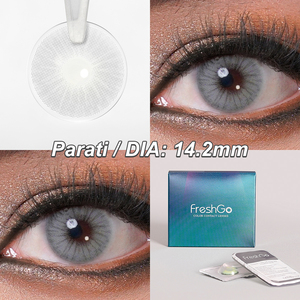
| Total Diameter (DIA) | 14.0 mm – 14.5 mm | 14.2 mm standard | Ensures comfortable tear exchange beneath lens skirt |
| Graphic Diameter (G.DIA) | 12.5 mm – 14.0 mm | 13.0 mm – 13.4 mm | Delivers natural iris enhancement without artificial bulging |
| Water Content | 38% – 58% | 38% (low) or 55% (high with moisture lock) | 38% water reduces tear evaporation in air-conditioned Tokyo transit |
| Oxygen Permeability (Dk/t) | 10 – 120 x 10⁻⁹ | > 25 (Hydrogel) / > 80 (Si-Hy) | Complies with corneal physiological health standards |
| Color Layer Construction | Sandwich Encapsulation | 100% Fully Embedded Matrix | Zero pigment rub-off during JIS biological safety inspection |
| Center Thickness (CT) | 0.06 mm – 0.09 mm | 0.08 mm standard (-3.00D) | Balances high oxygen transmission with structural handling ease |
Velalens OEM/ODM Production Advantages for Tokyo Brands
Engineered from the ground up to support international brand owners with clinical rigor, rapid scaling, and seamless export compliance.
Agile Private Label MOQs
Launch customized Tokyo-targeted collections starting from just 300 pairs per colorway for catalog designs, slashing inventory exposure and enabling rapid seasonal testing.
Full Regulatory Dossier Support
We supply complete Technical Files, raw material declarations, cytotoxicity and bio-compatibility test reports, and sterilization validations ready for your Tokyo MAH team.
Proprietary Micro-Dot Printing
Our computer-controlled pad printing and cast-molding systems achieve microscopic tonal gradations, delivering multi-dimensional natural iris depth that matches Japanese beauty preferences.
Medical-Grade Quality Systems
Operating inside continuous Class 100,000 cleanrooms certified under ISO 13485 and international medical device norms, our automated casting ensures zero batch-to-batch variation.
100% Quality Assurance
Every single contact lens is subjected to high-definition automated optical inspection for perimeter edging, central aperture integrity, bubble defects, and optical power consistency.
Expedited Sampling & Logistics
Receive physical stock prototype samples in Tokyo within 3 to 7 business days via temperature-monitored international express, backed by reliable direct sea/air freight booking.
Procurement & Importation FAQ for Tokyo Optical Buyers
Direct, pragmatic operational answers based on dozens of cross-border medical device shipments into Japan.
Can an overseas company export colored contact lenses directly to Tokyo without a local Japanese partner?
What is the typical lead time for custom OEM contact lens production bound for Japan?
How does the factory prove pigment encapsulation compliance under Japanese safety guidelines?
What minimum order quantity (MOQ) is required for private label packaging with Japanese JAN barcodes?
Do you support both Plano (0.00) cosmetic lenses and refractive corrective powers for the Japanese market?
Ready to Launch or Expand Your Contact Lens Brand in Tokyo?
Collaborate with an ISO 13485-certified medical device manufacturer. Share your project specifications, required wear modalities, target graphic diameters, and volume projections—our international OEM export engineering team will respond within one business day with full specification sheets, sample options, and transparent factory-direct pricing.