Natural Enlarging
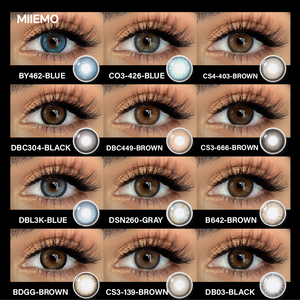
Miiemo Big Eye Grey Colored Contact Lenses 14.2mm Soft Natural Enlarging Eye Lenses 5 Year Expiration
DIA: 14.2mm
BC: 8.6mm
Sandwich Matrix
Engineered specifically to solve digital eye fatigue, prolonged indoor air-conditioned dehydration, and intense tropical urban environments across modern Bangkok retail and clinical channels.
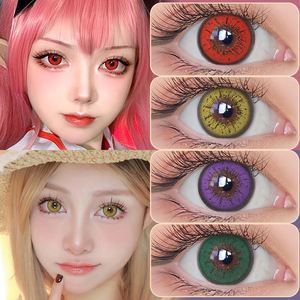
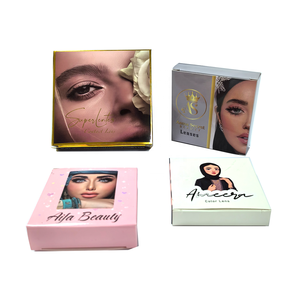
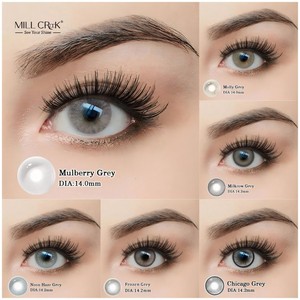
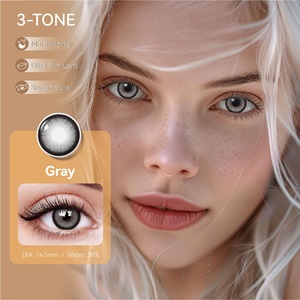
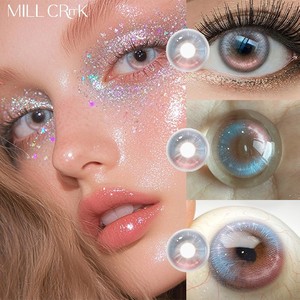
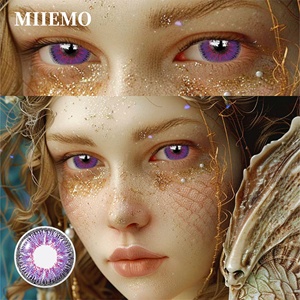
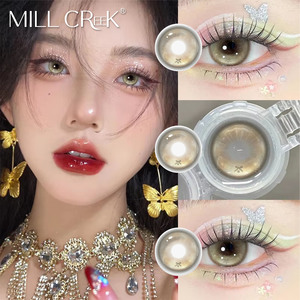
Designing colored contact lenses for Bangkok requires answering unique environmental challenges—from extreme outdoor UV and ambient humidity shifts to rigorous 12-hour air-conditioned office exposures.
Bangkok's trend centers—from Siam Square to Thonglor—represent the hub of Southeast Asian influencer media. Local consumers demand high-definition micro-printed lenses that pop on mobile video streams without looking artificial under intense daylight or LED ring lights. Our ultra-thin multi-tone printing provides realistic depth on deep brown irises common across Thai demographics.
Office workers across Sathorn and Silom constantly transition between 35°C outdoor tropical heat and 21°C low-humidity, air-conditioned corporate spaces. Traditional high-water HEMA lenses draw moisture directly from the corneal film under these conditions, creating rapid dry-eye symptoms. Our silicone hydrogel formulations lock internal moisture, maintaining wettability across extended shifts.
The Food and Drug Administration of Thailand classifies decorative and corrective contact lenses under strict Class 4 medical device mandates. Optical distributors, retail chains (such as Boots and Watsons Thailand), and hospital networks require complete technical documentation (CSDT format), full biocompatibility reports, and accredited ISO 13485 certification.
An authoritative comparison of polymer cross-linking, oxygen diffusion dynamics, and surface treatment methodologies for B2B brands procuring cosmetic contact lenses.
Cosmetic contact lenses have evolved from novelty fashion accessories into sophisticated daily-wear medical devices. For private label owners targeting the Bangkok metropolis and surrounding provinces (Nonthaburi, Samut Prakan, Pathum Thani), understanding the physical chemistry of the lens matrix is essential for reducing consumer return rates and preventing hypoxia-related clinical complications.
The cornea is an avascular structure that relies almost entirely on atmospheric oxygen diffusion. Legacy poly-HEMA lenses typically deliver a Dk/t value between 15 and 28. While adequate for 4 to 6 hours of casual wear, this level fails to meet Holden-Mertz criteria for avoiding corneal edema during 10-to-14 hour active wear. Silicone hydrogel incorporates fluorosiloxane monomers, establishing continuous hydrophobic oxygen pathways that push Dk/t ratings above 120 to 140, completely eliminating limbal hyperemia and evening end-of-day discomfort.
| Polymer Metric | Standard Poly-HEMA | Velalens 3rd Gen Silicone Hydrogel | Direct Benefit for Bangkok Market |
|---|---|---|---|
| Oxygen Transmissibility (Dk/t) | 20 – 28 Dk/t | 125 – 140 Dk/t | Zero corneal hypoxia during 14-hour work & commute days |
| Water Equilibrium | 42% – 58% (unbound) | 38% – 45% (chemically bound) | Prevents moisture stripping in BTS & air-conditioned malls |
| Modulus of Elasticity | 0.3 – 0.5 MPa (limp) | 0.6 – 0.7 MPa (optimal handling) | Effortless insertion and centering without eyelid friction |
| Color Encapsulation | Varying (semi-surface) | 100% Sealed Triple-Layer Matrix | Absolute barrier against pigment release and epithelial abrasion |
A critical metric audited during Thai FDA inspections is biocompatibility regarding pigment leaching. In our fully automated cleanroom facilities, color matrices (composed of iron oxides, titanium dioxide, and phthalocyanine pigments) are locked between two optical-grade layers of clear hydrogel. The surface contacting the palpebral conjunctiva and the corneal epithelium is entirely smooth, non-ionic, and free of exposed pigment particles. This completely mitigates mechanical micro-scratches and giant papillary conjunctivitis (GPC).
Silicone materials naturally display hydrophobic tendencies, which historically caused lipid deposition and surface dryness. Our proprietary plasma oxidation and copolymerized hydrophilic polyvinylpyrrolidone (PVP) bonding technology embeds moisture-retaining agents directly into the polymer network. This structural wetting agent will not wash away, retaining an ultra-low contact angle (<45°) even in hot, polluted metropolitan air environments.
Everything local optical distributors, aesthetic clinic chains, and independent e-commerce brands need to know about lead times, documentation, and regulatory handling.
Built from the ground up to guarantee clinical quality, visual fidelity, and absolute regulatory reliability for brand owners worldwide.
State-of-the-art automated production workshops with laminar air-flow zones, cast-molding lines, and robotic hydration extraction.
Every individual lens passes high-resolution CCD optical scanners and manual magnification review for edge burrs and decentration.
In-house chromatic designers developing exclusive dot-matrix patterns, limbal enhancement rings, and natural color blends tailored for Asian irises.
Dedicated regulatory affairs specialists preparing compliant documentation packages for FDA registrations throughout ASEAN and global territories.
Request our comprehensive 2026 silicone hydrogel product catalog, technical parameter sheets, and complimentary aesthetic physical sample kits today.