Targeted Lens Portfolio for Strategic Importers
Source export-ready formulations engineered for high oxygen permeability, hyper-realistic color depth, and stringent K-Beauty cosmetic standards.
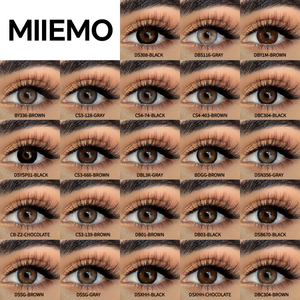
MIIEMO Soft Natural Three Tone Color Contact Lenses
38% water content formulation balancing corneal hydration and lens stability for long shifts.
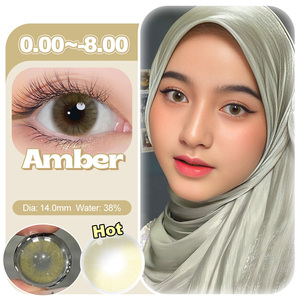
Magister Hidrocor Natural Prescription Contact Lenses
Seamless limbal edge-transition with plano to -8.00D optical correction options.
Custom Logo Cartoon Rectangle PP Contact Lenses Packaging
Food-grade polypropylene bespoke packaging, pairing compliance with retail aesthetics.
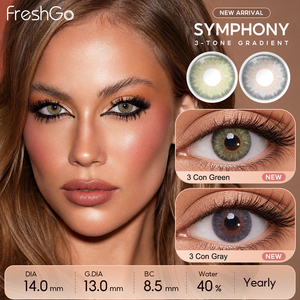
Freshgo Yearly Green Contact Lenses Wholesale
High-density cast molding designed for durability without compromising oxygen diffusion.
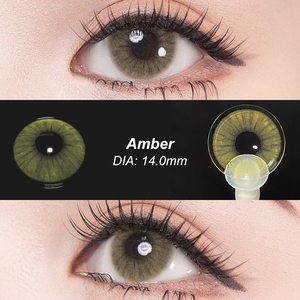
Hidrocor Natural Eye Contact Lenses Magister Queen
Designed to complement Asian dark irises with fine micro-dot pixelation arrays.
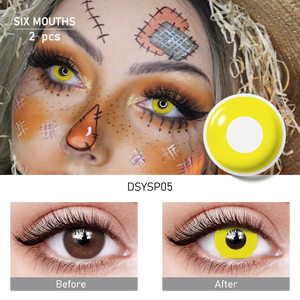
Halloween & Cosplay Colored Contacts: Factory Series
Opaque tint containment utilizing advanced sandwich technology for creative sectors.
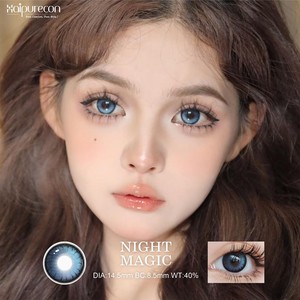
Haipurecon High Quality Soft Natural Colored Contact Lenses
Engineered with smooth-edge profile bevels to minimize lid friction during blinking.
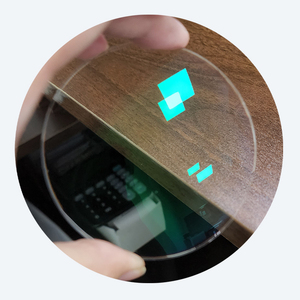
Factory Direct Wholesale Blue Cut Lens Photochromic UV420
Complementary ophthalmic resin solutions for comprehensive eye-wear chain portfolios.
Korean Market Localization & Application Scenarios
Deciphering regional consumer habits, optical dispensing legislation, and high-performance micro-distribution pathways across South Korea.
The 'Personal Color' Analysis Trend
In the domestic Korean market, contact lenses are no longer purchased as generic accessories. South Korean beauty consumers actively match lens undertones to diagnostic skin profiles:
- Warm Autumn/Spring: Demands fine amber hues, hazel transitions, and subtle gold undertones as seen in our custom three-tone formulations.
- Cool Summer/Winter: Requires ash grays, subtle slate pigments, and crisp outer limbal definitions with muted center dots.
- Graphic Diameter Precision: Korean consumers show a strong preference for Graphic Diameters (G.DIA) between 13.0mm and 13.3mm—moving away from exaggerated enlargement to refined, realistic iris definition.
Private label brands localizing for Korea must build SKU matrices that match these seasonal personal-color categories to thrive across selective channels.
Omnichannel B2C Reservation Models
Under South Korea's Medical Devices Act and the Medical Technicians Act, pure cross-border direct e-commerce distribution of corrective and plano contact lenses straight to domestic consumers is restricted to authorized optician dispensaries:
- O2O Click-and-Collect: Successful private brands in Seoul utilize digital catalogs where consumers reserve bespoke collections online, which are then shipped directly to affiliated local optical shops for in-person dispensing and vision verification.
- Barcoded Optometric Integration: Blister packaging must include clear, high-density GS1 barcodes and Korean-compliant back-labels ready for seamless inventory intake by domestic retail opticians.
- Bespoke Retail Packs: 2-piece blister packs engineered for sample gifting and 10-to-30 piece daily boxes tailored to modern commuter convenience.
Daily Disposables & Ocular Wellness
The Korean demographic leads Asia in the fast transition from traditional annual wear to daily and monthly disposable modalities:
- Dry-Eye Mitigation: With extensive office screen usage and high seasonal variations in Seoul, materials with 38%-42% balanced hydration retain structural hydration without drawing moisture from the tear film.
- Hygiene Awareness: Consumers prefer 1-day blisters over long-term storage bottles. Daily disposables significantly lower the risk of microbial keratitis and protein deposits.
- Blue Light & UV Blocking: Secondary value is captured through Class II UV blockers built directly into the monomer formulation to protect against ambient radiation.
Emerging Market Trends in South Korea's Contact Lens Sector
Staying ahead of consumer shifts: from hydrogel evolution to the rise of specialized optical designs.
Silicone Hydrogel Penetration
While traditional HEMA polymers remain cost-effective for entry-level product lines, South Korea's cosmetic market increasingly demands Silicone Hydrogel formulations. By combining higher oxygen transmissibility (Dk/t) with advanced wetting agents, brands can serve consumers who wear lenses for 10 to 14 hours a day, preventing corneal hypoxia and eye fatigue.
Toric & Multifocal Cosmetic Convergence
A high prevalence of astigmatism in the domestic East Asian demographic has led to a supply shortage of aesthetic toric lenses. Forward-looking brands now pair high-precision back-surface toric designs with modern cosmetic color prints. This allows astigmatic consumers to enjoy stylish K-Beauty color patterns without compromising refractive visual acuity.
Hyper-Realistic 'No-Makeup' Aesthetics
Loud, theatrical lenses have ceded shelf space to translucent layers that enhance natural eye tones. The current Korean standard calls for subtle graphic patterns featuring micro-dot gradations and soft ash-infused limbal borders. This creates a clear, glistening iris look that complements everyday Korean makeup routines.
Manufacturing Excellence & Export Infrastructure
Direct-from-factory production capabilities built to help global brand owners and optical chains launch compliant, high-retention private label lines.
Micro-Pigment Sandwich Technology
Our cast-molding process locks colorants between two layers of clear hydrogel monomer. Zero pigment touches ocular surfaces or the palpebral conjunctiva, preventing dye migration and maintaining safe, smooth surface properties.
Comprehensive Testing Dossiers
We provide full-scope test reports per SKU: residual monomer content, extractables, cytotoxicity analysis, dimensional stability data, and accelerated shelf-life stability validations that support regulatory filings.
Custom Optical Parameters
Tailor your brand's specifications: Base curves ranging from 8.5mm to 8.7mm, Diameters from 14.0mm to 14.5mm, Graphic Diameters from 12.8mm to 13.8mm, and water contents from 38% to 55% in both HEMA and silicone hydrogel matrices.
Agile Private Label MOQs
Lower your inventory risk. We support new market tests with starting minimums from around 300 pairs per color for proven stock designs, paired with custom box designs, blister packs, and multi-language patient inserts.
Korean Sourcing & Procurement FAQ
Practical guidance on regulatory compliance, logistics, quality documentation, and custom OEM timelines.
What are the regulatory requirements for importing private label contact lenses into Korea?
In South Korea, contact lenses (both corrective and cosmetic plano) are classified as Class II Medical Devices overseen by the Ministry of Food and Drug Safety (MFDS). To import, the local brand entity or distributor must hold a Medical Device Business License and secure an MFDS Product Approval (Item License) for each product model. We supply full technical documentation—including raw material biosecurity files, ISO 13485 certifications, sterilization validations, and stability assessments—to support your local Korean License Holder (KLH) through the submission process.
Can you customize the Graphic Diameter (G.DIA) specifically for East Asian aesthetic preferences?
Yes. While Western cosmetic lenses typically feature wider graphic diameters (13.8mm to 14.2mm) to maximize eye size, the Korean domestic market favors subtle natural enhancements. We offer custom molding and printing plates configured for compact G.DIAs ranging from 12.8mm to 13.3mm, combined with delicate micro-pixel limbal gradations that blend seamlessly with natural Asian iris patterns.
What are the typical lead times for sample proofing and mass manufacturing?
For existing catalog designs prepared with your custom private label blister foils and packaging boxes, physical pre-production samples are dispatched in 3 to 7 business days. Fully custom pattern designs (novel printing plates, layered ink formulas, and target base curves) require 2 to 3 weeks for tooling and optical balance testing. Mass production runs are typically completed and steam-sterilized within 4 to 6 weeks, depending on total SKU depth and packaging configurations.
How do you guarantee that colored pigments do not leach from the lens material?
All our cosmetic contact lenses are manufactured using our proprietary Sandwich Cast-Molding Technology. During production, cosmetic pigment layers are completely encased within the inner polymer matrix before final thermal curing and hydration. This ensures no colored pigment particles sit directly on the anterior or posterior lens surfaces. Our products undergo rigorous swab testing and solvent extraction analyses to verify zero surface leaching before release.
Ready to Launch Your Korean Contact Lens Line?
Speak directly with our technical engineering and OEM export team. Get access to detailed parameter specifications, testing protocols, sample collections, and volume pricing today.
Get a Quote