Featured OEM/ODM Cosmetic Lenses & Packaging Infrastructure
Engineered for New England optical chains, boutique cosmetic brands, and high-turnover regional distributors. Fully customizable with clinical biocompatibility dossiers.
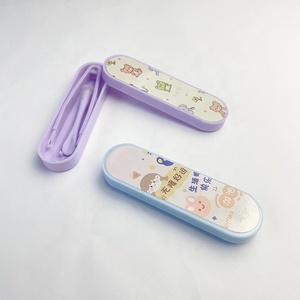
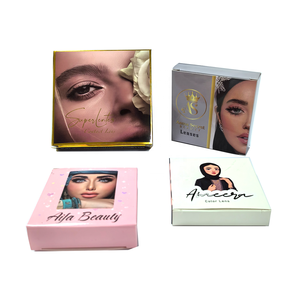
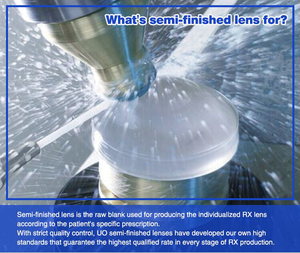
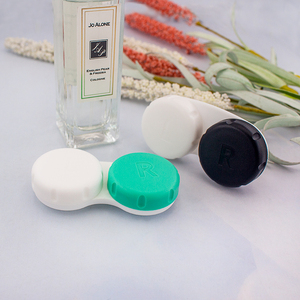
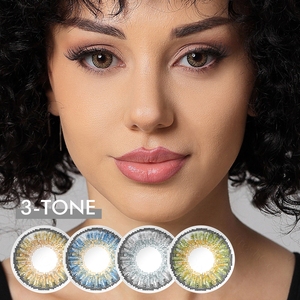
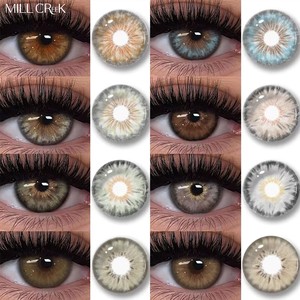
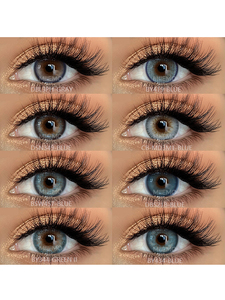
Strategic Sourcing of Pink Cosmetic Contact Lenses in the Greater Boston Medical-Academic Ecosystem
The Greater Boston metropolitan area represents one of the most clinically rigorous, legally scrutinized, and aesthetically discerning consumer optical markets in North America. Home to world-renowned clinical research institutions including Massachusetts Eye and Ear, Harvard Medical School teaching affiliates, and the New England College of Optometry (NECO), Massachusetts enforces stringent consumer eye-safety oversight. For B2B importers, optical retail syndicates, and digital-native cosmetic brands targeting the Boston metropolitan area, procuring pink contact lenses—ranging from soft rose quartz daily beauty lenses to high-opacity pastel anime lenses—demands an advanced understanding of polymer chemistry, colorant encapsulation technologies, and United States Food and Drug Administration (FDA) device classification.
Core Industry Axiom: In the United States, all contact lenses are legally categorized as Class II or Class III medical devices under 21 CFR § 886.5916 and § 886.5925. Sourcing for Boston optical chains requires verified sandwich cast-molding encapsulation to eliminate pigment leaching, backed by documented 510(k) Premarket Notifications and full compliance with the Federal Trade Commission (FTC) Contact Lens Rule.
1. Biomaterial Architecture & Pigment Encapsulation Engineering
The manufacturing architecture of cosmetic pink contact lenses diverges fundamentally from conventional clear corrective lenses. Because pink hues require blended pigment formulations—frequently utilizing titanium dioxide (CI 77891) for opacity, blended with iron oxides (CI 77491) and organic quinacridone or carmine derivatives—surface-applied printing presents severe clinical hazards. Early generation cosmetic lenses utilized direct stamp printing on the polymer surface, which created corneal surface abrasions, destabilized the tear film, and dramatically increased bacterial adherence by Pseudomonas aeruginosa and Acanthamoeba.
Modern precision manufacturing centers, such as Velalens Technology, employ automated Cast Molding with Three-Layer Micro-Sandwich Encapsulation. In this automated cleanroom process, the front curve mould is first injected with a medical-grade hydrogel monomer (e.g., Poly-HEMA or silicone macromers). The chromatic pink matrix pattern is then printed with sub-micron registration using computerized pad-printing or digital photolithography. Crucially, a secondary clear protective polymer layer is cast across the pigmented stratum before thermal or UV polymerization occurs. This encapsulates the pigment strictly within the internal matrix of the lens, ensuring 0% direct contact with either the palpebral conjunctiva or the corneal epithelium.
Oxygen Transmissibility (Dk/t) in Winter Climates
Boston's geographical climate imposes unique physical challenges upon contact lens performance. From November through March, the New England coastal winter brings outdoor sub-zero temperatures accompanied by indoor forced-air heating, plunging ambient indoor relative humidity to below 20%. In standard high-water ionic hydrogels, dry atmospheric conditions trigger accelerated superficial dehydration, drawing moisture out of the lens matrix and causing the lens to tighten against the cornea, inducing limbal hypoxia and severe ocular discomfort.
To combat New England winter corneal desiccation, export facilities supplying the Boston territory prioritize low-water content (38%) HEMA formulations or third-generation non-ionic silicone hydrogels. Silicone hydrogel compositions achieve oxygen transmissibility ratings (Dk/t) exceeding 80 to 120 × 10-9 (cm/s)[ml O2/(ml × mm Hg)], utilizing siloxane macromers to transport oxygen directly through the material matrix rather than relying entirely on water transport channels. Consequently, Boston consumers maintain clinical corneal physiological homeostasis throughout long academic study sessions, office commutes on the MBTA, or extended evening fashion events.
2. Localized Greater Boston Application Scenarios
Procuring pink cosmetic contact lenses for the Boston regional market requires an acute segmentation of diverse micro-demographics spanning Suffolk, Middlesex, and Norfolk counties. Commercial purchasing volumes should align directly with four established consumer lifestyle verticals:
Cosplay & Pop-Culture Conventions
Greater Boston hosts major national conventions, notably Anime Boston at the Hynes Convention Center and Boston Comic Con. Attendees require high-opacity anime pink, pastel violet, and magenta lenses featuring sharp limbal boundaries and saturated iris coverage that pop distinctly under flash photography and convention floor LED lighting.
Newbury Street Boutique Eyewear
High-end retail practices along Back Bay's Newbury Street and Beacon Hill cater to subtle aesthetic enhancement. Here, the demand centers on translucent 'rose-quartz' or pink-hazel gradient lenses (14.0mm to 14.2mm DIA) that softly brighten natural brown and hazel irises for professional, daytime corporate environments.
Collegiate & Performing Arts
With more than 250,000 university students across Harvard, MIT, Boston University, Berklee, and Emerson College, student-led theatrical productions and avant-garde fashion groups drive constant demand for daily disposable pink lenses, requiring rapid shipping, hygienic packaging, and affordable student price points.
North Shore & Salem Seasonal Surges
The historic tourist magnet of Salem and the North Shore generates immense fourth-quarter demand for novelty eyewear. Retailers stock up heavily on specialty fantasy pink, glowing UV-reactive pink, and hybrid theatrical contact lenses from August through November, requiring reliable factory production buffer lead times.
3. Technical Specifications & Material Selection Matrix
To assist Boston procurement officers, clinical optometrists, and private-label brand founders in selecting appropriate lens specifications for regional distribution, the following engineering matrix contrasts conventional poly-HEMA against advanced third-generation silicone hydrogel systems.
| Parameter / Property | Standard Poly-HEMA Series | Tri-Tone Korean Fusion Series | 3rd Gen Silicone Hydrogel Pink | Target Boston Demographics |
|---|---|---|---|---|
| Polymer Matrix | Polymacon (Class II Hydrogel) | Etafilcon A (High Moisture) | Filcon V / Senofilcon Substrate | Clinical & Aesthetic Grade |
| Water Content (%) | 38% ± 2% | 42% ± 2% | 48% to 55% | Anti-evaporative winter stable |
| Oxygen Permeability (Dk/t) | 18 - 24 Fatt units | 26 - 32 Fatt units | 85 - 120 Fatt units | Safe for 14-hour daily wear |
| Pigment Encapsulation | Dual Sandwich Cast | Tri-Layer Micro-Dot Cast | Molecular Lock Layering | Corneal epithelium isolation |
| Base Curve (BC) / Diameter | 8.6 mm / 14.2 mm | 8.6 mm / 14.0 mm - 14.2 mm | 8.5 mm - 8.7 mm / 14.2 mm | Universal North American fit |
| Power Diopter Options | Plano (0.00) only | Plano (0.00) to -8.00D | Plano, Myopia, Toric Astigmatism | Prescription & Cosmetic hybrid |
| Wear Modality | Monthly / 6-Month / Yearly | Daily Disposable / Monthly | Daily Disposable (Single Use) | Hygiene-first student & retail |
| Regulatory Dossier | FDA 510(k) Ready | CE ISO 13485 Cleared | US / EU Medical Class II | US Customs clearance valid |
Why Boston Sourcing Directors Partner With Our Factory
Direct-from-factory OEM/ODM capabilities engineered to satisfy US regulatory compliance, agile brand scaling, and rapid international air-freight logistics.
GMP Cleanroom & Full ISO 13485 Verification
Our automated production facilities operate under Class 100,000 cleanroom standards with medical-grade deionized water purification cascades. Every lens batch undergoes 100% automated optical inspection (AOI) to eliminate edge tear defects, particulate contamination, and asymmetric pigment eccentricity before blister steam autoclaving at 121°C.
Turnkey US Labeling & 510(k) Technical Dossiers
We provide full documentation required for legal importation through US Customs and Border Protection (CBP) at the Port of Boston and Logan Airport. This includes complete Device Master Files (DMF), biocompatibility cytotoxicity assay reports (ISO 10993), Device Identifier (UDI) barcodes, and bilingual packaging conforming to 21 CFR § 801 regulations.
Agile Low-MOQ Private Label Customization
Eliminate inventory holding risk. Boston brands can launch private label collections starting at approximately 300 pairs per colorway for existing mold tooling, or collaborate with our optical engineers for proprietary pink iris pattern formulations with custom-printed FSC-certified rigid boxes, sterile foil blisters, and precision saline buffer fills.
4. New England Market Evolution: Daily Disposables & Direct-to-Consumer Growth
Historically, the cosmetic contact lens category in New England relied heavily on annual or quarterly replacement vials. However, recent clinical reports from regional optometry boards have drastically altered commercial consumer behavior. Today, Greater Boston consumers increasingly prefer daily disposable blister packs (10-lens or 30-lens retail boxes). This shift is driven by three prevailing factors:
- Sterility & Acanthamoeba Prevention: Daily disposables eliminate the need for cleaning solutions and storage cases, drastically reducing patient non-compliance and eye infection risks associated with municipal tap water in older metropolitan apartment housing.
- Occasion-Based Cosmetic Utilization: In university environments, students wear natural prescription eyewear or clear lenses on weekdays, adopting striking pink, hazel, or violet lenses specifically for weekend socializing, creative media creation, and theatrical performance.
- Reduced Preservative Exposure: Factory-sealed sterile buffered saline eliminates long-term chemical preservative accumulation on the hydrogel polymer, significantly mitigating ocular surface allergies common during Boston's high-pollen spring and dry indoor winter.
5. Cold-Chain Logistics & Transport Integrity via Boston Logan (BOS)
A critical consideration frequently overlooked by inexperienced importers is the transit temperature vulnerability of hydrogel medical devices during the New England winter. If liquid-filled blister packages freeze during tarmac cargo staging at Logan International Airport (BOS) or during truck transit across Massachusetts Route 128, ice crystal expansion can breach the sterile heat-sealed aluminium foil barrier. Such micro-leaks cause evaporative saline loss, microbial infiltration, and irreversible polymer distortion.
Our export division mitigates this vulnerability by coordinating temperature-damped thermal container shipping via direct international air freight to Boston Logan (BOS), or consolidated ocean container freight through the Port of Boston Conley Terminal for large-scale enterprise consignments. Outer packaging utilizes heavy-gauge double-corrugated export cartons lined with closed-cell expanded polyethylene (EPE) thermal buffering, ensuring ambient package stability from factory dispatch through final warehouse shelving in Middlesex or Suffolk County.
Frequently Asked Questions for Boston Importers
Critical regulatory, commercial, and operational insights for Massachusetts eyewear importers, optical practices, and e-commerce operators.
Can cosmetic pink contact lenses be sold in Massachusetts without a prescription?
No. Under federal US law (Fairness to Contact Lens Consumers Act) and Massachusetts State Board of Registration in Optometry regulations, all contact lenses—including zero-power plano cosmetic lenses—are restricted medical devices. Retailers, optical dispensaries, and online vendors must verify customer prescriptions before dispensing. As an OEM factory, we supply all required FDA 510(k) compliance data, standardized diopter labeling, and consumer safety instructions to ensure complete federal and state compliance.
How does the factory prevent pigment migration into the patient's eye?
We utilize a proprietary cast-molding sandwich encapsulation technique. The chromatic pink, magenta, or white pigment layers are sealed entirely between two micro-thin layers of clear biomedical hydrogel. The pigment is physically locked within the polymer matrix, preventing direct surface exposure. This completely prevents pigment leaching, maintains optical surface smoothness, and guarantees that no pigment particles rub against the cornea or eyelid conjunctiva.
What is the minimum order quantity (MOQ) for custom private-label branding?
For pre-engineered catalog designs (such as our Freshgo or Korean 3-tone series), private label packaging starts at approximately 300 pairs per SKU. For fully bespoke color pattern development—where our optical laboratory creates an exclusive pink pattern to your Pantone or photographic specification—the standard initial pilot production run begins at 1,000 to 3,000 pairs, which covers custom pad-printing plate tooling and micro-injection molding calibration.
What is the standard production and shipping lead time to Boston?
Stock evaluation samples are dispatched via express courier within 3 to 7 business days. For customized OEM private-label mass manufacturing, standard production cycles require 3 to 5 weeks depending on blister box complexity and diopter spread. Express air freight into Boston Logan International Airport (BOS) typically clears customs and delivers within 5 to 8 business days, while ocean consolidated freight to the Port of Boston requires 22 to 28 transit days.
Scale Your Cosmetic Eyewear Line for the Boston Market
Partner directly with an established medical device manufacturer. Connect with our engineering and regulatory export team to request sterile physical samples, verify FDA 510(k) documentation, and obtain direct wholesale OEM quotations.
Send an Inquiry