Featured Natural Enhancement & Cosmetic Contact Lens Formulations
Engineered specifically for cosmetic realism, pupil tracking clarity, and corneal oxygenation. Below are eight core OEM/ODM series available for immediate procurement, custom tooling, and private label packaging for the New York commercial market.
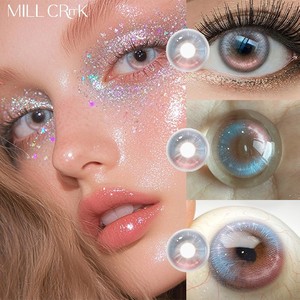
Wholesale Soft Cosmetic Color Contact Lenses OEM 14.5mm Natural Eye Lenses Non Prescription Grey Green Brown Blue
Ultra-soft HEMA hydrogel lenses featuring a micro-dot multi-chromatic matrix for natural iris blending. Popular in Manhattan cosmetic boutiques.
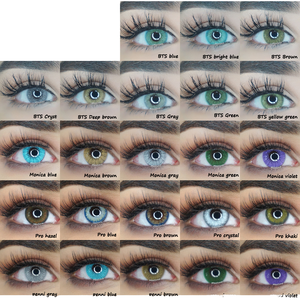
For DSC Pro Penni Soft Natural Colored Contact Lenses Private Label Cosmetic Wholesale Color Contact Lens
Designed for subtle tone enhancement without an aggressive limbal border. Favored by NYC beauty subscription box brands.
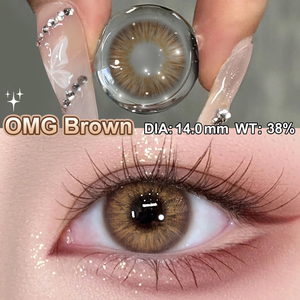
Free Shipping Eye Lenses Color Contact Lens Soft Eye Prescription Contact Lenses 14.5mm Colored Eye Contacts Lentille De Couleur
Full refractive range from -1.00 to -8.00 D. Medical-grade corrective clarity coupled with luxury aesthetic tone enhancement.
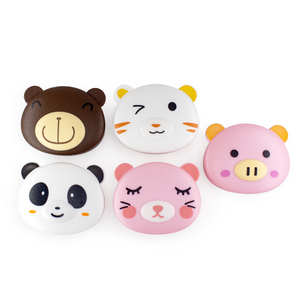
New Chanxin MC-503 Animal Design Fresh Look Contact Lenses Packaging Case with Natural Color Eye Lens Box
Medical-grade anti-microbial polypropylene storage kit tailored for retail point-of-sale display and e-commerce bundling.
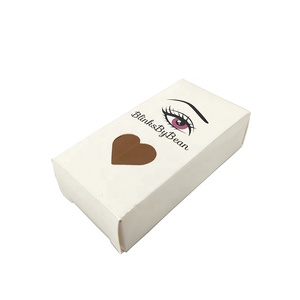
Logo All Color Contacts Wholesale Natural Color Eye Lens New Design Hot Sale Colored Contact Lenses Box Glossy Lamination Matte
Turnkey secondary packaging designed to meet US 21 CFR Part 801 labeling rules with UDI barcode integration and anti-counterfeiting foils.
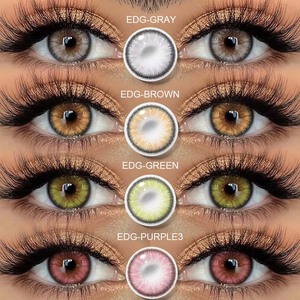
Free Lenses Contact Wholesale Color Contact Lenses Eye Lentillas Natural Contact Lentes
Triple-layer gradual dispersion coloration designed for dark brown irises. Provides high-end optical depth under direct Manhattan sunlight.
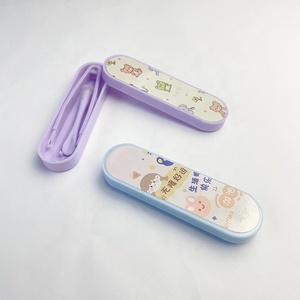
Koncci Manufacturer Pink Contact Lenses Case Contact Lens Tool Case Kit with Cute Designs Silicone Contact Lens Tweezer C-011
Silicone-tipped insertion tools and mirrored compact cases engineered for hygienic handling, preventing lens surface tearing and bacterial transfer.
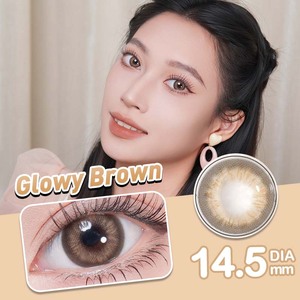
Free Sample Magister Glowy Eye Contact Lenses Eye Contact Colour Colored Contacts Wholesale Lentille Oculaire Les Lentilles
Luminescent crescent-reflection layer simulating soft photographic studio lighting in the pupil zone. Outstanding bestseller for Brooklyn fashion shoots.
100%
Pigment Encapsulation Inspection
300+
Pairs Low Starting Trial MOQ
Dk/t 25+
High Oxygen Permeability Hydrogels
3-5 Days
Direct Sample Dispatch to NY
The Strategic Evolution of Natural Enhancement Contact Lenses in the New York Market
The Metropolitan New York optical and cosmetics landscape represents the world's most exacting consumer base for cosmetic contact lenses. Unlike historical novelty lenses characterized by harsh, opaque pigment blocks, contemporary New York buyers—ranging from high-end Manhattan optometry practices to independent Soho-based direct-to-consumer (DTC) beauty brands—demand nuanced "natural enhancement" architecture. This requires lenses that replicate the multi-layered depth, fibrous stroma, and organic gradient of human irises.
With an increasingly health-conscious and litigious consumer environment in the United States, commercial success in New York hinges on two pillars: biological biocompatibility and regulatory compliance. As an established OEM/ODM contract manufacturer and direct international exporter, Velalens provides the technical bridge between laboratory-grade ophthalmologic engineering and trend-setting aesthetic formulation. By operating under rigorous ISO 13485 quality systems and executing cast-molding processes with closed-system bio-encapsulation, we equip New York importers with product lines that withstand both regulatory scrutiny and high-definition consumer examination.
B2B Application Scenarios Across the New York Metro Ecosystem
Different commercial districts across New York demand distinct physical and aesthetic lens configurations. Our custom production lines support targeted private labeling mapped to specific regional procurement channels.
Manhattan Executive & Corporate Aesthetics
High-density office environments in Midtown and the Financial District require lenses designed for extended VDT (visual display terminal) screen exposure under air-conditioned environments.
- Enhanced water retention (38%-42%) to mitigate dry-eye evaporative fatigue.
- Subtle 1-tone and 2-tone limbal enhancers (Latin Brown & Hazel) providing understated office-appropriate iris depth.
- Plano to high-minus corrective powers (-0.50 to -8.00 D).
Broadway Theatrical & 4K/8K Film Production
Stage actors, television networks in Long Island City, and Broadway production houses need lenses that maintain natural radiance under high-intensity incandescent and LED studio lighting.
- Zero-shift optical center zones (minimum 3.8mm clear pupil aperture) preventing peripheral vision hazing.
- High-definition tri-tone color layering preventing the "flat lens" look on Ultra-HD camera sensors.
- High wettability hydrogel materials preventing lens displacement during dynamic choreography.
NYFW Runway & Editorial Fashion Hubs
New York Fashion Week designers, Chelsea modeling agencies, and runway stylists require rapid color shifts that complement diverse ethnic skin complexions without artificial pixelation.
- Glowy and multi-tonal custom prints that blend organically over dark melanin irises.
- Single-use daily disposable blisters ensuring rapid, sterile backstage model turnover.
- Custom packaging formats tailored for promotional influencer press kits.
SoHo & Brooklyn DTC Beauty Boutiques
Direct-to-consumer cosmetic brands require boutique minimum order quantities, bespoke brand iconography, and unboxing appeal designed for social sharing.
- Turnkey private label blister packaging with FSC-certified sustainable carton options.
- Low initial SKU threshold (300 pairs per colorway) to test viral micro-trends.
- Full integration with automated fulfillment centers across New Jersey and upstate New York.
US Market Regulatory & Clinical Trends Driving NYC Procurement
Importers navigating the New York commercial sector face shifting statutory frameworks and evolving wearer preferences. Below are the definitive developments reshaping purchase orders in 2026.
1. The Surge in Daily Disposables
The New York metropolitan consumer has overwhelmingly shifted away from traditional yearly vial lenses toward 1-Day daily disposable blisters (10-pack and 30-pack configurations). The primary drivers are ocular hygiene, zero maintenance overhead, and reduced risk of microbial keratitis. B2B buyers who transition their catalogs to daily disposables report 40% higher customer lifetime re-order frequency.
2. Stringent US FDA 510(k) & Prescription Verification
Under US Federal Law (21 CFR Part 801 & Part 800.30), all contact lenses—including zero-power (plano) cosmetic colored contacts—are classified as Class II medical devices requiring doctor prescription verification under the FTC Contact Lens Rule. Sourcing from factories lacking traceability or registered manufacturing establishments leads to severe customs seizures at JFK International Airport or Newark Terminal.
3. Silicone Hydrogel Migration
While poly-HEMA hydrogel remains the industry workhorse for cost-effective color printing, third-generation silicone hydrogel formulation is gaining exponential market share in upscale optical clinics. Providing oxygen transmissibility (Dk/t) values exceeding 80–100 units, silicone hydrogel colored lenses prevent corneal hypoxia and maintain corneal clarity during 14-hour wear cycles.
| Technical Parameter | Standard Hydrogel (HEMA) Series | Silicone Hydrogel (SiHy) Series | Clinical Significance for NYC Retailers |
|---|---|---|---|
| Oxygen Transmissibility (Dk/t) | 20 – 28 Dk/t (@ center -3.00D) | 85 – 115 Dk/t (@ center -3.00D) | SiHy supports extended daily wear cycles without limbal hyperemia or redness. |
| Water Content (%) | 38% – 42% (Low-Mid Water) | 45% – 55% (Optimized Modulus) | Low-water HEMA resists dehydration in low-humidity heated NYC apartments. |
| Pigment Sealing Tech | Sandwich Micro-Layering | Dual Matrix Internal Injection | 100% barrier against direct corneal or palpebral epithelial pigment contact. |
| Base Curve (BC) / DIA | 8.6 mm / 14.0 mm – 14.5 mm | 8.5 mm – 8.7 mm / 14.2 mm | Accommodates >94% of Caucasian, Hispanic, and Asian corneal topography. |
| Packaging Options | Medical Blister or 10ml Borosilicate Vial | Individual Foil-Sealed Saline Blister | Blisters reduce retail shelf volume and lower international air freight costs. |
Engineering Integrity: How Velalens Protects Brand Capital
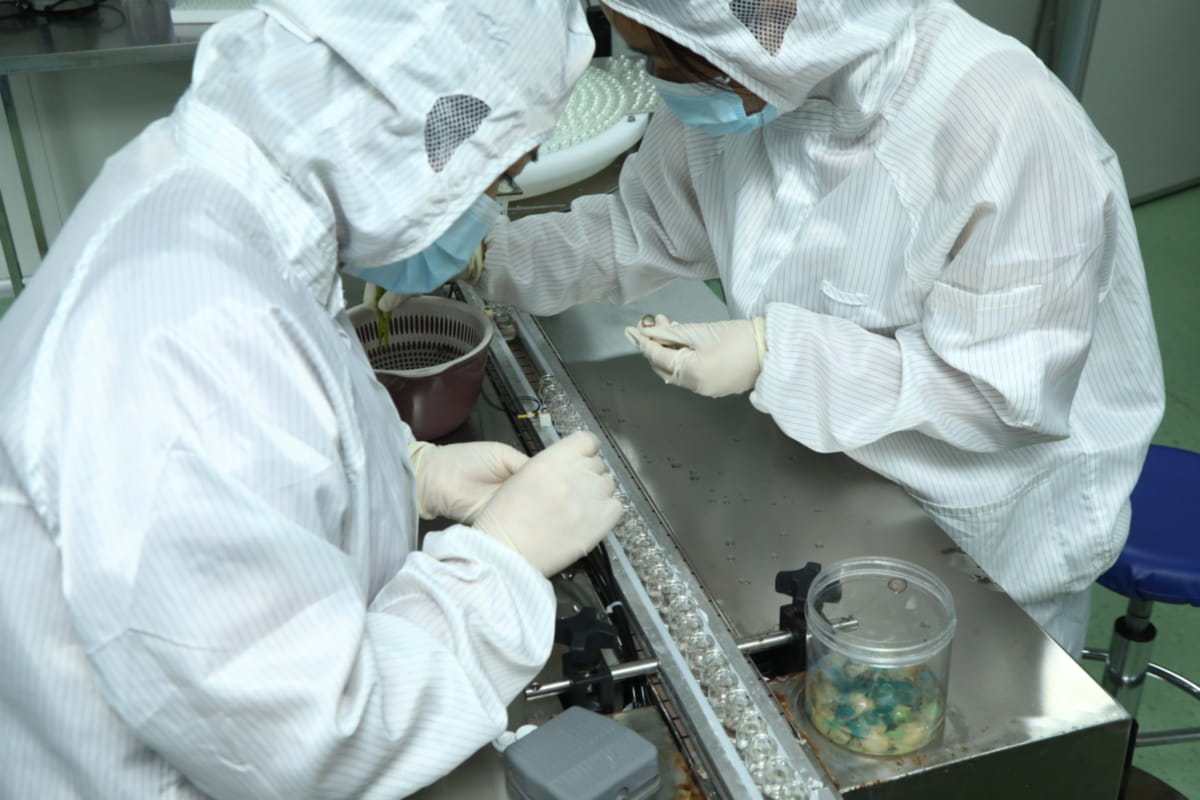
For private label brand operators and medical wholesalers, a product recall or consumer corneal irritation lawsuit can destroy years of brand equity. Velalens Technology controls the end-to-end production pipeline across fully automated Class 100,000 cleanroom environments.
Our proprietary Sandwich Encapsulation Process guarantees that cosmetic pigments—whether organic iron oxides, titanium dioxide, or phthalocyanine blues—are permanently molecularly locked between two inert layers of optical polymer. Zero pigment sits on the anterior or posterior surface. Combined with automated cast molding, our lenses achieve consistent edge geometries that facilitate tear fluid exchange with every blink.
Sub-Micron Edge Finishing
Every lens profile features an ultra-thin, round-beveled edge contour. This minimizes friction between the upper eyelid margin and the lens during the average 15,000 daily blinks of an active wearer.
100% Automated Optical Inspection
High-resolution charge-coupled device (CCD) cameras inspect each hydrated lens for edge tears, micro-bubbles, peripheral color eccentricity, and surface inclusions prior to blister sealing.
Steam Autoclave Sterilization
Post-packaging, blisters undergo high-temperature moist steam sterilization cycles monitored by calibrated biological indicators, providing guaranteed sterility assurance levels (SAL 10⁻⁶).
Full Batch Traceability
Each shipment includes comprehensive Certificates of Analysis (COA), bio-burden reports, and traceable lot numbers printed on primary and secondary cartons to simplify US customs documentation.
Frequently Asked Questions for US & New York Importers
Critical legal, logistical, and production answers compiled by our export trade department to ensure transparent, friction-free transactions for American businesses.
What is the minimum order quantity (MOQ) for custom private label packaging entering New York?
How does Velalens assist US brands with FDA Class II medical device requirements?
What are the typical logistics lead times for door-to-door delivery to New York warehouses?
Can we manufacture natural enhancement lenses for astigmatism (Toric) or presbyopia (Multifocal)?
What pigment materials are utilized, and how is zero-leaching certified?
Scale Your Contact Lens Brand in Greater New York
Partner with an authoritative, factory-direct cosmetic contact lens manufacturer. From initial pattern prototyping and regulatory validation to rapid overseas dispatch, Velalens provides the infrastructure your business needs to lead the North American aesthetic market.