Standardized & Bespoke Formulations for the UK Market
Explore our export-ready contact lens and optical accessory SKUs engineered for immediate deployment across London's retail, optometric, and cosmetic distribution networks.

Custom Prescription Colored Contact Lenses Wholesale 40% Water Content & Full Certifications Direct From ISO13485 Factory
Cast-molded cosmetic corrective lenses engineered with locked hydrogel matrix encapsulation, providing 40% balanced hydration for London city professionals in air-conditioned and digital environments.
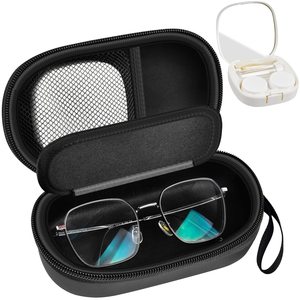
Customized Waterproof Eco-friendly Stress-Resistant Hard Shell Eva Eyeglasses Case Contact Lens Solution Bottle Holder Oxford
Sustainable Oxford-EVA protective enclosure designed to house vial and blister contact lenses alongside maintenance solutions, meeting UK retail preferences for zero-crush travel hygiene accessories.
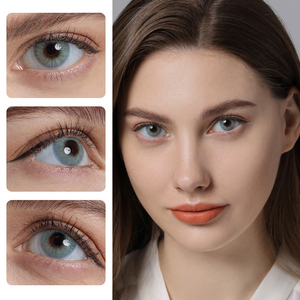
Free Sample MAGISTER Prescription Contact Lenses Myopia Natural Colored Emballage Lentille De Lunettes Contact Lenses with Power
Ultra-thin myopic corrective optics with natural iris gradient layering. Tailor-made for London private label eye care brands seeking subtle iris enhancement without compromising central vision clarity.
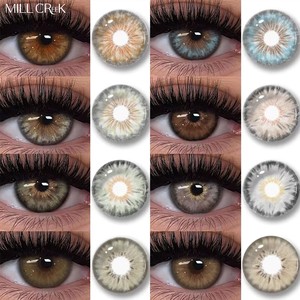
Wholesale Three Tone Colored Contact Lenses Soft Korean Style Eye Lenses Haipurecon Beautiful Big Eyes Makeup Fashion Beauty
High-aesthetic 3-tone iris chromatic transitions favored in London's West End fashion shows, editorial shoots, and high-street boutiques in Covent Garden and Oxford Street.
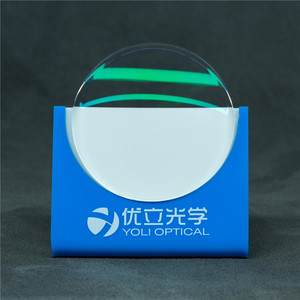
1.49 1.56 1.6 1.67 1.74 Lens China Ophthalmic Lenses Manufacturers (CE)
Complete series of high refractive index ophthalmic lens blanks and finished optical lenses manufactured with anti-scratch and blue-blocking coatings for optical prescription laboratories across Greater London.
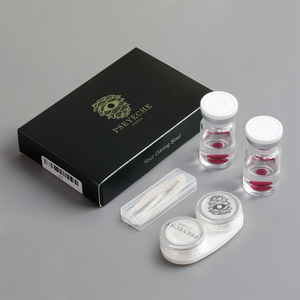
Free Shipping Pseyeche Prosthetic Contact Lenses Red Green Colored Contact Lenses Achromatopsia Eye Lens for Color Blindness
Prosthetic and spectral chromatic filters designed for clinical optometry practices in Moorfields and Harley Street corridors, aiding spectral discrimination for congenital achromatopsia.
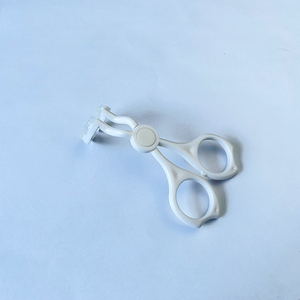
Koncci Chinese Factory New Case for Contact Lenses Contact Lenses Case Eye-opener Wearing Tool A-2
Ergonomic hygienic insertion applicator and sterile silicone-tipped extraction pliers that drastically reduce micro-abrasions and microbial transfer during daily contact lens application.
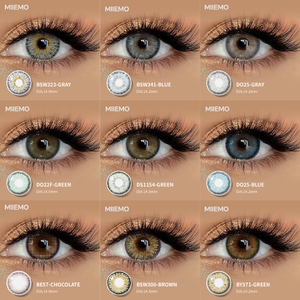
2026 Hot Sale Natural Colored Contact Lenses Soft 3 Tone Eye Contacts Wholesale Dark Eyes Super Natural Brown Grey CE ISO
High-opacity natural brown and charcoal gray tones tailored specifically for dark brown eyes, combining cast-molded edge bevels with high oxygen transmissibility for day-long ocular comfort.
Navigating the London Contact Lens Market: Clinical Standards, Regulatory Regimes & B2B Procurement
The Greater London optical sector represents one of the most sophisticated, densely regulated, and commercially lucrative markets for contact lenses in Europe. Characterized by high consumer disposable income, a world-leading concentration of specialist ophthalmic institutions (including Moorfields Eye Hospital and the private practices radiating along Harley Street and Wimpole Street), and an expansive cosmopolitan population, London dictates global optical retail trends. However, succeeding as an importer, distributor, or brand owner in this territory demands an acute technical understanding of the UK's legal framework post-Brexit, stringent device classification parameters, and high-barrier manufacturing benchmarks.
"In the post-EU transition era, the UK optical marketplace operates under dual oversight: the Medicines and Healthcare products Regulatory Agency (MHRA) governing medical device integrity and the General Optical Council (GOC) enforcing strict professional dispensing statutory requirements under Section 27 of the Opticians Act 1989."
1. Regulatory Architecture: MHRA Registration, UKCA Marking, and GOC Mandates
A critical distinction that foreign manufacturers and London-based sourcing directors must navigate is the statutory status of zero-powered (plano) cosmetic contact lenses. Under UK statutory instruments, all contact lenses—irrespective of whether they incorporate refractive correction for myopia, hyperopia, or astigmatism, or are purely worn for cosmetic aesthetic transformation—are legally designated as Class IIa Medical Devices. Under the Opticians Act 1989 (as amended), the sale of zero-powered cosmetic contact lenses in the UK must take place by or under the direct general supervision of a registered medical practitioner, registered optometrist, or registered dispensing optician.
For international manufacturers exporting into London Gateway Port, the Port of Tilbury, or London Heathrow Cargo Terminal, compliance requires three immutable pillars:
- UKCA & CE Marking Transition: Under prevailing MHRA guidance, CE marks issued by EU Notified Bodies under Directive 93/42/EEC (MDD) or Regulation (EU) 2017/745 (MDR) remain recognized across Great Britain during the transition period; however, enterprise brands are progressively adopting the UKCA (UK Conformity Assessed) designation through designated UK Approved Bodies.
- UK Responsible Person (UKRP): Manufacturers established outside the United Kingdom must legally appoint a UKRP with physical domicile in the UK. The UKRP holds the manufacturer’s technical files, liaises with the MHRA, and oversees vigilance reporting across domestic territory.
- ISO 13485:2016 Quality Management Systems: Cleanroom environmental controls, bioburden limits, validation of ethylene oxide (EtO) or moist-heat steam sterilization cycles, and extractables/leachables toxicology profiles must strictly align with EN ISO 13485 standards.
| Evaluation Parameter | UK / London Clinical Benchmark | Factory Engineering Standards | Import Clearance Status |
|---|---|---|---|
| Device Classification | Class IIa Medical Device (UK MDR 2002) | Full Class IIa Technical Dossier | MHRA Compliant |
| Pigment Safety | Zero direct corneal contact | Sandwich Micro-Encapsulation Technology | 100% Sealed |
| Oxygen Permeability (Dk/t) | > 20 Fatt Units (Hydrogel) / > 80 (Si-Hy) | High-Dk/t HEMA & Silicone Hydrogel Matrix | Corneal Safe |
| Base Curve Precision | 8.50mm – 8.70mm (±0.05mm tolerance) | High-speed automated cast-molding lathes | Optometric Fit |
| Sterilization Assurance | SAL 10-6 sterility validation | Pure steam autoclave with data logging | EN 556-1 Certified |
2. Localized London Application Scenarios
The geographic concentration of specialized industries within London creates distinct sub-sectors for contact lens procurement. Custom manufacturing must mirror the clinical and commercial diversity of these micro-markets:
Harley Street & Ophthalmic Centers
London's private ophthalmic corridor requires bespoke prosthetic lenses to conceal aniridia, corneal scarring, and severe leukoma. Our lathe-cut, pigment-encapsulated prosthetic lenses provide tailored pupil apertures, matching natural contralateral iris coloration while maintaining physiological corneal respiration.
Soho & West End Theatrical Productions
From major cinematic film crews operating out of Pinewood and Shepperton Studios to high-impact live theatrical stages in the West End, special-effects (SFX) and character lenses demand full dioptric accuracy, certified non-toxicity, and optical center alignments that do not impede peripheral field performance.
Covent Garden & Shoreditch D2C Hubs
London’s digital beauty startups and retail concept stores require rapid private label turnaround times. Our modular packaging and low-batch branding enable British cosmetic entrepreneurs to test micro-trends—such as multi-tone gray and amber limbal designs—with immediate speed to market.
3. Emerging Market Trends Across Greater London
Procurement strategies in London must adapt to shifting clinical guidelines, environmental legislation, and lifestyle expectations across the metropolitan demographic:
- Surge in Daily Disposable Modalities: Commuters on the London Underground network face airborne particulate matter and desiccating station environments. As a result, optometric practitioners across Greater London heavily prioritize daily disposable modalities (1-Day wear) over monthly or yearly variants to minimize microbial keratitis and giant papillary conjunctivitis (GPC) risks.
- Silicone Hydrogel Penetration: While traditional poly-HEMA hydrogel dominates price-conscious beauty sectors, the London clinical optometry base actively migrates toward third-generation silicone hydrogel polymers. High oxygen transmissibility (Dk/t > 80) reduces end-of-day limbal hyperemia and corneal edema, making high-oxygen cosmetic lenses a primary margin driver for private practices.
- Subtle Enhancement and Micro-Dot Printing: Heavy, artificial solid-print lenses are rapidly being superseded in Kensington, Chelsea, and Mayfair retail sectors by biomimetic multi-layer prints. Sophisticated sub-micron printing machines apply feathered limbal borders and translucent radial striations that harmonize naturally with diverse base iris colors.
- Sustainability and Packaging Waste Compliance: Under the UK’s extended producer responsibility (EPR) regulations and retail consumer activism, excessive plastic waste is heavily scrutinized. Importers are requesting optimized PP blister packaging, secondary cartons derived from FSC-certified sustainable timber, and bulk-packed eco cases made from resilient Oxford-cloth EVA.
Why Tier-1 Importers Partner with Our Manufacturing Base
Combining automated precision robotics, cleanroom molding technology, and comprehensive regulatory documentation to de-risk your UK supply chain.
Sandwich Encapsulation
Pigment particles are completely embedded inside the hydrophilic matrix using double-cast mold curing. Dyes never contact the corneal epithelium or palpebral conjunctiva, completely eliminating mechanical abrasion and allergic sensitization.
Cast-Molding Geometry
Micro-engineered steel and optical-grade resin mold inserts guarantee edge roundness, minimal center thickness variation (±0.005mm), and uniform sag heights across daily, monthly, and yearly replacement batches.
Auditable Technical Files
Each SKU is supported by biological evaluation dossiers under ISO 10993 (cytotoxicity, sensitization, ocular irritation), physicochemical analysis, accelerated aging stability reports, and complete sterilization validation files.
Rapid London In-Transit
Established freight lanes directly connecting to London Heathrow (LHR) and London Gateway ensure prompt dispatch of sample sets in 3-7 days, with commercial private label production runs dispatched via temperature-controlled air and sea corridors.
4. London B2B Procurement, Supply Chain & Logistics Framework
Sourcing contact lenses from an offshore ISO 13485 manufacturing facility into London requires strict adherence to HM Revenue & Customs (HMRC) tariff classifications, port handling, and good distribution practice (GDP):
- Commodity Code & Tariff Classification: Soft contact lenses are imported under UK Integrated Tariff code HS 9001.30.00 (Contact Lenses). Depending on free-trade status and current rules of origin, importers should ensure documentation matches customs declarations to prevent impoundment at border control posts (BCPs).
- Cold-Chain and Thermal Stability: Contact lenses sealed in buffered saline must be protected from extreme freezing or excessive heat during international air transit into Heathrow or ocean transit to Tilbury. Our validated blister sealing ensures seal integrity under standard pressure deviations experienced in airfreight cargo holds.
- Batch Release & Quarantine Procedures: UK distributors are legally required to maintain lot-level traceability. Every carton dispatched from our cleanrooms features serialized barcode labels indicating Lot Number, Sterilization Date, Expiration Date, Power, Base Curve, and Diameter, allowing rapid recall management if required by the MHRA.
Procurement & Regulatory Inquiries for the UK Market
Direct technical answers addressing the operational, clinical, and logistical queries posed by UK optical purchasers.
Can zero-powered (plano) colored lenses be sold in London without optical prescription?
What technical documentation is provided to support our UKRP and MHRA registration?
What is the minimum order quantity (MOQ) for custom private label packaging in the UK?
How do you guarantee that pigments will not leach into the eye?
What are the standard freight transit times to London logistics hubs?
Can we formulate toric or multifocal colored lenses for the London prescription market?
Establish Your Certified Contact Lens Supply Line to London
Request our comprehensive technical whitepaper, full regulatory compliance dossier, and complete OEM/ODM product catalog. Partner with a qualified factory capable of supporting your brand’s clinical integrity, margin targets, and UK regulatory assurance.