Featured Contact Lens Products & Custom Packaging Solutions
Direct factory supply lines for South Korean distributors, multi-brand optometry franchisers, and boutique e-commerce labels. Tested for ocular biocompatibility and high oxygen performance.
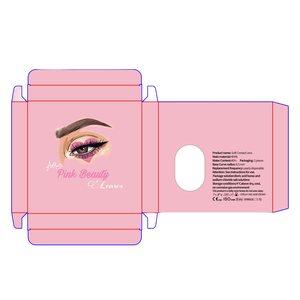
Custom Glossy Lamination Self Erecting Recyclable Packaging Box
Premium four-color CMYK offset printing with foil stamping, optimized for Seoul cosmetic optical retailers and luxury unboxing appeal.
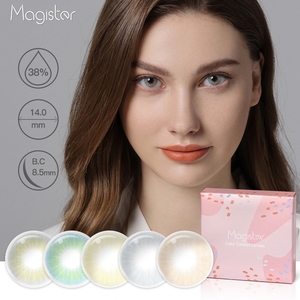
Magister Queen Natural Color Cosmetic Contact Lenses
Ultra-realistic multi-tone dot matrix patterns tailored to East Asian irises, ensuring delicate gradient transitions and high water retention.
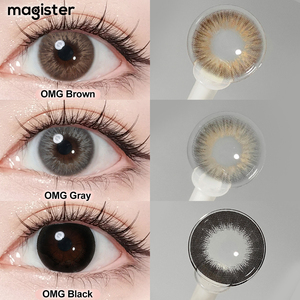
Magister Comfortable Color Eye Contact Lenses
Silicone hydrogel matrix built for sustained 14-hour daily wear, reducing end-of-day dryness in climate-controlled office spaces.
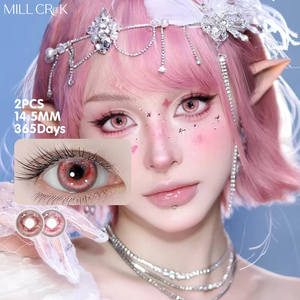
14.2mm Soft Yearly Cosplay Anime Color Contact Lenses
High-opacity pigment micro-encapsulation engineered for theatrical, cosplay, and media creation events across Seoul's youth culture hubs.
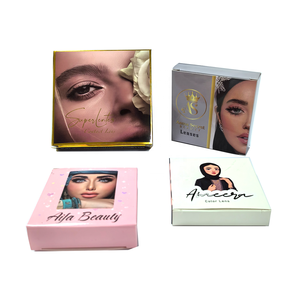
Custom Luxury Colored Contact Lens Retail Packaging Box
Rigid-board structure, matte soft-touch coating, and embossed metallic accents meeting the strict luxury aesthetics of Korean department store lines.
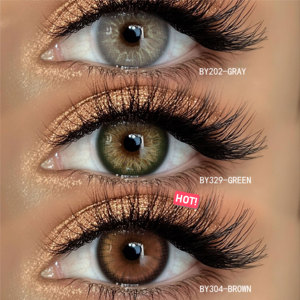
14.0mm Diameter Soft Opaque Eye Transforming Contact Lenses
Compact diameter and narrow optical clearance optimized for subtle enhancement without unnatural enlargement, matching Seoul daily fashion trends.
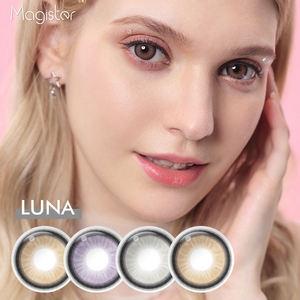
Magister Breathable Daily/Monthly Fashion Contact Lenses
Designed with round-edge profiling and biocompatible HEMA-co-polymer for zero-friction blinking and all-weather visual stability.
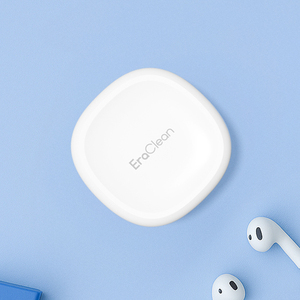
105KHz Ultrasonic Cleaner with UVC Light & Magnetic Charging
Acoustic micro-cavitation stripping protein precipitates without lens abrasions; integrated UVC sterilization for clinical lens preservation.
Navigating Contact Lens OEM & ODM Sourcing for South Korea
An executive briefing for medical device procurement heads, optical chain directors, and Korean beauty brand incubators on clinical compliance, structural design, and market trends.
The Metropolitan Seoul optical market represents one of the most sophisticated, design-forward, and clinically demanding contact lens ecosystems globally. Driven by the convergence of the iconic K-Beauty cosmetic sector and strict regulatory oversight from the Ministry of Food and Drug Safety (MFDS), launching a private label or OEM contact lens line in Seoul requires unprecedented precision. Contact lenses in South Korea are not mere novelty accessories; they are regulated as Class II and Class III medical devices subject to exhaustive verification of microbial safety, oxygen permeability (Dk/t), chromatic leach tests, and dimensional stability.
For international distributors, domestic optical retail chains like those concentrated in Namdaemun, Gangnam, and Hongdae, and export-driven cosmetic groups, partner capability is the critical barrier to market entry. Our manufacturing infrastructure merges high-speed automated cast molding lines with proprietary sandwich pigment-locking technology, providing an indispensable competitive advantage: custom optical products that bridge visual impact with ocular safety.
Sandwich Color Micro-Encapsulation
Traditional printing can expose raw colorants to corneal tissues. Our advanced process binds inorganic pigments between two layers of clear optical polymer, ensuring that pigments never touch the epithelial layer while eliminating physical friction on the eyelid inner palpebral conjunctiva.
Silicone Hydrogel & Oxygen Permeability
Seoul's tech-intensive lifestyle involves extended digital screen exposure in arid, heated, and air-conditioned interiors. We formulate high-transmissibility silicone hydrogel and high-purity HEMA polymers, maintaining surface wettability without protein deposition.
Full MFDS Regulatory Dossier Support
We provide comprehensive technical documentation for Korean importers, including cytotoxicity assay protocols, biocompatibility studies (ISO 10993), chemical characterization reports, accelerated aging validations, and GMP documentation to expedite clearance.
Seoul Market Product Application Scenarios
Translating local consumer demographics and retail footprints into tailored lens specifications.
1. High-Density Franchise Optometry
For retail hubs across Namdaemun and Gangnam, optical chains demand consistent plano and myopic power curves up to -10.00D with blister packaging designed for efficient storage and automated dispensing.
2. K-Beauty Cosmetic Flagships
In shopping districts like Myeongdong and Seongsu-dong, contact lenses are merchandised alongside skincare and color cosmetics. Brands demand compact graphic diameters (13.0mm–13.3mm) with soft choco and olive gradient rims.
3. Digital-First D2C Beauty Brands
E-commerce operators require small-batch pilot programs with custom multi-pack boxes, tailored social influencer sample packs, and short manufacturing cycles to keep pace with dynamic viral beauty trends.
4. Clinical Post-Refractive Correction
Seoul has one of the highest LASIK/SMILE surgical volumes in the world. We produce specialty non-abrasive, high-hydration daily disposables and ultrasonic care devices for sensitive post-operative eyes.
Key Trajectories Reshaping the Korean Contact Lens Sector
Where design precision meets modern ocular ergonomics in South Korea's fast-moving market.
| Trend Domain | Legacy Market Baseline | 2025-2027 Seoul Market Evolution | OEM Engineering Adaptation |
|---|---|---|---|
| Graphic Diameter (G.DIA) | Exaggerated 13.8mm – 14.2mm circle rings | Subtle 12.8mm – 13.4mm "natural iris" enhancers | Micro-fine dot matrix feathering on outer limbal borders |
| Replacement Regimen | Predominantly 6-month & 1-year vial lenses | Daily disposable 10p/30p & 1-month blister packs | Automated blister forming and foil-seal production lines |
| Polymer Substrate | Standard HEMA (38%–42% water) | Third-generation Phosphorylcholine (PC) & Silicone Hydrogel | High biomimetic lubricity preventing corneal surface desiccation |
| Color Layering Depth | Single-color solid borders | Multi-dimensional tri-tone watercolor gradient mapping | High-definition photolithographic plate mastering |
| Lens Hygiene Technology | Manual multipurpose rubbing solutions | Automated ultrasonic micro-cavitation cleaners | Integration of 105kHz piezoelectric transducers with UVC light |
Why Top Global Brands Partner With Us for OEM/ODM
End-to-end integration: from raw polymer formulation to automated sterilization and turnkey packaging.
Cast Molding Geometry Precision
We use diamond-turned nano-molds to guarantee repeatable base curves (8.5mm–8.7mm) and uniform center thicknesses down to 0.06mm. This eliminates edge distortion and maximizes rotational stability for toric designs.
Automated Visual & Power Inspection
Every manufactured unit is inspected via high-speed optical coherence analyzers to identify edge flaking, air inclusions, off-center prints, and diopter deviance before entering the autoclave cycle.
Flexible Low MOQ for Pilot Launching
To mitigate stock risk for agile cosmetics and optometry brands, we support starting minimum order volumes from ~300 pairs per color for in-house designs, paired with custom packaging mockups.
Hangul Compliant Packaging Design
Our packaging specialists craft MFDS-compliant labeling, ensuring Korean character rendering, lot traceability barcodes, standard diopter/expiry notation, and clear consumer safety warnings.
Rapid Supply Chain Connectivity
Direct air routes link our modern manufacturing base with Incheon International Airport (ICN), enabling rapid sample dispatches in 3–7 days and volume shipment replenishment within 4 to 6 weeks.
In-House Design Pattern IP Library
Access over 300 pre-validated lens graphics or collaborate directly with our optical pattern design team to secure exclusive regional production rights for your designated territorial market.
Frequently Asked Questions by Korean Sourcing Teams
Clear, actionable answers addressing compliance, testing, lead times, and private labeling.
We furnish complete Technical Construction Files (TCF), including ISO 13485 audit certificates, ISO 10993 cytotoxicity and ocular irritation testing, leachability analysis, accelerated stability protocols, cleanroom microbial testing, and sterilization validation data required for import declarations.
Yes. Our packaging engineers assist in proofing bilingual (Hangul and English) outer box artwork, blister foil printing, and Instructions for Use (IFU). This includes designated spaces for product licensing numbers, batch identifiers, manufacturing/expiry dates, and manufacturer/importer business details.
For existing tested patterns with custom private-label box packaging, our MOQ starts at roughly 300 pairs per SKU/color. For fully proprietary ODM patterns requiring dedicated printing plates and customized molds, MOQ is assessed per project scope to balance setup costs and pilot profitability.
Yes. We produce standard 38%-55% water content HEMA hydrogel lenses ideal for cost-efficient cosmetic fashion wear, as well as premium silicone hydrogel formulations tailored for long daily wear hours in dry environments, providing high oxygen transmissibility to prevent corneal hypoxia.
Standard design samples ship within 3–7 business days via international air express, arriving in Seoul in 1–2 business days. Mass production cycles typically range between 4 to 6 weeks depending on SKU depth, diopter distribution, and packaging complexity.
We use spectrophotometric color calibration and automated multi-point registration alignment during pad printing. Every batch is benchmarked against physical retention master lenses to maintain exact chromatic uniformity across repeats.
Ready to Build or Scale Your Contact Lens Line in Seoul?
Connect with our OEM technical team today to receive physical lens sample sets, formulation data sheets, and custom packaging templates tailored for the Korean optical market.
Get Catalog