Featured Ophthalmic & Contact Lens Product Series
Explore our specialized production lines engineered for international export, offering strict dimensional tolerances, CE & ISO certifications, and customized private-label blister packaging.
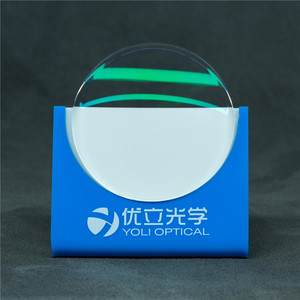
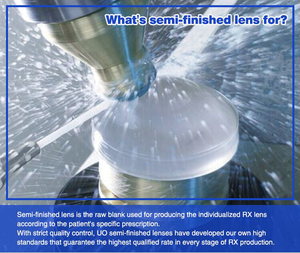
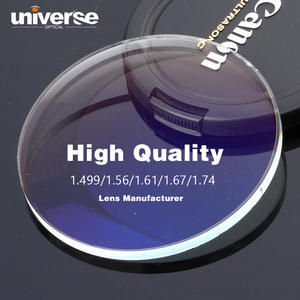
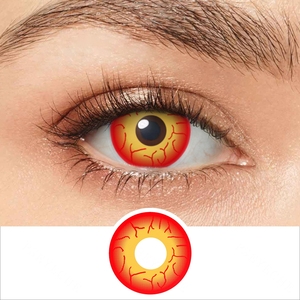
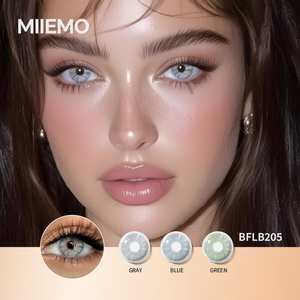
Engineering Contact Lenses for Canadian Regional Environments
Canada represents a distinct contact lens market defined by extreme climate swings, stringent federal medical oversight, bilingual consumer legislation, and high metropolitan optical diversity.
Sub-Zero Winter & Dry Indoor Comfort
Canadian winters across Alberta, Ontario, and Quebec subject contact lens wearers to harsh outdoor winds and arid heated indoor microclimates, where indoor relative humidity often drops below 20%. Under these conditions, standard high-water HEMA hydrogel lenses dehydrate rapidly, drawing tear film moisture away from the corneal epithelium and inducing end-of-day dryness.
Our Canadian-optimized silicone hydrogel formulations integrate internal wetting agents (PVP matrix stabilization) and balanced 38%-45% equilibrium water content with oxygen transmissibility ratings up to 138 Dk/t, maintaining tear film lipid stability in sub-zero metropolitan winters.
Multicultural Cosmetic Demographics
Major Canadian population hubs such as the Greater Toronto Area (GTA), Metro Vancouver, Montreal, and Calgary encompass ethnically diverse populations with widely varying iris pigments, corneal curvature profiles, and cosmetic expectations. While Caucasian wearers often seek subtle chromatic transformations (honey, hazel, sea-green enhancement), East Asian and South Asian consumers prefer limbal enlargement (circle lenses) and defined pupil geometry.
Our OEM catalog incorporates graphic diameters ranging from subtle 13.2mm tints to dramatic 14.2mm outer circle accents, fabricated with varying optical zone apertures (3.8mm to 4.2mm) to ensure unobstructed peripheral vision under low-light Canadian winter conditions.
Canadian Regulatory & Bilingual Compliance
Under the Canadian Food and Drugs Act and the Medical Devices Regulations (SOR/98-282), contact lenses—including zero-power plano cosmetic lenses—are categorized as Class II or Class III medical devices. Importers must operate under a valid Medical Device Establishment Licence (MDEL), and products must hold an active Medical Device Licence (MDL) supported by an audited quality system (MDSAP).
Furthermore, Canada’s Official Languages Act and Consumer Packaging and Labelling Act require fully bilingual packaging (English and French). We provide turn-key packaging art proofing, including standardized dual-language IFUs (Instructions for Use), diopter identification, batch tracking, and Canadian regulatory symbol compliance.
Canadian Optical Market Sourcing Trends (2025–2030)
Industry dynamics across Canada are evolving rapidly as independent optometry practices, D2C beauty portals, and regional optical networks rethink traditional supplier dependencies.
Dominance of Daily Disposable Silicone Hydrogel
Canadian optometrists are actively steering patients toward daily disposable replacement cycles to mitigate the risk of microbial keratitis associated with lens case contamination. Sourcing demands are shifting from traditional hydrogel materials to third-generation silicone hydrogels that balance low modulus (suppleness) with high oxygen flux, satisfying both clinical safety benchmarks and single-use convenience.
Rise of Independent E-Commerce & Indie Beauty Brands
Canadian consumers are bypassing legacy optical retail outlets in favor of subscription-based D2C platforms and beauty-focused private label lines. Indie cosmetic brands in Montreal, Toronto, and Vancouver are incorporating plano cosmetic contact lenses into their core beauty collections, demanding reliable contract manufacturers that offer agile MOQs, rapid prototyping, and automated drop-shipping packaging.
Eco-Friendly Packaging & Cold-Chain Shipping Integrity
With Canada’s aggressive provincial environmental policies on single-use plastics, buyers increasingly mandate recyclable polypropylene (PP) blister trays, reduced-volume saline blister profiles, and FSC-certified paperboard outer cartons. Concurrently, winter transcontinental logistics across CP/CN freight lanes necessitate cold-tested blister foil seals capable of withstanding freeze-thaw cycles down to -35°C without compromising sterility.
Comparative Technical Parameters: Hydrogel vs. Silicone Hydrogel
A detailed parametric comparison designed for Canadian optical buyers, evaluating biological tolerability, material mechanics, and climate adaptation.
| Evaluation Parameter | Standard HEMA Hydrogel Line | Premium Silicone Hydrogel (SiHy) | Cosplay & Theatrical Line | Canadian Clinical Relevance |
|---|---|---|---|---|
| Base Material | Poly-HEMA + NVP matrix | Filcon II 3 / Lotrafilcon B Grade | HEMA Copolymer | Determines surface wettability and deposit resistance |
| Water Content (%) | 38% – 42% | 45% – 55% | 38% | Lower water content retains shape better in dry office heating |
| Oxygen Permeability (Dk/t) | 20 – 28 Dk/t | 110 – 138 Dk/t | 18 – 22 Dk/t | Prevents corneal hypoxia during prolonged daily computer use |
| Base Curve (BC) Options | 8.5 mm / 8.6 mm / 8.7 mm | 8.4 mm / 8.6 mm / 8.8 mm | 8.6 mm | Accommodates multi-ethnic corneal sagittal depths |
| Pigment Safety Method | Full Sandwich Micro-Encapsulation | Dual-Surface Laser Polymer Cast | Sandwich Cast Molding | Mandatory to prevent chemical keratitis & epithelium staining |
| UV Filtering (ISO 18369) | Class II (UV-A >70%, UV-B >95%) | Class I (UV-A >90%, UV-B >99%) | Standard UV-B Absorber | Crucial for high-albedo winter snow reflection across Canada |
| Health Canada Device Class | Class II (Plano) / Class III (Power) | Class II / Class III | Class II | Mandates MDL licensing under CMDR regulations |
Why Canadian B2B Optical Importers Partner With Us
Operating from state-of-the-art automated manufacturing plants in China, we combine clinical-grade precision with high-volume cost efficiency.
Zero-Contact Sandwich Casting
Our proprietary cast molding locks micronized medical-grade pigments inside the core polymer layers. No pigment particles are exposed on either the posterior or anterior lens surface, eliminating friction-induced corneal abrasions and chemical migration.
Class 10,000 Cleanroom Automation
Molding, monomer dosing, UV thermal curing, hydration, and automated optical sorting are conducted inside fully sealed ISO Class 7 (Class 10,000) cleanrooms. Robotic pick-and-place arms maintain strict particulate control and micro-geometric consistency.
100% Automated Optical Inspection (AOI)
Every single manufactured lens passes through high-resolution 360-degree machine vision inspection stations. Systems detect edge micro-tears down to 5 microns, center thickness variances, surface bubbles, and eccentricities before saline blister sealing.
Full Turnkey OEM / Private Label
From initial diopter range mapping and 3-tone iris plate engineering to Health Canada dual-language blister box printing and barcoding, we offer full private-label execution. Sample kits ship in 3–7 business days with transparent regulatory dossiers.
Canadian B2B Procurement & Sourcing FAQ
Clear, authoritative guidance on regulatory compliance, customs clearance, logistics, and private label ordering for Canadian optical enterprises.
What are the specific Health Canada regulatory requirements for importing Chinese-manufactured contact lenses into Canada?
In Canada, all contact lenses (both corrective prescription lenses and plano zero-power cosmetic lenses) are regulated under the Medical Devices Regulations (CMDR, SOR/98-282). Plano cosmetic lenses generally fall under Class II medical devices, while corrective and extended-wear lenses are classified as Class II or Class III. To import and distribute legally, Canadian buyers must hold a valid Medical Device Establishment Licence (MDEL), and the manufacturing facility must hold a valid Medical Device Licence (MDL) issued by Health Canada. Our facility maintains an active, audited Quality Management System certified under the Medical Device Single Audit Program (MDSAP / ISO 13485:2016), which satisfies Health Canada’s strict quality standards. We furnish complete technical dossiers, biocompatibility data (ISO 10993), stability studies, and risk analysis files to ensure your importation process is fully compliant.
How do you handle mandatory English and French bilingual packaging requirements for the Canadian retail market?
Canada’s Official Languages Act and Consumer Packaging and Labelling Regulations mandate that all consumer-facing health product packaging, warnings, diopter specifications, and Instructions for Use (IFU) be presented in both official languages (English and Canadian French) with equal prominence. Our in-house packaging prepress department maintains pre-approved bilingual templates. We work directly with your Canadian compliance counsel to proofread all blister lidding foil, outer cartons, batch lot numbering, expiry date formatting (YYYY-MM-DD), and French contraindication warnings prior to volume cylinder engraving and mass printing.
How are contact lenses protected against extreme sub-zero freezing during Canadian winter maritime and air freight transit?
Winter transit across Canadian logistics routes (such as maritime arrival at Port of Vancouver or Prince Rupert followed by CN/CP rail freight through the Canadian Rockies, or air cargo through Montreal-Trudeau and Toronto Pearson) regularly exposes cargo to ambient temperatures dropping below -30°C. Standard blister seals can crack or experience micro-leaks under rapid thermal contraction. To solve this, our export products utilize high-burst-strength multi-layer laminated aluminum foil heat-sealed to virgin medical polypropylene (PP) blister cups. Our blisters undergo rigorous freeze-thaw chamber cycling tests (-35°C to +40°C over 72 hours) and dye-immersion vacuum leakage tests (ASTM D3078) to guarantee blister integrity, sterility, and isotonic buffer stability upon arrival.
What are the minimum order quantities (MOQ) and production lead times for Canadian private label custom orders?
For catalog in-stock designs packaged under your private brand, our MOQ starts at approximately 300 to 500 pairs per color SKU across standard base curves. For fully custom ODM pattern development (involving custom color separation, printing pad engraving, and unique graphic diameter formulation), the minimum order volume is typically 2,000 to 3,000 pairs across requested diopters to offset mould and tooling setup costs. Standard lead times are 3 to 7 business days for express evaluation sample dispatch, 2 to 3 weeks for custom color strike-off prototypes, and 4 to 6 weeks for mass blister packaging, terminal steam autoclaving, and final Canadian export clearance.
What Incoterms and commercial shipping solutions are supported for delivery to Canadian distribution centers?
We support flexible international commercial trade terms tailored to our Canadian clients' logistical capabilities. For major optical distributors with existing customs brokerages, we provide FOB Shenzhen/Shanghai/Hong Kong or CIF Port of Vancouver / Port of Montreal. For emerging brands or retail chains preferring door-to-door convenience without customs overhead, we arrange comprehensive DDP (Delivered Duty Paid) air freight directly to your fulfillment warehouse in Toronto, Calgary, Montreal, or Vancouver. All Canada Border Services Agency (CBSA) customs declarations, commercial invoices, and HS code classifications (9001.30.00.00 for contact lenses) are accurately compiled by our export trade department.
Build Your Competitive Advantage in the Canadian Optical Market
Whether you are expanding an optometrist retail brand, developing private label daily disposables, or launching an exclusive cosmetic circle lens collection for Canada, our engineering and regulatory teams are ready to support your launch.