Industrial-Grade Cosmetic Lens Solutions for Brazilian Wholesalers & Optical Brands
Brazil represents the largest aesthetic and corrective contact lens market in Latin America. Supplying optical retail chains in São Paulo, specialized aesthetic clinics in Rio de Janeiro, and regional beauty distributors across Minas Gerais and Bahia demands exceptional ocular comfort, specialized chromatic pigments for dark iris covering, and stringent technical compliance. Explore our factory-direct B2B collection engineered specifically to meet Brazilian consumer preferences and import standards.
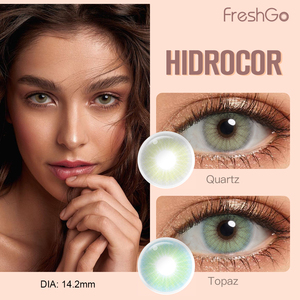
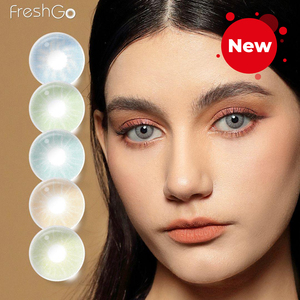
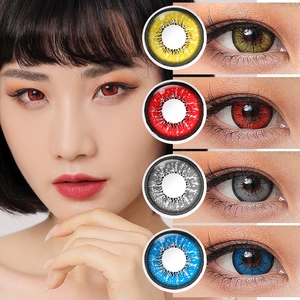
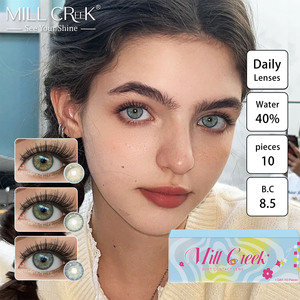
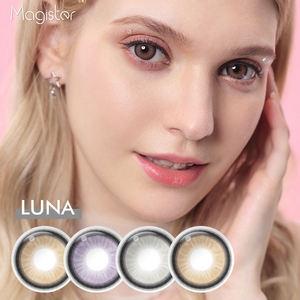

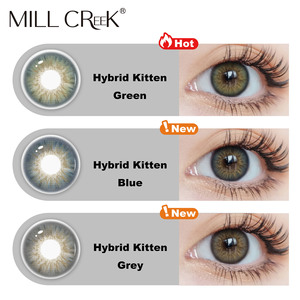
Engineered for Brazilian Lifestyles: Localized Application Scenarios
A successful cosmetic contact lens brand in Brazil must address unique physiological characteristics and culturally distinct wear patterns. From high-humidity equatorial zones to air-conditioned urban microclimates, our lenses are calibrated for specific localized application scenarios.
Carnaval & Festive High-Performance Wear
During festive periods like the world-renowned Carnaval in Rio, Salvador, and Recife, consumers wear cosmetic lenses continuously for 12 to 18 hours in high-temperature, crowded outdoor environments. Our lenses utilize hydrophilic surface modifications with low lipid-deposit affinity, preventing blurriness, dryness, and protein build-up caused by theatrical makeup, heavy perspiration, and atmospheric dust.
Facial Harmonization & Aesthetic Medicine
Brazil ranks second globally in aesthetic and cosmetic procedures. Dermatologists and aesthetic clinics in São Paulo and Curitiba frequently recommend colored contact lenses as part of non-surgical Harmonização Facial (facial harmonization). Natural shades such as Mel (Honey), Ocre (Ochre), and Grafite (Graphite) provide subtle pupil contrast that balances contoured facial structures under direct photographic and LED ring lighting.
Dark Iris High-Melanin Transformation
Over 78% of the Brazilian population possesses dark brown or deep hazel irises with rich melanin densities. Conventional translucent European-designed lenses lose opacity on darker eyes, yielding muddy or unnatural hues. Our proprietary Micro-Opaque Dot Distribution (MODD) technology ensures crisp, genuine chromatic transfer (e.g., transforming deep brown eyes to crystalline topaz or luminous emerald) without a bulky, pixelated appearance.
Digital Content Creators & High-Definition Media
With Brazil being one of the world's most active markets on Instagram, TikTok, and YouTube, influencers require lenses that look seamless under 4K video resolution and ultra-close macro photography. Our feather-edged graphic borders avoid artificial stark rings, producing an authentic iris pattern that blends naturally with the sclera under studio lighting and daylight conditions.
Bridal & High-End Social Gala Market
In major metropolitan centers such as Belo Horizonte, Porto Alegre, and Brasília, the bridal and luxury social event industry drives strong demand for single-use daily and 30-day replacement cosmetic lenses. Brides and attendees demand non-irritating, hypoallergenic lenses that maintain corneal hydration through emotional moments and flash photography without red-eye flare or lens displacement.
Brazilian Contact Lens Industry: Macro Trends & Technological Shifts
Understanding shifting consumer purchasing patterns, demographic demands, and technological migration is vital for optical brands entering or scaling within Brazil.
The Paradigm Shift: From Traditional Annuals to Frequent Replacement Modalities
Historically, the Brazilian cosmetic contact lens market was dominated by annual wear (yearly replacement) vials. However, recent data from the Brazilian Council of Ophthalmology (CBO) indicates a decisive transition toward monthly, bi-weekly, and daily disposable modalities. Modern Brazilian consumers prioritize ocular hygiene, reduced microbial keratitis risk, and the freedom to alternate between eye colors to match apparel or beauty moods. Wholesalers shifting their inventory matrices toward 2-lens and 10-lens blister configurations are seeing a 34% faster stock turnaround compared to traditional 1-lens glass vial programs.
Overcoming Tropical Climate Tear-Film Dehydration
Operating in Brazil requires addressing equatorial and tropical climates where average ambient temperatures frequently exceed 30°C with variable humidity. In high-heat coastal or arid inland zones, contact lenses with excessively high water content (e.g., above 58%) can ironically accelerate dry eye symptoms by drawing moisture from the precorneal tear film to maintain their own polymer hydration. Our specialized formulations balance water content between 38% and 42% HEMA-NVP copolymers, offering an optimal equilibrium: minimal on-eye dehydration, superior mechanical dimensional stability, and long-lasting all-day comfort under intense sunlight and air-conditioned office environments.
Chromatic Trends: Natural Limbal Transitions ("Efeito Natural")
While bright, dramatic colors once drove impulse purchases, the current Brazilian market is overwhelmingly led by subtle, realistic chromatic transitions known locally as Efeito Natural. Brazilian end-users strongly favor lenses inspired by natural Latin and Mediterranean eye shades: subtle Hazel (Mel), Crystal Gray (Grafite), Warm Amber (Ocre), and Natural Green (Verde Esmeralda). Designs lacking an aggressive black outer limbal ring (similar to the classic Hidrocor structure) allow the wearer's natural eye dimension to integrate organically, creating an undetectable enhancement that appeals to both women and men in professional settings.
| Parameter | Hydrogel (Poly-HEMA) Standard | Advanced Moisture Matrix (HEMA-NVP) | Silicone Hydrogel (SiHy) Premium |
|---|---|---|---|
| Water Content | 38% – 40% | 40% – 43% | 45% – 52% |
| Oxygen Transmissibility (Dk/t) | 18 – 24 × 10-9 | 28 – 35 × 10-9 | 85 – 110 × 10-9 |
| Base Curve (BC) / DIA | 8.6 mm / 14.0 – 14.2 mm | 8.6 mm / 14.2 mm | 8.6 – 8.7 mm / 14.2 mm |
| Pigment Encapsulation | Double-Coated Cast Molding | Sandwich Molecular Locking | Tri-Layer Nano-Matrix Insertion |
| Ideal Brazil Application | High-turnover cosmetic retail, fashion e-commerce | All-day tropical wear, daily disposable boxes | Optical chains, refractive corrective cosmetic |
Velalens Manufacturing Advantages: Engineered for Global B2B Brands
As an authoritative contact lens manufacturer, Velalens provides end-to-end industrial solutions for Brazilian distributors, retail chains, and private-label startups seeking uncompromising safety, high-precision reproducibility, and scalable volume production.
Patented Sandwich Pigment Encasement
Ocular safety is non-negotiable. Our production utilizes micro-sandwich encapsulation technology where FDA-approved inorganic cosmetic colorants are permanently sealed between two ultra-thin layers of optical-grade clear polymer. Pigment particles never contact corneal tissue or the palpebral conjunctiva, completely preventing pigment leaching, abrasive epithelial irritation, and allergic conjunctivitis.
Sub-Micron Automated Cast-Molding
Using ultra-precision CNC-lathed molds and automated multi-cavity injection cast-molding systems, we achieve edge-profile smoothness that eliminates lid-friction sensation during blinking. Every lens batch exhibits exact geometric stability, consistent base curve uniformity (8.6mm standard), and concentric pupil aperture alignment.
100% Optoelectronic Visual Inspection
Unlike factories relying on batch spot-checking, our facility implements automated dual-camera optical inspection systems for every single manufactured lens. Molds, edge perimeters, chromatic dot alignments, and foreign particulate checks are analyzed algorithmically. Defective units are ejected automatically before hydration and packaging.
Full Regulatory Dossier Support
We supply Brazilian importers with comprehensive technical files (Dossiê Técnico) required for ANVISA Class II medical device registration. Documentation includes ISO 13485:2016 quality certificates, CE MDR compliance records, biocompatibility test results (ISO 10993 cytotoxicity, sensitization, ocular irritation), and accelerated 5-year shelf-life stability data.
Bespoke OEM/ODM Packaging & Portuguese Localization
Launch your brand with turnkey packaging solutions. From foil blister sealing to custom paperboard boxes, outer sleeves, and user instructions (Instruções de Uso) translated and formatted according to Brazilian ABNT/INMETRO labeling standards, we deliver market-ready inventory optimized for immediate customs release and shelf display.
Frequently Asked Questions: Sourcing & Importing into Brazil
Direct, authoritative answers addressing customs compliance, regulatory verification, MOQs, and logistics for Brazilian procurement professionals.
What is the regulatory classification for cosmetic contact lenses under ANVISA?
In Brazil, the National Health Surveillance Agency (ANVISA) classifies all contact lenses—including zero-power (plano) cosmetic colored lenses—as Class II Medical Devices (Dispositivos Médicos). Importers must hold an Operating License (AFE - Autorização de Funcionamento de Empresa) and register the products via the Notificação pathway under RDC 751/2022. As an experienced manufacturer, Velalens furnishes the complete Technical Dossier, ISO 13485 certification, and stability reports required for swift approval.
What is the Minimum Order Quantity (MOQ) for custom private label brands?
For existing factory-standard colors packed under your private brand box and blister labeling, our starting MOQ is flexible, typically beginning at 300 to 500 pairs per color shade with mixed corrective diopters (from 0.00 to -8.00D). For proprietary, newly formulated custom chromatic patterns or bespoke graphic diameter development, initial MOQs generally start around 2,000 pairs to accommodate custom pad-printing plate engraving and cleanroom line setup.
How do your lenses maintain stability under Brazil's tropical transport conditions?
Maritime or air cargo arriving at the Port of Santos or Guarulhos Airport can experience prolonged thermal exposure and humidity spikes. Velalens uses multi-laminated medical-grade medical Tyvek/aluminum blister foil seals and automated ultrasonic temperature-controlled welding. Our buffered saline solution incorporates stabilized osmolarity buffers that prevent pH drift and preserve polymer elasticity up to 45°C ambient warehouse storage conditions across a certified 5-year shelf life.
Can we request product samples for fitment and opacity evaluation on Brazilian eyes?
Yes. We strongly encourage sample testing prior to commercial commitments. Stock color demonstration kits can be dispatched via international priority couriers (DHL, FedEx) within 3 to 5 business days. Sourcing teams can test our color opacity across Fitzpatrick phototypes III through VI to assess natural pupil integration and edge comfort directly with local optometrists and aesthetic professionals.
What international trade terms and payment mechanisms do you support?
We work extensively with standard Incoterms including FOB (Shenzhen/Shanghai/Hong Kong), CIF (Santos/Guarulhos), and DDP via specialized medical freight forwarders. Payment structures include secure Wire Transfer (T/T), Irrevocable Letters of Credit (L/C at sight) for verified large-scale commercial contracts, and phased milestone payments for custom tooling and private-label production schedules.
Are your lenses compatible with multi-purpose lens care solutions sold in Brazilian pharmacies?
Absolutely. Our non-ionic hydrogel and silicone-hydrogel materials are chemically inert and fully compatible with all major contact lens multipurpose disinfecting solutions (MPDS) and hydrogen peroxide systems distributed in Brazilian pharmacies (Drogasil, Raia, DPSP), such as Opti-Free, Renu, and BioTrue, ensuring zero polymer clouding or dimensional warping.