Featured Prescription & Cosmetic Optical Series for Nagoya Port Direct Import
Engineered in ISO 13485 & GMP-certified cleanrooms. Every lens utilizes proprietary Sandwich Pigment Encapsulation to meet Japan PMDA microbiological safety standards.
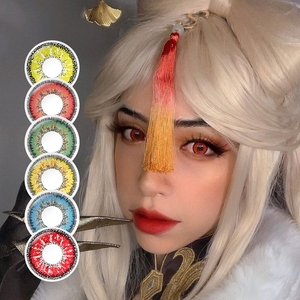
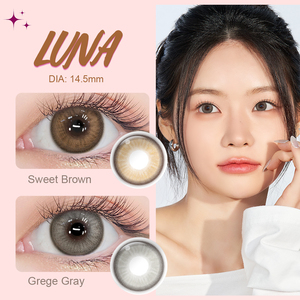
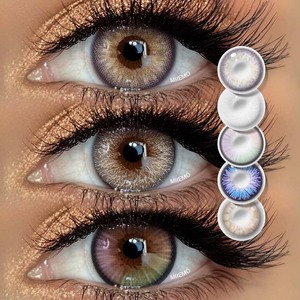
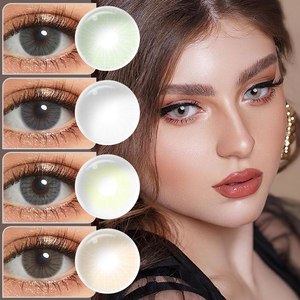
Localized Application Scenarios in Greater Nagoya and Aichi Prefecture
Nagoya serves as the economic hub of the Tokai region, bridging unique optical consumer demands from subcultural epicenters in Osu to elite retail corridors in Sakae.
World Cosplay Summit (WCS) & Osu Pop-Culture
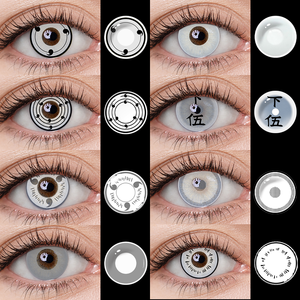
Nagoya hosts the globally renowned World Cosplay Summit annual championship. This brings concentrated surges in demand for high-opacity anime contact lenses, such as Sharingan patterns, vivid dolly eyes, and extreme sclera graphics.
- High-pigment opacity masks naturally dark Asian irises
- Available in zero-power (plano) and precise diopter corrections
- Stable toric options for astigmatic cosplay participants
Meieki & Sakae Corporate 'Bare-Eye' Aesthetics
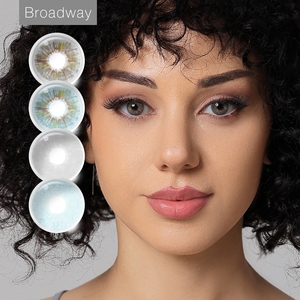
Young working professionals and corporate staff in the Meieki office towers and Sakae shopping districts favor the "Hadashi-gan" (naked-eye enhanced) style—subtle, small graphic-diameter (G.DIA 13.0–13.4mm) circle lenses.
- Feathered micro-dot printing eliminates unnatural outer rings
- HEMA hydrogel with 38%–42% water prevents end-of-day dryness
- Complies with discreet office workplace dress codes
Direct Port Logistics & Tokai Drugstore Chains
Leveraging direct sea freight via Port of Nagoya (Meiko) and air cargo through Chubu Centrair International Airport (NGO), distributors supply drugstore networks like Sugi Pharmacy and Don Quijote regional outlets.
- Custom secondary packaging matching Japanese labeling standards
- Complete pallet-level lot tracking from autoclave to container
- Bulk SKU consolidation optimizing local clearance fees
Engineering & Manufacturing Parameter Matrix
Technical specifications available for OEM private-label production and Nagoya import distribution agreements.
| Optical Parameter | Standard Specification Range | Clinical Significance for Japanese Wearers |
|---|---|---|
| Base Curve (BC) | 8.50 mm – 8.70 mm (±0.02 mm tolerance) | Conforms accurately to the corneal curvature profiles common across East Asian populations. |
| Overall Diameter (DIA) | 14.0 mm – 14.5 mm | Ensures comfortable centration and adequate coverage of corneal margin without limbal impingement. |
| Graphic Diameter (G.DIA) | 12.8 mm – 13.8 mm (Natural) / Up to 14.2 mm (Dolly) | Allows fine gradation between natural pupil enhancement and exaggerated theatrical circle effects. |
| Hydration / Water Content | 38% – 42% (Extended daily) / 55% (Silicone hydrogel) | Low-water hydrogel minimizes tear-film depletion in air-conditioned office and transit settings. |
| Encapsulation Method | Patented Double-Layer Semi-Cast Sandwich Polymerization | Zero pigment exposure: ensures dyes do not contact ocular surfaces or strip corneal epithelial cells. |
| Diopter Range (Sphere) | Plano (0.00) to -8.00D (-0.25D step ≤ -6.00D; -0.50D step above) | Broad clinical diopter progression correcting moderate-to-severe myopia prevalent in urban Japan. |
Why Japanese Importers Partner with Our Manufacturing Facility
Integrating automated mold casting, optical physics, and complete regulatory traceability to supply reputable brands across East Asia.
Medical Device Cleanroom Standards & Quality Control
Our facility operates Class 100,000 cleanroom workshops equipped with computerized high-precision cast molding technology. Rather than screen-printing directly on the hydrogel, our sandwich method cures the micro-pigment layer securely between two clear layers of polymer.
Every lot undergoes 100% video inspection for edge burrs, color concentricity, and optical aberrations under digital magnification before undergoing terminal steam autoclaving at 121°C for 30 minutes.
Dossier Preparation for Japan PMDA Registration
In Japan, cosmetic colored contact lenses are classified strictly as Class III Medical Devices under the Pharmaceuticals and Medical Devices Act (PMD Act). Distribution requires approval from the Ministry of Health, Labour and Welfare (MHLW).
We supply foreign manufacturers and Japanese Marketing Authorization Holders (MAH / 製造販売業者) with full technical dossiers: ISO 13485 audits, biological evaluation reports (ISO 10993 cytotoxicity, irritation, and systemic toxicity), extractables test data, and dye leachability testing.
Market Trends: Shifting Dynamics in the Tokai Contact Lens Sector
The Nagoya optical retail environment is experiencing noticeable shifts driven by regulatory compliance and conscious consumer buying habits:
1. Daily Disposable Dominance
Hygiene concerns and streamlined lifestyle routines have made 1-day blister packs the fastest growing segment, commanding over 65% of colored lens sales across Aichi drugstore counters.
2. Toric & Multifocal Colors
As the first generation of color lens wearers matures, there is surging unmet demand in Nagoya's optical clinics for presbyopia-correcting (multifocal) and astigmatic (toric) cosmetic lenses.
3. High-Dk Silicone Hydrogel Transition
High oxygen transmissibility (Dk/t > 80) colored lenses are transitioning from clinical niche to premium retail lines, preventing corneal neovascularization during long office days.
Frequently Asked Questions for Nagoya B2B Lens Sourcing
Crucial answers addressing PMDA compliance, minimum batch quantities, customs clearance, and logistics to Aichi.