Bridging Chinese Precision Ophthalmology with the Indonesian Consumer Landscape
An exhaustive commercial and regulatory roadmap designed for Indonesian optical retailers, beauty conglomerates, and medical device importers (PAK License holders) sourcing natural enhancement cosmetic lenses directly from high-volume automated manufacturing facilities in China.
The Southeast Asian cosmetic ophthalmology sector is witnessing exponential growth, led predominantly by the Republic of Indonesia. With an urban population exceeding 150 million and a median age below 31, consumer demand across tier-1 metropolises such as Greater Jakarta (Jabodetabek), Surabaya, Bandung, and Medan has transitioned from dramatic, high-contrast novelty lenses toward hyper-realistic, natural enhancement colored contact lenses. In this sophisticated market climate, Chinese contact lens manufacturers and exporters represent an irreplaceable link in the global supply chain, delivering ISO 13485-certified medical manufacturing, competitive unit economics, scalable cast molding production, and end-to-end technical documentation essential for Indonesian regulatory clearance.
Operating under the brand portfolio of Velalens Technology Co., Ltd. and its affiliated precision manufacturing hubs in China, our export infrastructure is engineered to solve the persistent operational challenges faced by Indonesian beauty brands and optical distributors. These pain points include severe climatic dehydration triggered by tropical ambient heat and indoor HVAC transitions, stringent BPOM (Badan Pengawas Obat dan Makanan) and Ministry of Health (Kemenkes RI) registration requirements, ocular health demands for zero-pigment surface contact, and the logistical agility required for multi-channel sales across Tokopedia, Shopee, and offline optical retail chains.
Recommended Natural Enhancement Lenses & Optical Formats for Indonesian Sourcing
Engineered with micro-dot matrix printing, dark-iris adaptation profiles, and medical-grade hydrogel polymers optimized for the humid Indonesian archipelago.
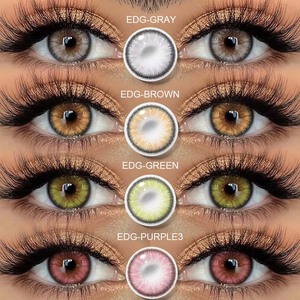
Free Lenses Wholesale Color Contact Lenses Lentillas Natural Lentes
Ultra-thin tri-tone hazel and soft honey blends formulated specifically to overlay dark brown Southeast Asian irises seamlessly under daylight conditions.
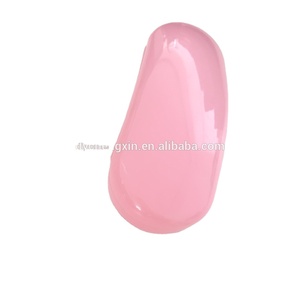
Custom PP Contact Lens Cases & Travel Care Packaging Set
Medical PP eco-grade hygienic applicator tools, leak-proof screw barrels, and mirror cases customized with Indonesian private label cosmetic brand branding.
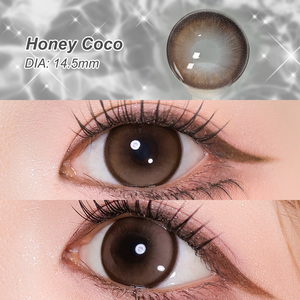
Magister Natural Soft HEMA 6-Month Replacement Cosmetic Lenses
High tear-film retention structure engineered for semi-annual wear. Provides optimal affordability for tier-2 Indonesian cities without compromising corneoconjunctival health.
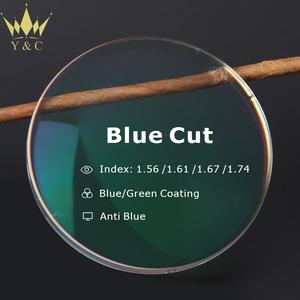
Medical-Grade Clear Blue Light Blocking & Corrective Optical Lenses
Accompanying ophthalmic corrective range extending up to -8.00D. High UV400 and HEV blue cut performance suited for clinical optometry dispensing chains.
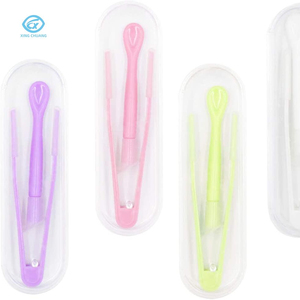
Compact Travel Inserter Applicator Kit & Hygiene Insertion Wand Set
Silicone-tipped insertion forceps and suction wands preventing unwashed fingernail contamination, crucial for long fingernail wearers and hijab styling routines.
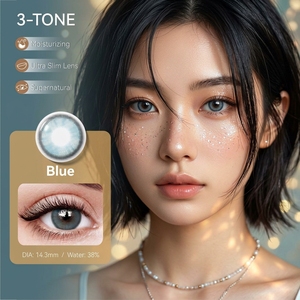
Miiemo Natural Asian Iris Depth Soft Contact Lenses (ISO 13485)
Graduated limbal border lens simulating deep iris crypts. Packed in medical grade blister saline solutions maintaining 5-year sterile shelf life under Indonesian warehouse conditions.
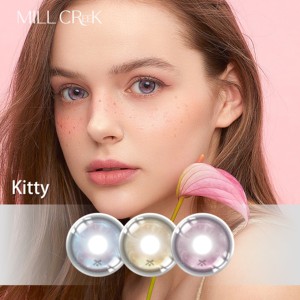
14.5mm Natural Blend Doll-Eye Soft Lenses (40% Water Content)
Balanced 40% water hydrogel preventing moisture extraction from the ocular surface in air-conditioned Jakarta workspaces, featuring gentle iris enlarging circumference.
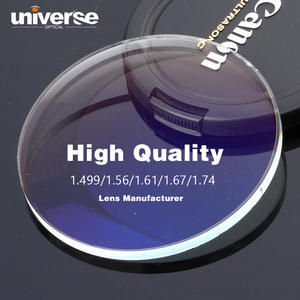
China Finished & Semi-Finished Resin Optical Stock Lenses (1.49 - 1.74)
Broad index ophthalmic blanks offering comprehensive index ranges for Indonesian retail chains combining prescription spectacle dispensing with cosmetic contact lens sales.
Tailoring Natural Enhancement Lenses to Indonesian Socio-Cultural Scenarios
Consumer wear habits in Indonesia are governed by religious practices, bridal makeup traditions, rapid cosmetic digital adoption, and tropical atmospheric parameters.
Hijab Fashion & "No-Makeup" Clean Beauty Trends
Over 75% of Indonesian female consumers identify with modern modest fashion (Hijabers). In this visual aesthetic, the facial plane is framed entirely by the fabric, concentrating viewer focus heavily on the eyes.
Indonesian working professionals and students demand natural enhancement shades—such as warm chocolate, deep olive-gray, and amber brown—that brighten the gaze without looking visibly synthetic or violating workplace modesty standards.
- Subtle graphic diameters (G.DIA 13.0mm to 13.4mm) creating an undetectable edge.
- Feathered outer limbal rings avoiding harsh anime doll delineations.
- High compatibility with wudhu cleansing routines before daily prayer sessions.
Indonesian Bridal (Rias Pengantin) & High-Glamour Events
The traditional Indonesian wedding industry (encompassing Javanese Paes Ageng, Sundanese Siger, Minang, and modern international concepts) requires lenses that withstand 12+ continuous hours under high-powered stage lights and video capture.
Makeup artists (MUAs) are key B2B micro-distributors across Java and Sumatra, demanding vivid yet realistically blended lenses that enhance eye contrast against elaborate headpieces without causing hyperemic scleral redness during photography.
- Multi-tone pigment matrices providing three-dimensional refractive highlights.
- Superior edge profile preventing conjunctival pinching during prolonged wear.
- Tear-film stabilizing monomer technology counteracting hot studio stage lighting.
Tropical High-Humidity & Air-Conditioned Microclimates
Indonesia's tropical outdoor climate features ambient temperatures averaging 28°C-34°C with humidity levels often exceeding 85%, contrasted sharply against freezing, desiccating indoor office air-conditioning.
High-water-content hydrogel lenses (e.g., >58%) act like sponges, extracting essential moisture from the wearer's precorneal tear film to maintain hydration, causing acute dry eye discomfort for Indonesian office workers.
- Optimized 38% to 42% HEMA formulation designed for low evaporation kinetics.
- Non-ionic surface treatment preventing lipid and protein deposit crystallization.
- Silicone Hydrogel options offering high oxygen transmissibility (Dk/t >80) for 10-hour days.
Macro Trends Transforming the Contact Lens Industry in Indonesia (2025–2030)
A rigorous examination of shifting regulatory strictures, consumer purchasing channels, and evolving optical demographics across the archipelago.
| Strategic Trend Vector | Underlying Market Driver in Indonesia | Direct Operational Impact on Importers & Brands |
|---|---|---|
| Kemenkes Medicalization & AKL Enforcement | Transition from cosmetic open-market classification to strict Class II/III medical device enforcement by the Indonesian Ministry of Health. | Importers require suppliers with audited ISO 13485 cleanrooms, valid Free Sale Certificates (CFS) authenticated by Chinese foreign affairs and Indonesian embassies, and full Technical dossiers. |
| Shift from Annual Vials to Daily/Monthly Blisters | Rising hygiene consciousness among Gen Z consumers, paired with e-commerce lifestyle guidance warning against annual microbial contamination. | Production planning must pivot toward automated PP blister packaging lines, 10-lens or 30-lens retail boxes, and daily disposable hydrogels offering sterile unit hygiene. |
| TikTok Shop & Live Commerce Dominance | Indonesian consumers rely heavily on live-stream video demonstrations on TikTok and Shopee Live to assess realistic lens appearance on Asian brown eyes. | B2B brands require Chinese manufacturing partners capable of rapid color prototyping, micro-influencer sample batching, and providing high-fidelity raw macro footage. |
| Integration of Astigmatic (Toric) Colored Formulas | High prevalence of uncorrected corneal astigmatism among urban Indonesian youth who historically settled for blurry cosmetic lenses or clear toric lenses. | First-mover advantage belongs to brands deploying customized prism-ballast or back-surface toric colored lines in natural shades, blending acuity with aesthetic appeal. |
As the Indonesian archipelago continues its rapid economic formalization, the illicit grey-market importation of non-compliant lenses via cross-border parcel channels is facing systematic customs crackdowns in Tanjung Priok (Jakarta) and Tanjung Perak (Surabaya). Indonesian optical entrepreneurs must partner directly with institutional manufacturers capable of providing end-to-end trace documentation, lot sterility testing, and stable FOB/CIF sea-air logistics.
Frequently Asked Questions by Indonesian Optical Importers & Distributors
Clear, direct answers regarding customs clearance, BPOM/Kemenkes compliance, production lead times, and private label parameter minimums.
What documentation is provided to support our Kemenkes AKL registration?
We provide a comprehensive technical file dossier structured to ASEAN Medical Device Directive (AMDD) standards. This includes our ISO 13485:2016 quality management certificate, Certificate of Free Sale (CFS) legalized by the Ministry of Foreign Affairs and Indonesian Embassy in Beijing, full biocompatibility reports (ISO 10993 cytotoxicity, ocular irritation, systemic toxicity), accelerated 5-year stability test data, and localized Bahasa Indonesia artwork templates.
How do you guarantee that colors look natural on dark Indonesian irises?
Most Caucasian-oriented cosmetic lenses appear excessively neon, chalky, or bug-eyed on dark brown eyes. Our optical engineers deploy high-density, multi-layer dot-matrix matrices with translucent inner pupillary blending zones. By utilizing micro-spacing in the pigment distribution, the natural dark brown background of the Indonesian iris filters through, creating a hyper-realistic, illuminated shade rather than an artificial flat graphic overlay.
What is the Minimum Order Quantity (MOQ) for custom private label brands?
For existing catalog shades packaged under your own brand's private label packaging, our entry trial volume begins at approximately 300 pairs per color across standard powers. For completely custom ODM pattern creation (bespoke print matrix and custom base curves), setup begins at 2,000 to 5,000 pairs depending on the chosen replacement cycle (Daily blisters vs. Monthly/Yearly sterile vials).
Can you accommodate specific diopter (prescription) power splits?
Yes. In Indonesia, the majority of cosmetic lens transactions online are plano (0.00D), but retail optical chains require deep myopic ranges. We offer power progressions from -0.50D to -6.00D (in 0.25D steps) and -6.50D to -8.00D (in 0.50D steps). We assist you in calculating optimized production power ratios based on nationwide statistical vision defect models in Java and Sumatra.
What are the door-to-door or port-to-port delivery timelines to Jakarta?
Standard production lead times for private label blister orders are typically 30 to 45 business days post artwork sign-off. Shipping via direct air freight from Shanghai or Guangzhou to Soekarno-Hatta (CGK) requires 3–5 days. Consolidated sea freight to Tanjung Priok Port (Jakarta) requires 12–16 days transit time. We coordinate seamlessly with your appointed Indonesian freight forwarder (Jasa Import Borongan or Resmi).
How does your factory ensure the pigment never leaks or touches the eye?
We utilize clinical-grade Sandwich Encapsulation Technology (Cast Molding). Rather than pad-printing dyes directly onto the formed lens surface, the FDA-approved cosmetic iron oxide and mineral colorants are injected and polymerically embedded within the core layer of the hydrogel matrix. The front and back surfaces remain 100% virgin polymer, completely isolating dyes from the corneal epithelial cells and tarsal conjunctiva.
Velalens Manufacturing Infrastructure: Precision, Safety, and Global Scalability
Operating state-of-the-art cleanroom manufacturing hubs in China equipped with high-precision optical lathes, automated cast molding, and robotic inspection lines.
Class 100,000 Cleanroom Cast Molding
Our production facilities utilize automated double-sided cast molding technology within environmental enclosures conforming to Class 100,000 (ISO Class 8) cleanroom parameters. Ambient humidity, particulate matter, and air exchanges are monitored continuously to prevent microbial bioburden contamination prior to terminal autoclave sterilization.
This automated approach yields standard deviation base-curve tolerances within ±0.02mm, ensuring repeatable, predictable corneal fitting across every production batch shipped to Indonesian regional warehouses.
100% Digital Vision Defect Inspection
Every single optical unit undergoes high-speed automated machine-vision inspection alongside secondary human optical microscopy. Digital cameras capture multi-angle images of the lens in its hydrated state to detect edge tears, bubble inclusions, central optical zone eccentricity, and pigment registration errors.
Lenses with print misalignments greater than 0.05mm or imperfect edge bevels are automatically ejected from the packaging line, maintaining zero-defect standards for your brand's reputation.
Global Export Documentation Desk
We maintain an internal regulatory compliance team dedicated to international clearance. Having successfully supported distributor registrations across the Americas, Europe, the Middle East, and Southeast Asia, we understand how to prepare documentation that satisfies Indonesian surveyors (Sucofindo) and health inspectors.
From legalized Letters of Authorization (LoA) to certified ingredient breakdown sheets and GMP inspection audit trails, we remove bureaucratic roadblocks to your commercial launch.
Launch or Expand Your Colored Contact Lens Brand in Indonesia
Access our comprehensive B2B exporter product index, detailed technical specifications, pricing matrices, and free qualification sample kits tailored for dark iris evaluation.