Rotational Stability
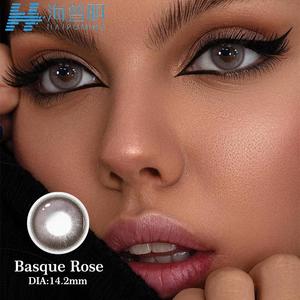
Haipurecon Fixed-Axis Highlight Color Contact Lenses Non-Prescription
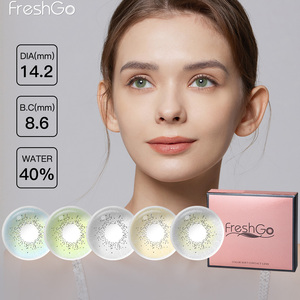
DIA: 14.2mm
BC: 8.6mm
Plano Only
Engineered in ISO 13485:2016 and CE-certified cleanroom environments. Optimized for Latin American iris pigmentation, prolonged moisture stability, and automated high-throughput retail operations.
Designing colored contact lenses for Chile requires engineering that accounts for specific environmental, biological, and retail factors unique to the Pacific Southwest corridor.
Over 88% of the Chilean demographic possesses deep brown to dark amber irises. Standard low-pigment lenses from European suppliers frequently produce an unnatural or cloudy "doll-eye" artifact. Our high-definition 3-tone matrix achieves seamless transformation without compromising optical clarity.
The Santiago Metropolitan basin suffers from low relative air humidity (frequently dropping below 25% in summer) combined with seasonal thermal inversion particulate matter. Standard lenses cause rapid tear film evaporation and lipid buildup. Our lenses utilize biocompatible NVP-HEMA cross-linked hydrogels.
From premium optical boutiques in Providencia and Las Condes (like GMO and Rotter & Krauss chains) to bustling e-commerce beauty stores and anime conventions (Comic Con Chile, Festigame), consumer use cases are sharply segmented. We supply matched inventories for both medical-grade cosmetic needs and fashion novelty lines.
Understanding shifts in consumer preference, healthcare compliance, and trade logistics is vital for Chilean distributors looking to scale margin-resilient private label operations.
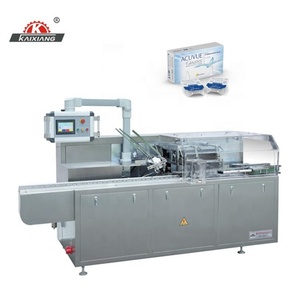
Historically dominated by traditional annual (yearly) glass-vial lenses due to perceived economy, the Chilean market is experiencing a rapid structural pivot toward 30-day and 1-day blister packaging. Ophthalmic professionals registered with the Colegio de Optometristas de Chile are actively recommending frequent-replacement modalities to reduce bacterial keratitis and giant papillary conjunctivitis (GPC). Our automated packaging facility supports private-label blister conversion in compact 2-pack, 10-pack, and 30-pack formats with localized Spanish text.
Under Supreme Decree No. 825/98 and sanitary provisions for medical devices (Dispositivos Médicos Clase II), Chilean customs (Servicio Nacional de Aduanas) and the ISP strictly enforce import control. Distributors can no longer import unverified white-label lenses without risking border confiscation. As an audited medical device manufacturer, Velalens provides comprehensive technical dossiers, including biocompatibility reports (ISO 10993), Certificate of Free Sale (CFS), stability test documentation, and CE 0123 certifications required for expedited Chilean sanitary clearance.
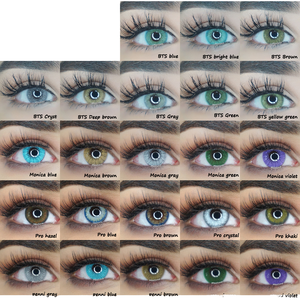
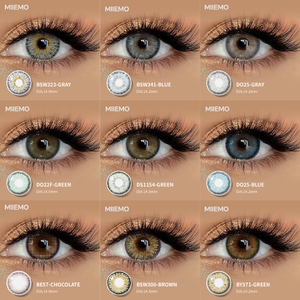
Market data from major urban centers (Santiago, Concepción, Valparaíso) shows that extreme saturation ("electric blue" or "opaque violet") has yielded to sophisticated earth-tone and hazel palettes. Chilean consumers prioritize lenses that integrate seamlessly with natural warm skin undertones in direct sunlight. Our proprietary Latin Series and Lumirere Hazel lines utilize radial feathering and multi-layer gradient printing specifically calculated for dark melanin base reflections.
Chile was the first Latin American nation to establish an individual Free Trade Agreement with China. Under this bilateral treaty, soft contact lenses categorised under HS Code 9001.30.00 enjoy a 0% preferential customs tariff when supported by an authentic Certificate of Origin (Form F). While imports from non-FTA countries incur a baseline 6% Most Favoured Nation (MFN) duty plus VAT, partnering with us delivers immediate fiscal efficiency that bolsters distributor gross margins.
| Parameter / Metric | Standard HEMA Series | Silicone Hydrogel (SiHy) Series | Chilean Regulatory Benchmark (ISP) |
|---|---|---|---|
| Oxygen Permeability (Dk/t) | 22 – 28 × 10⁻⁹ | 85 – 110 × 10⁻⁹ | Compliant with ISO 18369-3 Ophthalmic Standards |
| Base Curve (BC) / Diameter | 8.6 mm / 14.0 – 14.5 mm | 8.5 – 8.7 mm / 14.2 mm | Clinically adapted for Latin American corneal curvature |
| Water Content Matrix | 38% – 42% (Low dehydration) | 48% – 55% (High transmissibility) | Resistant to arid Central Valley tear film breakup |
| Pigment Isolation Tech | Dual-Layer Sandwich Matrix | Encapsulated Polymeric Interlayer | Zero corneal surface pigment elution (ISO 10993-10) |
| Import Tariff (China to Chile) | 0% with Form F (TLC) | 0% with Form F (TLC) | Duty-free entry at Valparaíso / SCL Customs |
Combining high-capacity automated cast molding with pharmaceutical-grade safety. We control the entire production chain to protect your brand reputation.
Consumer safety is paramount. Low-grade contact lenses print dye directly on outer polymer layers, exposing the cornea and palpebral conjunctiva to mechanical abrasion and chemical leaching. Our sandwich manufacturing seals medical pigments inside two layers of clear hydrogel, ensuring zero direct ocular contact.
Our facility operates Class 100,000 cleanroom zones equipped with automated German cast-molding systems. Edge profiling eliminates microscopic flashings, providing uniform edge apex design. This minimizes blinking friction and guarantees consistent central corneal fit batch after batch.
Launching a private label in Chile is seamless with our full-service engineering and packaging lines. We handle custom blister foil printing, multilingual patient leaflets (folletos informativos), barcode generation, and complete ISP product registration dossier preparation.
Connect directly with our export engineering team. Receive complimentary sample packs, regulatory technical sheets, and wholesale pricing adapted for Chilean import margins.
Clear answers regarding customs clearance, sanitary registrations, MOQs, and technical configurations for buyers in Chile.
In Chile, contact lenses (both cosmetic plano and prescription) are categorized as Class II medical devices regulated by the Instituto de Salud Pública (ISP). Importers must hold an approved sanitary storage installation permit (Resolución de Bodega) and process a commercialization authorization (CDA - Certificado de Destinación Aduanera). Velalens supplies complete documentation dossiers: ISO 13485:2016 factory certification, CE compliance certificates, technical product sheets, accelerated aging stability studies, and Certificates of Free Sale (CFS).
Under the China-Chile Free Trade Agreement (Tratado de Libre Comercio China-Chile), soft contact lenses imported under HS Code 9001.30.00 qualify for a 0% preferential import tariff. To claim this exemption at Chilean customs, our export documentation department issues an official Form F (Certificate of Origin) certified by CCPIT/China Customs for every shipment. Importers only pay standard local VAT (IVA 19%), eliminating the 6% general tariff applicable to non-FTA shipments.
For our existing, catalog-proven multi-tone series using stock blister or vial packaging, our private-label packaging service begins at approximately 300 pairs per color design, with mixed diopter power ranges (from 0.00 to -8.00D). For fully bespoke ODM iris patterns requiring new printing plates and custom-molded graphic parameters, initial MOQs generally start around 2,000 to 5,000 pairs depending on the modality (daily disposable vs. monthly vs. yearly).
Santiago's urban basin experiences dry conditions and elevated dust particulate levels during summer, which rapidly evaporates high-water-content lenses. We recommend our low-water (38% to 42%) biocompatible HEMA or Silicone Hydrogel formulations for the Chilean market. These formulations draw significantly less tear fluid from the corneal epithelium while sustaining an optimal boundary lubrication layer, ensuring 12+ hours of comfort without ocular redness.
Stock samples are dispatched via express courier (DHL, FedEx, UPS) within 3 to 7 business days, landing at Arturo Merino Benítez International Airport (SCL) in Santiago in roughly 5 to 8 transit days. Mass production of private-label branded orders takes between 4 and 6 weeks following artwork approval. Bulk commercial shipments can be dispatched via air cargo (5–10 days) or ocean freight to the ports of Valparaíso or San Antonio (approx. 28–35 days transit time).
Yes. We provide complete OEM graphic services. Our pre-press team ensures that all outer cardboard packaging, secondary blister foils, user guide leaflets (folleto al paciente), and batch/lot expiry stickers comply with Chilean labeling norms. This includes incorporating your local company RUT, sanitary registration numbers, Spanish-language contraindications, UV-blocking warnings, and EAN-13 retail barcodes.
Connect with an export specialist to evaluate physical sample swatches, verify diopter charts, or calculate landed CIF Santiago pricing today.