Featured Natural Gray & Tonal Color Contact Lenses
Engineered specifically for hyper-realistic iris integration, high oxygen transmissibility (Dk/t), and all-day comfort. Available across daily, monthly, semi-annual, and annual wear replacement schedules.
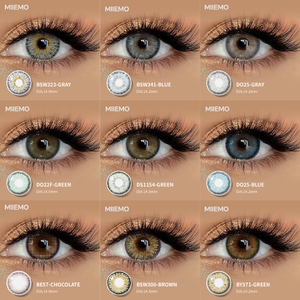
2026 Hot Sale Natural Colored Contact Lenses Soft 3 Tone Dark Eyes Super Natural Brown Grey CE ISO
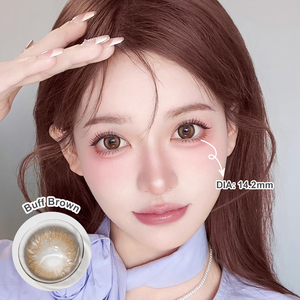
Free Samples Magister BLUSH GIRL Contact Lenses Color Lenses Eye Contact Soluciones Lentes De Contacto
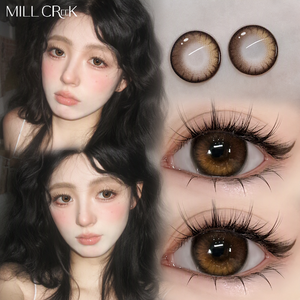
Haipurecon Hot Style Soft 3 Tone Contact Lenses Wholesale Grey Brown Green Blue Natural HEMA 40% BC 8.5mm
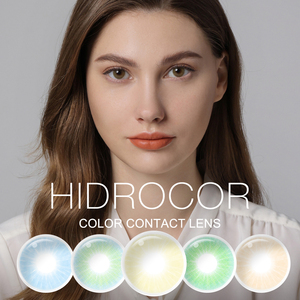
Free Sample Freshgo HIDROCOR Eye Contact Lenses Color Cosmetic Contact Lens Lentes De Contacto
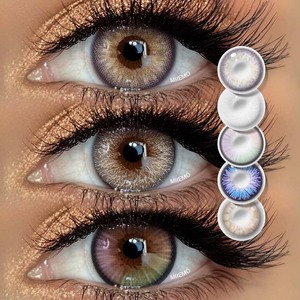
Soft Natural Three Tone Color Contact Lenses 14.0mm Diameter HEMA 38% Water Content ISO Certified 6 Months
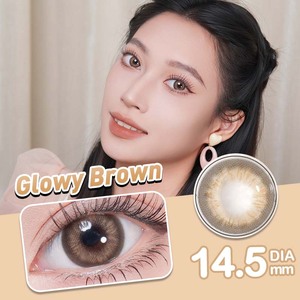
Free Sample Magister Glowy Eye Contact Lenses Eye Contact Colour Colored Contacts Wholesale Lentille
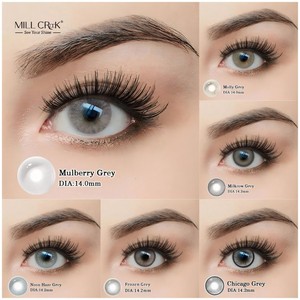
Gray Series Colored Contact Lenses OEM Private Label Factory Direct Supply CE & ISO 13485 Certified
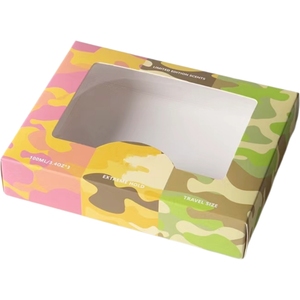
Logo All Color Contacts Wholesale Natural Color Eye Lens New Design Hot Sale Colored Contact Lenses Box
The Engineering Science Behind "Hyper-Natural" Gray Lenses
Overcoming the "flat artificial effect" in cosmetic contact lenses requires advanced bio-mimetic pigment distribution, high oxygen permeability, and precision micro-encapsulation.
1. Micro-Sandwich Encapsulation: Absolute Epithelial Isolation
ISO 10993 Biocompatibility and Pigment Leaching PreventionIn consumer optical markets, the primary cause of contact lens intolerance, superficial punctate keratitis (SPK), and giant papillary conjunctivitis (GPC) stems from direct epithelial friction caused by exposed pigment particles. As a premier natural gray contact lenses supplier and exporter, our manufacturing paradigm mandates zero surface pigment exposure through true Micro-Sandwich Cast-Molding Technology.
Unlike inferior pad-printed lenses where pigments are stamped onto the exterior concave or convex surface of a pre-polymerized blank, our automated production lines encapsulate ultra-refined, non-toxic cosmetic colorants between two distinct virgin layers of biocompatible hydrogel matrix (HEMA or Silicone Hydrogel). The pigment layer is permanently sealed within the optical core, completely insulated from both the sensitive corneal epithelium and the palpebral conjunctiva. Even after rigorous 121°C steam autoclave sterilization and cyclic friction stress tests exceeding 20,000 blinks, zero color migration or surface delamination occurs.
Optical Clear Zone (3.8 – 4.2mm)
Calculated precisely to prevent tunnel vision or cloudy peripheral fringing during scotopic pupil dilation, allowing flawless night-driving and ambient light adaptability.
3-Tone Radial Gradient Matrix
Interlacing smoky charcoal limbal outer rings, misty sterling gray mid-zones, and honey-gold inner transitions to blend seamlessly over Grade 5 deep brown irises.
Bi-Curvature Edge Geometry
Engineered with a 0.06mm ultra-thin beveled edge configuration that facilitates tear fluid turnover and avoids edge indentation under the upper tarsal plate.
2. Polymer Matrix Selection: HEMA Hydrogel vs. Advanced Silicone Hydrogel
Clinical trade-offs for B2B procurement decision-makersProcuring the correct polymer composition is vital for international regulatory approval and end-user retention. Brands targeting the beauty and fashion demographic frequently prioritize cost-effective high-water HEMA, while clinical optical chains require medical-grade Silicone Hydrogel for prolonged continuous wear. Velalens provides both formulation architectures in our certified cleanroom facilities.
| Engineering Attribute | HEMA Hydrogel Series | Silicone Hydrogel (SiHy) Series | B2B Procurement Application |
|---|---|---|---|
| Oxygen Transmissibility (Dk/t) | 15 – 25 × 10-9 Fatt units | 80 – 130 × 10-9 Fatt units | SiHy is ideal for 14+ hr daily wear without corneal hypoxia. |
| Hydration / Water Content | 38% – 42% (Low dehydration) | 45% – 55% (High hydrophilic bond) | 38% HEMA minimizes tear film evaporation in arid climates. |
| Modulus of Elasticity (MPa) | 0.35 – 0.45 MPa (Ultra-soft) | 0.60 – 0.85 MPa (Structural stability) | HEMA offers instant insertion comfort; SiHy simplifies handling. |
| Recommended Wear Cycles | Daily Disposables, 6-Month, Annual | Daily Disposables, Monthly Prescriptions | HEMA dominates Latin America & SEA; SiHy expands in EU & US. |
| Base Curve / Diameter | BC 8.5 – 8.6mm | DIA 14.0 – 14.5mm | BC 8.6 – 8.7mm | DIA 14.2mm | Universal anatomic fits covering 97% of worldwide corneas. |
Global Procurement & Product Trends (2026–2030)
The worldwide cosmetic lens supply chain is undergoing profound shifts in consumer aesthetics, material compliance, and distribution mechanics. Here is how forward-looking importers stay ahead.
The Shift from "Doll-Eye" to Micro-Diameter Realism
Historically, Asian and Middle Eastern export channels prioritized dramatic 14.5mm to 15.0mm circle lenses with prominent black limbal rings. Modern global search trends show an exponential pivot toward Graphic Diameters (G.DIA) of 13.0mm – 13.4mm.
- Natural Gray iris enhancement matching workplace dress codes
- Feathered, non-solid outer rings that blend into the sclera
- Reduced customer returns due to "unnatural alien eye" complaints
Ascendance of Daily Disposable Sterile Packaging
While annual vials remain economical for traditional distributors, regulatory authorities (US FDA, EU MDR) and hygiene-conscious Gen Z consumers are aggressively favoring daily 10-pack and 30-pack blisters.
- Zero lens case maintenance, lowering microbial keratitis risks
- Higher lifetime customer value (LTV) for retail e-commerce brands
- Compact blister strip configurations optimizing international freight
Multifunctional Convergence: Color + Toric + UV Shielding
Cosmetic lenses are no longer restricted to plano (0.00) beauty enthusiasts. The fastest growing B2B market category represents color lenses manufactured with Class II UV blockers and specialized optical correction.
- Back-surface prismatic ballast designs for Astigmatic Toric color lenses
- Center-near multifocal zones for presbyopic cosmetic wearers
- UVA (≥85%) and UVB (≥95%) blocking monomers integrated into polymers
Strategic Supply Chain Takeaway for Importers:
To mitigate shipping cost volatility and strict customs inspections, overseas brand distributors are decoupling inventory risk by maintaining a two-tier procurement strategy: Tier 1 (Core Volume) relies on standardized OEM private label stock in top-performing gray tones (Latin Gray, Hidrocor Gray, Blush Girl) with low 300-pair entry MOQs; Tier 2 (Market Exclusivity) utilizes custom ODM color formulas with dedicated printing mould registrations to prevent regional price wars.
Why Top Global Brands Partner with Velalens
Velalens Technology Co., Ltd. operates a high-precision medical optical manufacturing base engineered to deliver consistent quality, full regulatory traceability, and responsive customization.
Class 100,000 Cleanroom
Molding, hydration, visual inspection, and sealing take place under strict HEPA positive-pressure laminar airflow, meeting international medical device GMP requirements.
CE & ISO 13485 Certified
Our quality management system is audited under ISO 13485. All commercial shipments include Certificate of Analysis (CoA), sterilization records, and biocompatibility dossiers.
Sub-Micron Laser Centering
Automated optical projection comparators verify print concentricity, pupil zone clearance, and edge thickness on 100% of finished lots before blister packaging.
Agile Low MOQ Policy
Launch your brand line starting from only ~300 pairs per color for in-stock designs, drastically minimizing inventory carrying risks while test-marketing new regional palettes.
Turnkey OEM / ODM Contract Manufacturing Process
Selection of pattern, base curve, DIA, water %, and wear schedule.
Stock samples shipped in 3–7 days; custom prototypes in 2–3 weeks.
Custom foil blisters, vials, branded outer cartons, and multi-lingual IFUs.
Precision cast molding, autoclave sterilization, and full optical QC.
Air express, temperature-controlled freight, and export customs clearance.
Frequently Asked Questions for Sourcing Directors
In-depth answers addressing minimum order volumes, regulatory dossiers, sterilization methodologies, and custom packaging logistics.
For existing, market-tested color matrices (such as Latin Gray, Crystal Gray, or Hidrocor series) with customized private brand boxes and foil blisters, our MOQ begins at approximately 300 pairs per color. If your brand requires a completely proprietary pattern or custom graphic diameter requiring new printing plates and toolings, the initial pilot batch typically begins at 1,000 to 2,000 pairs depending on the chosen replacement cycle.
Velalens provides a complete technical documentation suite to support registration with national health authorities worldwide. This includes ISO 13485:2016 quality management system certification, CE conformity documentation, Certificate of Free Sale (CFS), raw material declarations (USP Class VI biocompatibility), ISO 10993 cytotoxicity test reports, real-time stability/shelf-life testing reports, and batch-specific Certificates of Analysis (CoA).
Color drift is the leading cause of brand customer churn. We eliminate variance by implementing automated CNC-controlled micro-pipette pigment dispensing calibrated via spectrophotometric reflectance matching (CIE L*a*b* standard). Every ink batch is indexed against a digital master color coordinate library, ensuring delta E values remain strictly below 0.8 across repeat production runs year-over-year.
We support all commercial wearing modalities: Daily disposables (1-day), Monthly replacement (30-day), Semi-annual (6-month), and Annual (1-year) cycles. Packaging formats include premium polyolefin sterile blister packs (individual, 2-packs, 10-packs, or 30-pack branded tuck-boxes) and medical-grade borosilicate glass vials sealed with flip-off aluminum closures for long-term shelf storage.
Pre-production evaluation samples from our extensive stock warehouse dispatch within 3 to 7 business days. Custom private label orders requiring specialized packaging box printing and blister foil stamping typically complete manufacturing, autoclave sterilization, and QA release within 4 to 6 weeks. Repeat scheduled replenishment contracts can be batched with buffer stock for rapid 10-day dispatches.
Yes. Beyond non-prescription cosmetic plano lenses (0.00), our automated production molds support standard myopic diopter ranges from -0.50D to -8.00D (in 0.25D and 0.50D increments). For selected premium series, we also manufacture custom toric parameters (cylinder -0.75D to -2.25D, axes 10° to 180°) and center-near multifocal geometries designed specifically for presbyopia management.
Initiate Your Custom Natural Gray Lens OEM Project Today
Request an enterprise sampling kit, technical compliance dossier, or customized bulk pricing quotation directly from our optical manufacturing engineering team. All inquiries are evaluated and answered by senior export directors within 24 business hours.