Precision-Engineered Cosmetic Colored Contact Lenses
Direct from cleanroom automated lines. Each product family undergoes multi-stage photopolymerization, automated edge polish, and color-lock micro-encapsulation to ensure corneal oxygenation and radiant aesthetics.
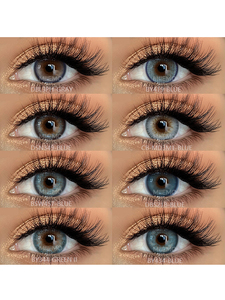
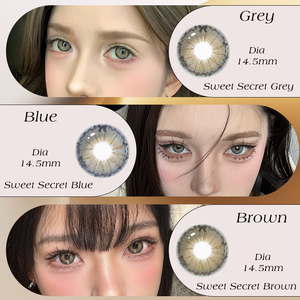
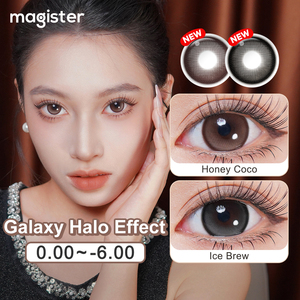
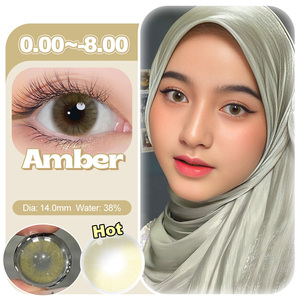
Engineering Excellence in Soft Cosmetic Lens Manufacturing
Navigating medical-grade polymer synthesis, micro-precision cast molding, pigment sandwich encapsulation, and international compliance architectures.
The global soft cosmetic contact lens landscape has evolved from an incidental beauty novelty into a highly regulated, precision-engineered ophthalmic device category. For professional optical buyers, brand custodians, and clinical import distributors, selecting a top trusted colored soft contact lenses manufacturer requires rigorous technical evaluation that looks far beyond basic catalog aesthetics. As regulatory barriers heighten under the European Union Medical Device Regulation (EU MDR 2017/745) and United States FDA 21 CFR 886.5925 requirements, the modern factory must execute an uncompromised convergence of biological safety, biometric optics, and automated high-throughput manufacturing.
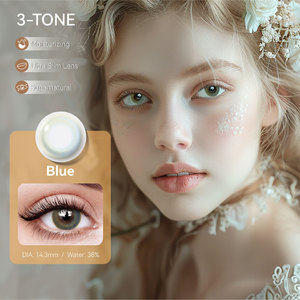
Color rendition on the human cornea is governed by complex optical physics. The native iris exhibits intricate structural depth, characterized by stromal fibril arrays, crypts of Fuchs, and variable melanin distributions. High-fidelity soft cosmetic lenses reproduce this depth not through rudimentary single-plane ink stamping, but through multi-layered, micro-stochastic dot-matrix printing suspended within hydrophilic polymer networks. Without precise mechanical stabilization, pigment bleed or surface friction can cause corneal epithelial abrasions, giant papillary conjunctivitis (GPC), and corneal hypoxia. Leading factories resolve this through proprietary double-sided cast molding and sandwich color encapsulation, completely isolating inert mineral pigments between polymerized layers of clear hydrogel.
Sandwich Micro-Sealing
Pigment layers are sealed between the anterior and posterior polymer membranes via automated spin-cast and press polymerization. Reactive pigments never touch corneal tissue or palpebral conjunctiva.
Class 100,000 Cleanrooms
Production environments adhere to ISO 14644-1 Class 7/8 cleanroom standards with HEPA filtration, automated wet-state hydration chambers, and steam terminal autoclaving at 121°C for sterile barrier integrity.
Full Dossier Registration
Export orders are paired with comprehensive technical files: ISO 13485:2016 certifications, biocompatibility tests (ISO 10993 cytotoxicity, ocular irritation), stability studies, and Declaration of Conformity documents.
Flexible Private Label OEM
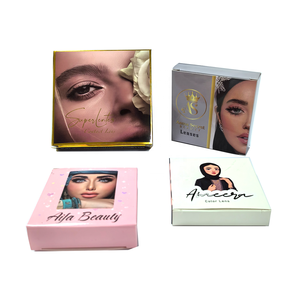
From low-barrier pilot runs (~300 pairs per SKU) up to fully automated multi-million blister cycles. Complete brand customization across custom blister foils, luxury outer boxes, and multilingual leaflets.
Future Procurement Trends in Colored Soft Contact Lenses (2025–2030)
How progressive buyers are re-aligning their supply chain matrices to capture shifting consumer demographics, tightening regulatory mandates, and rapid material science developments.
1. The Accelerating Shift to Daily Disposables (1-Day)
While yearly and half-yearly lenses historically dominated cosmetic volume in emerging territories due to low unit pricing, consumer preferences in North America, Europe, and Tier-1 APAC markets are decisively gravitating toward daily single-use modalities.
- Zero maintenance requirement (eliminates multipurpose lens solution incompatibility and protein deposits).
- Higher annualized revenue per user (ARPU) for e-commerce subscription brands and optical retail chains.
- Lower consumer drop-out rates caused by micro-contaminations or wear-cycle overextension.
2. Mass Market Penetration of Silicone Hydrogel (SiHy)
Traditional poly-HEMA hydrogel formulations (Dk 8–12 Fatt units) struggle to provide sufficient oxygen transmission during long-hour cosmetic wear. Silicone hydrogel macromer blends increase oxygen flux to Dk/t values exceeding 80–120.
- Overcomes the classic barrier: combining lipophilic silicone phases with hydrophilic cosmetic pigment matrices.
- Enables all-day (12h+) comfortable wear without corneal limbal hyperaemia or dry eye discomfort.
- Allows brand positioning at premium retail price tiers with verifiable clinical comfort claims.
3. Regulatory Audit Rigor & Supply Chain Traceability
Regulatory authorities no longer classify cosmetic contact lenses as casual beauty accessories. Global enforcement treats non-corrective plano cosmetic lenses with identical scrutiny to high-risk prescription medical devices.
- Mandatory UDI (Unique Device Identification) barcode implementation across secondary packaging.
- Deprecation of generic CE marks; distributors must audit factory technical documentation under EU MDR Class IIa.
- Consolidation of procurement orders toward accredited factories capable of direct regulatory dossier filing.
Next-Generation Optical & Cosmetic Development Trends
From biomimetic pixelation algorithms to integrated HEV-filtering monomers, discover how factory laboratory innovations are reshaping tomorrow's contact lens formulations.
Biomimetic Sub-Micron Dot Printing
Early cosmetic lenses suffered from visible halftone raster patterns and unnaturally opaque borders. Modern R&D focuses on multi-pass stochastic micro-pigment transfer that emulates genuine anatomical iris gradients.
- Variable radial transparency letting native iris pigment show through for hyper-realistic color merging.
- Soft blurred limbal borders (Graphic Diameter 13.2mm–13.6mm) replacing harsh black outer rings.
- Customized color palettes calibrated specifically for natural blending over dark brown and black irises.
Functional Toric & Multifocal Colored Optics
Historically, cosmetic color lenses were restricted to plano (0.00) or simple spherical myopia corrections. Next-generation production integrates back-surface prism ballasting and progressive aspheric zones.
- Cosmetic toric lenses correcting astigmatism (-0.75D to -2.75D) without pattern rotation or visual blur.
- Presbyopia-correcting center-near multifocal cosmetic lenses for demographics aged 40+.
- Expands target customer addressability by up to 35% for retail optometrist networks.
UV420 & HEV Blue-Light Monomer Polymerization
Integrating photoprotective compounds directly into the contact lens monomer matrix allows colored lenses to perform active ocular wellness defense against digital displays and intense solar exposure.
- Class 1 UV-blocking filtering >90% UVA and >99% UVB radiation in compliance with ANSI Z80.20 standards.
- Selective HEV blue-light absorption (400nm–430nm) without skewing perceived iris coloration or visual tint.
- Internal hyaluronic acid (HA) and MPC wetting agents infused into the hydrogel matrix to prevent dehydration.
| Evaluation Parameter | Standard HEMA Hydrogel | Advanced Silicone Hydrogel (SiHy) | Cast-Molding Cleanroom Standard |
|---|---|---|---|
| Oxygen Transmissibility (Dk/t) | 12 – 25 Dk/t (Daytime Wear) | 80 – 130 Dk/t (Extended Health) | ISO 18369 Polarographic Validation |
| Water Content Equilibrium | 38% – 42% (Low dehydration) | 45% – 55% (High equilibrium) | Gravimetric gravimetric dry-weight verified |
| Pigment Encapsulation Method | Internal Sandwich Print Matrix | Co-Polymer Dual Encapsulation | Zero pigment swab release test (ISO 10993) |
| Base Curve (BC) & DIA Tolerances | BC: 8.5–8.7mm | DIA: 14.0–14.5mm | BC: 8.6mm | DIA: 14.2mm | ±0.02 mm automated laser verification |
| Replacement Modalities Available | Daily, Monthly, 6-Month, Yearly | Daily Disposable, Monthly | Accelerated shelf-life stability 3–5 Years |
| Regulatory Readiness | CE MDR, US FDA 510(k), ISO 13485 | CE MDR, US FDA 510(k), ISO 13485 | UDI Laser marking & Batch Traceability |
Frequently Asked Questions: Sourcing & Manufacturing Colored Contact Lenses
Clear, direct answers regarding minimum order requirements, laboratory testing, regulatory registration support, lead times, and private label execution.
What is the minimum order quantity (MOQ) for custom private label orders?
For existing catalog color designs relabeled with your brand packaging, MOQ starts at approximately 300 to 500 pairs per color variant. Fully bespoke color patterns requiring customized printing plates and cast tooling generally begin at 3,000 to 5,000 pairs across requested power distributions.
How do factories ensure that the color pigments do not leak onto the eye?
Qualified medical-grade factories utilize "sandwich" encapsulation technology. Colorants are deposited into the mold cavity and polymerically sealed between two micro-thin layers of clear hydrogel monomer during photopolymerization. The surface of the lens is 100% pure polymer, passing strict scratch and chemical leach tests.
What regulatory documents are provided to support market registration?
We provide full technical documentation dossiers including ISO 13485:2016 factory audit certificates, CE compliance documentation under EU MDR 2017/745, Certificate of Analysis (COA) per production lot, biocompatibility reports (ISO 10993 cytotoxicity and ocular irritation), and Free Sale Certificates (FSC).
What are the real-world manufacturing lead times for OEM production?
Standard catalog samples dispatch within 3 to 7 business days. Custom trial sampling (including custom blister foil proofs) requires 2 to 3 weeks. Bulk mass production of private label orders typically runs 4 to 6 weeks, depending on packaging complexity and sterilization scheduling.
Can we order mixed prescription power distributions within a single order?
Yes. Production runs accommodate standard optical distributions from Plano (0.00) down to -8.00D (-0.50D increments above -6.00D). We assist private label clients in building statistically optimized power matrices based on current epidemiological refractive data in their target markets.
What primary and secondary packaging customization options exist?
Primary containment includes polypropylene blister packs with high-barrier peelable foil or traditional medical glass vials with aluminum tear-off caps. Secondary options range from compact 2-lens and 10-lens blister tuck boxes to rigid luxury boutique magnetic boxes, complete with custom foil stamping, embossing, and multilingual IFUs.
Ready to Launch or Scale Your Private Label Colored Lens Brand?
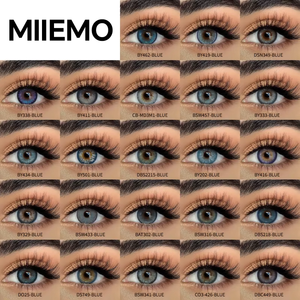
Consult directly with our biomedical optical engineers. Review master pattern books, verify regulatory compliance documentation, and request physical sample evaluation kits tailored to your distribution market.