Display Unit
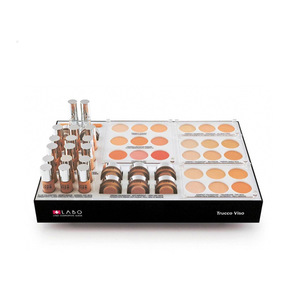
Acrylic Makeup & Contact Lenses Display Stand Counter Rack
High Clarity Acrylic
POS Countertop
Custom Logo
Streamlined OEM/ODM inventory combining high-definition outer-ring circle designs with medical-grade biocompatibility. Available for private labeling across low MOQs.
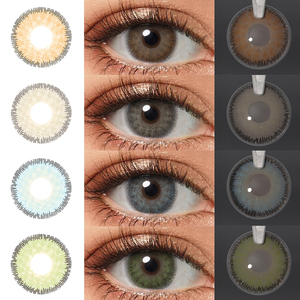
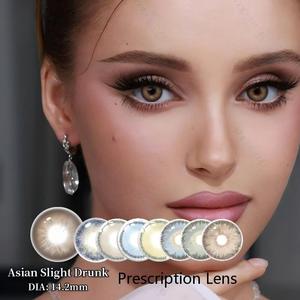
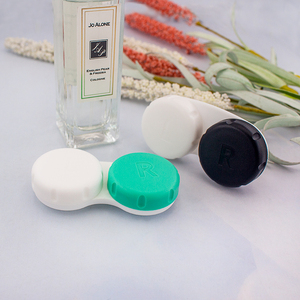
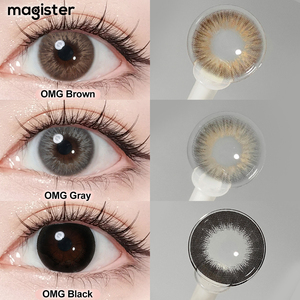
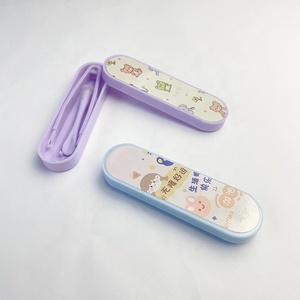
A granular look at the optical geometry, sandwich pigment encapsulation, and edge morphology differentiating clinical-grade circle lenses from non-regulated fashion novelties.
Surface-printed contact lenses risk dye migration, micro-abrasions to corneal epithelial cells, and giant papillary conjunctivitis (GPC). Our automated cast molding seals reactive organic and inorganic pigments inside a 0.02mm core hydrogel layer. Neither the cornea nor the palpebral conjunctiva ever touches color particulates, ensuring zero-leach safety validated under ISO 10993 cytotoxicity testing.
A stark, uninterrupted circle creates a synthetic, artificial gaze. Our CAD lithography employs a stochastic gradient: the outermost limbal ring transitions from a solid 85% opacity perimeter into feathering radial micro-dots (50–30μm diameter). This blends organically into the user's native stromal iris fibers, while preserving a pristine 5.5mm central optical clearance to prevent night-vision halo artifacts.
Cosmetic circle lenses have historically suffered from steep periphery lift and tight fitting dynamics. We engineer a modified round-tapered edge profile. By sustaining a clearance of 18–22 microns at the perilimbal sclera, every blink facilitates natural lacrimal tear circulation, supplying fresh metabolic oxygen and flushing cellular debris from the retro-lens space to avert hypoxia during extended wear.
| Parameter Category | Standard Hydrogel Range | Advanced Silicone Hydrogel Range | Compliance / Target Testing |
|---|---|---|---|
| Base Curve (BC) | 8.50 mm – 8.70 mm (±0.02mm) | 8.60 mm – 8.80 mm (±0.02mm) | ISO 18369-3 Sagittal Depth Verification |
| Overall Diameter (DIA) | 14.0 mm – 14.5 mm | 14.2 mm | Projection Comparator Optical Profiling |
| Graphic Diameter (G.DIA) | 13.0 mm (Natural) to 13.8 mm (Enlarging) | 13.2 mm to 13.5 mm | High-Res Chromatic Micro-Calipers |
| Water Content | 38% – 42% (Low dehydration rate) | 45% – 55% | Refractive Index Gravimetric Dehydration |
| Oxygen Permeability (Dk/t) | 18 – 25 × 10-9 Fatt units | 85 – 110 × 10-9 Fatt units | Polarographic Boundary Cell Method |
| Diopter Range | Plano (0.00) to -8.00 D (0.25D / 0.50D steps) | Plano (0.00) to -10.00 D (Toric & Multifocal) | ISO 18369-2 Automated Lensmeter Optical Axis |
Direct industry intelligence for supply chain directors, category managers, and retail optic executives anticipating regulatory evolutions and consumer taste transitions.
Historically, colored limbal lenses relied on conventional Poly-HEMA because printing on fluorosilicone hydrogel posed pigment adhesion barriers. Chinese contract manufacturers are overcoming this via plasma-surface treating and monomer cross-linking. Buyers are rapidly shifting inventory allocations away from annual vials toward daily disposable SiHy formats that deliver 3x oxygen transmissibility, meeting stringent EU MDR Class IIa/IIb clinical wear mandates.
The era of unfeathered 14.5mm dolly-eye prints has matured. Global consumers demand "quiet cosmetic enhancements." The highest-growing procurement volume resides in 13.0mm–13.3mm Graphic Diameter (G.DIA) profiles that recreate the young adult limbal shadow without ballooning iris proportions. Brands purchasing ODM lines are prioritizing grey-tinged charcoals, translucent mochas, and hazel halos that pass detection in daylight business environments.
Border authorities—including the US FDA, Saudi SFDA, and European Notified Bodies—are systematically intercepting non-compliant cosmetic lenses imported as generic goods. Exporters must now maintain full Unique Device Identification (UDI) barcoding, automated lot traceability back to raw monomer distillation, and localized safety leaflet translation. Importers who align with certified manufacturing lines minimize multi-million-dollar customs seizure exposures.
How our integrated factory ecosystem streamlines supply continuity, quality assurance, and speed-to-market for private label brands and high-volume distributors.
We do not broker products. From micro-mold CNC tooling, optical curve lathe cutting, cleanroom cast molding, pad printing, hydration cycling to high-speed blister sealing, our entire manufacturing footprint is consolidated under one roof. This minimizes subcontracting markups and provides buyers with uncompromised batch consistency.
Lower capital barriers for independent beauty brands and optical startups. While legacy international conglomerates mandate tens of thousands of units per SKU, our flexible pad-tooling process allows private label branding starting from just 300 to 500 pairs per shade on existing validated formulations, backed by rapid in-house package printing.
Entering regulated markets demands meticulous documentation. We provide buyers with comprehensive technical dossiers including Certificate of Analysis (CoA), Biocompatibility Reports (ISO 10993), Stability and Accelerated Aging Studies, Sterility Validation, and CE/ISO 13485 quality systems documentation to expedite domestic health authority filings.
Essential answers on lead times, optical customization, packaging standards, and international medical device compliance protocols.
Connect with our technical export engineers to request sample swatches, review comprehensive parameter tables, or receive an exact OEM quotation customized to your volume and packaging vision.
Contact Us