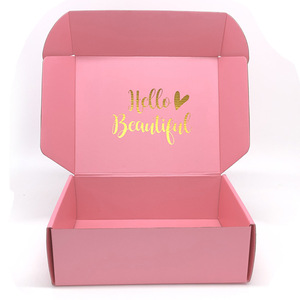
Wholesale Offset Printing Foldable Pink Airplane Packaging Box
Hard colorful foldable paper box with double-sided custom offset printing, anti-crush corrugated fluting, and tailored blister cavities for safe international export fulfillment.
Explore high-velocity OEM/ODM large diameter contact lenses engineered for dramatic corneal enlargement, authentic natural iridial blending, and turnkey branded medical packaging.
Hard colorful foldable paper box with double-sided custom offset printing, anti-crush corrugated fluting, and tailored blister cavities for safe international export fulfillment.
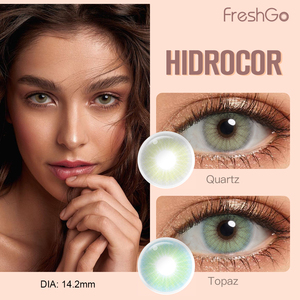
Iconic no-limbal-ring graphic architecture offering seamless iris blending, natural eye color modification, 40% water content balance, and ISO-verified physiological tear-exchange comfort.
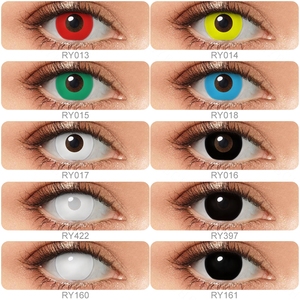
High-opacity specialty 14.5mm cosplay contact lenses featuring precision-registered animation graphics, completely isolated pigment sandwich layers, and exceptional theatrical visual impact.
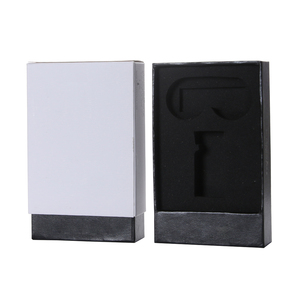
Luxury rigid magnetic sliding packaging tailored for dual-vial or blister presentations, incorporating embossed foil stamping, custom EVA foam trays, and compliant labeling panels.

Engineered with a triple-layer chromatic transition zone, an authentic central hazel burst, and a subtle outer limbal definition ring for enhanced depth in 14.2mm to 14.5mm diameters.
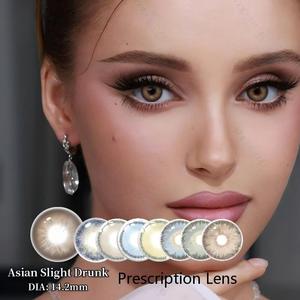
Cast-molded optical hydrogel featuring accurate corrective powers from plano 0.00 to -8.00D, integrating a delicate radial brown-hazel pigment matrix for daily office-safe cosmetic enhancement.
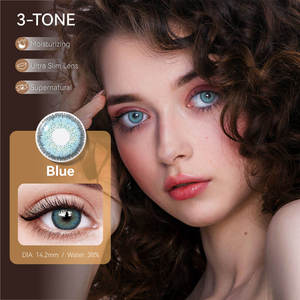
Designed specifically with a wide graphic diameter (G.DIA 13.8mm) on a 14.5mm total lens platform, delivering a pronounced doll-eye enlargement with vivid cerulean and sapphire micro-dots.
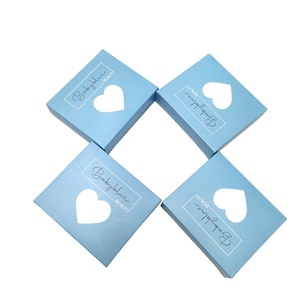
Premium cosmetic retail cartons with spot UV coating, metallic foil stamping, GS1 barcode integration, and batch-serialization printing designed specifically for commercial optical distribution.
Operating under stringent Class 100,000 cleanroom environments to deliver defect-free optical devices across 60+ countries worldwide.
An in-depth optical analysis on how modern cast-molding and micro-encapsulation overcome limbal hypoxia, edge lift, and decentration in lenses measuring 14.2mm to 15.0mm.
The standard human cornea has an average Horizontal Visible Iris Diameter (HVID) of approximately 11.8 mm. Standard cosmetic lenses range from 14.0 mm to 14.2 mm, whereas large diameter circle contacts span 14.5 mm to 15.0 mm. When increasing total diameter, conventional designs risk impinging upon the vascularized limbal stem cell zone.
Color bleeding or pigment contact with ocular tissue can trigger giant papillary conjunctivitis (GPC) or epithelial abrasion. Our semi-cast molding encapsulates all mineral pigments within an inert, high-purity HEMA/silicone polymer sandwich matrix.
Large diameter lenses encompass a greater surface area across the ocular globe, making oxygen transmissibility (Dk/t) a decisive health metric. We offer customized polymer structures tailored to either daily disposable convenience or durable extended wear.
| Technical Parameter | Standard Cosmetic Lens | Large Diameter Circle Lens (14.5mm) | Extra-Large Theatrical / Sclera (14.8-15.0mm) |
|---|---|---|---|
| Total Diameter (DIA) | 14.0 mm – 14.2 mm | 14.5 mm | 14.8 mm – 15.0 mm |
| Graphic Diameter (G.DIA) | 12.8 mm – 13.4 mm | 13.6 mm – 14.0 mm | 14.2 mm – 14.5 mm |
| Base Curve (BC) Options | 8.5 mm – 8.6 mm | 8.6 mm | 8.6 mm – 8.7 mm |
| Water Content Index | 38% – 45% (Hydrogel) | 38% – 42% (Anti-Dehydration) | 38% (Low-water shape retention) |
| Corneal Limbal Clearance | Standard overlap (~1.1mm) | Wide limbal skirt (~1.35mm) | Max coverage with aspheric bevel |
| Primary Target Market | Subtle natural daily wear | Doll-eye, K-beauty, Glamour iris enlargement | Anime, cosplay, stage, dramatic character wear |
Strategic purchasing insights for enterprise procurement teams, optical chain buyers, and direct-to-consumer cosmetic brands preparing for the next generation of consumer demand.
Historically, circle lenses were dominated by 6-month or 1-year replacement cycles packaged in glass vials. Regulatory compliance, infection-prevention concerns, and Gen-Z hygiene preferences have shifted wholesale demand decisively toward daily disposable 10-piece and 30-piece blister packs. Brands embracing daily disposable circle contacts report significantly higher annual lifetime customer value.
Inquire NowSolid, heavy black limbal bands of the early 2010s have been superseded by sophisticated multi-tone gradient micro-dots. Modern consumers demand eye-enlarging diameter combined with organic chromatic realism. Our latest 3-tone and 4-tone screen-printing matrices utilize dispersed dot layouts that blend seamlessly with both dark brown and light irises.
Inquire NowImport customs authorities in the European Union (EU MDR 2017/745), the United States (FDA 21 CFR Part 801/820), and the Middle East (SFDA) enforce uncompromising Class IIa/Class II device rules on colored contacts—even non-prescription plano SKUs. Enterprise buyers must source from Chinese manufacturers with complete technical dossiers, valid sterilization validations, and serialized GS1 UDI codes.
Inquire NowCombining automated precision molding technology with bespoke industrial packaging to establish the definitive supply chain benchmark for worldwide contact lens distribution.
High-purity raw materials compounded under sterile laminar flow, ensuring zero pyrogens, stable water balance, and high tensile elongation to resist edge tearing during high-speed handling.
State-of-the-art multi-cavity precision molds calibrated to micrometer tolerances create consistent sagittal depth, smooth anterior and posterior curves, and perfectly feathered edge profiles.
Computer-guided robotic printing arms apply organic, medical-grade color pigments onto the cast matrix prior to full polymerization, permanently sealing the graphics inside the inner core.
Extensive multi-cycle de-ionized water washing pulls out unreacted monomers and extractables, expanding the matrix into its final soft hydrogel state while stabilizing exact base curve metrics.
Every single manufactured lens undergoes automated high-resolution optical inspection to identify edge chips, bubbles, peripheral decentration, or pigment voids before release.
Hermetically sealed within pharmaceutical-grade polypropylene blisters or glass vials with buffered saline, followed by moist-heat steam autoclave sterilization at 121°C for 20 minutes.
Essential operational, regulatory, and logistical answers compiled by our export engineering team to streamline your B2B sourcing decisions.
Partner directly with China's leading ISO 13485 certified optical manufacturer. Receive custom prototype samples, full regulatory compliance dossiers, and factory-direct volume pricing within 24 hours.
Inquire Now