Featured OEM / ODM Cosmetic Colored Contact Lens Portfolio
Explore our primary export series manufactured under ISO 13485 cleanroom protocols. Available in diverse wear replacement cycles from daily disposable to annual modalities with total parameter customizability.
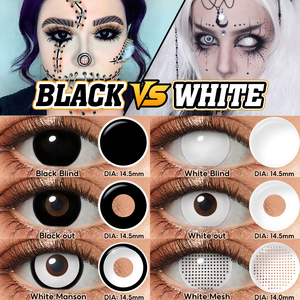
Wholesale Soft Halloween Crazy Black Color Contact Lens Glost White Scary Cosmetic Colored Contacts Cat Eye Contacts for Cosplay
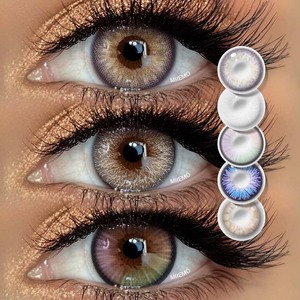
Soft Natural Three Tone Color Contact Lenses 14.0mm Diameter HEMA Material 38% Water Content ISO Certified 6 Months Using Cycle
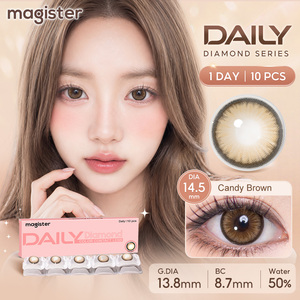
Free Shipping Natural Colored Contact Lenses Daily Soft Eye Contacts 50% Water Wholesale Dark Eyes CE ISO Brown Gray Daily Lens
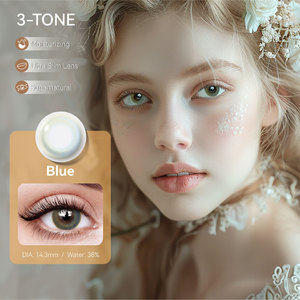
MIIEMO Stylish and Eye Catching New Look Contact Lens Manufacturer Lentes De Contacto Colored Contact Wholesale Contact Lens Eye
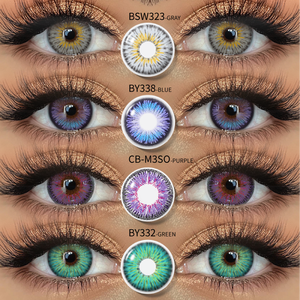
2025 Crazy Cosplay Anime Halloween Party Accessories Soft Colored Contact Lenses
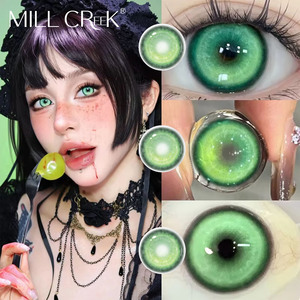
Direct Factory Supply Soft Enlarging Colored Contact Lenses Cosplay Style Various Unique Shades Wholesale Halloween Makeup
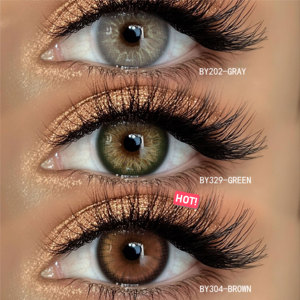
For Factory 14.0mm Diameter Colored Pupil Contact Lenses Soft Unique Opaque Color Technology for Eye Transforming Effects
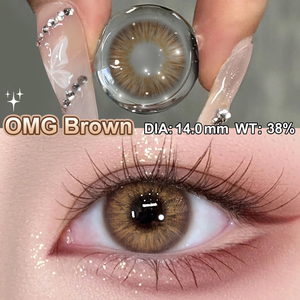
Free Shipping Eye Lenses Color Contact Lens Soft Eye Prescription Contact Lenses 14.5mm Colored Eye Contacts Lentille De Couleur
State-of-the-Art Contact Lens Engineering in China
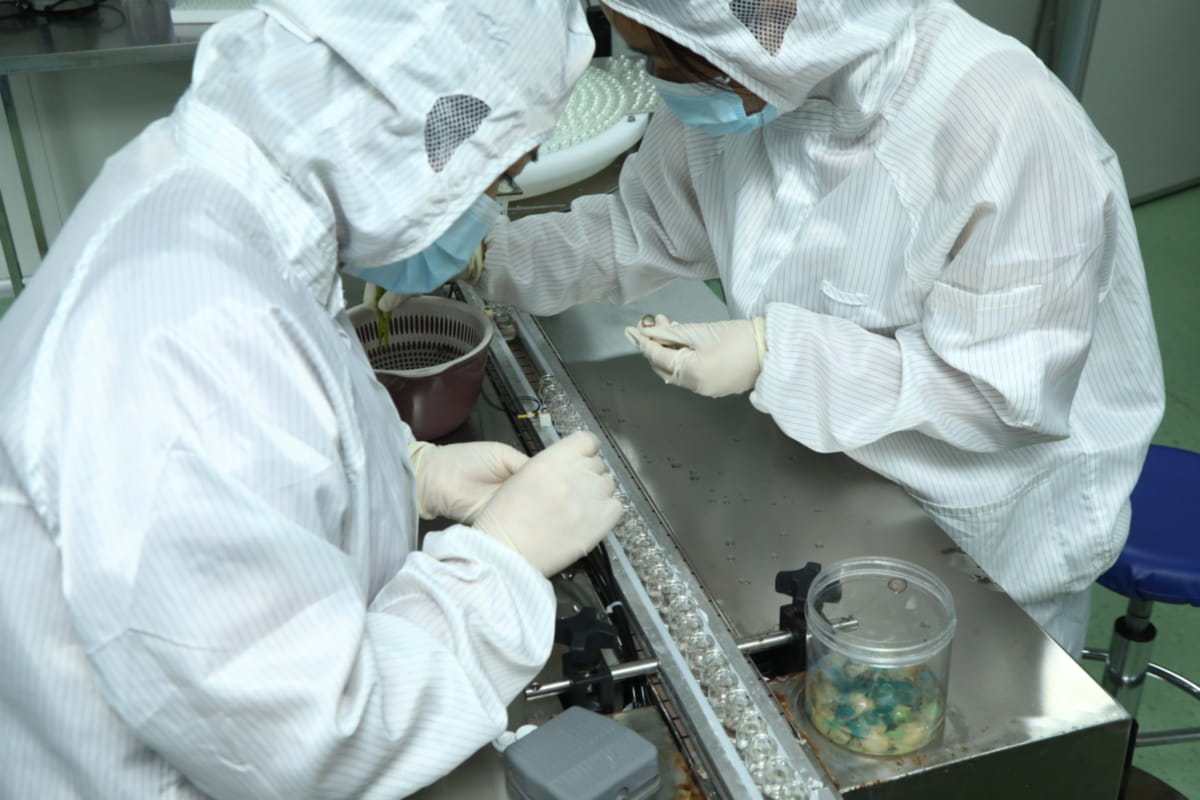
As a tier-one contact lens exporter, our manufacturing plants integrate precision polymer synthesis, advanced optical mould fabrication, and computerized quality inspection to safeguard corneal integrity while delivering vibrant chromatic performance.
Sandwich Encapsulation Printing
Unlike low-tier contact lens producers who stamp pigment directly on the outer surface, our bio-safe sandwich technology embeds inorganic FDA-approved color micro-particles between two pristine layers of medical poly-HEMA or silicone hydrogel.
- Zero direct contact with ocular epithelium
- Elimination of pigment leaching risks (ISO 10993)
- Ultra-smooth lens surface minimizes eyelid drag
Cast Moulding Precision Automation
Our automated injection moulding lines produce sub-micron optical finishes with mathematically optimized aspheric base curves. This eradicates peripheral aberration, guarantees center thickness stability, and offers repeatable comfort.
- Edge-lift profiling engineered for natural tear flow
- Dynamic fluid-motion hydration systems
- Dimensional tolerance within ±0.02 mm
100% AOI & Spectrophotometry QC
Every individual contact lens undergoes high-resolution Automated Optical Inspection (AOI) for edge burrs, air cavities, and chromatic uniformity, complemented by computerized spectrophotometer validation for batch-to-batch color stability.
- Microscopic pinhole and tear detection
- Consistent Pantone/CIELAB color reproduction
- Terminal autoclave steam sterilization at 121°C
GMP-Certified Manufacturing Built for Global Regulatory Audits
Operating under stringent ISO 13485:2016 quality management systems, our facilities provide comprehensive technical documentation (Device Master Records, Design Dossiers, and Sterilization Validation) to support your Class II / Class III medical device registrations worldwide.
From automated blistering to customized retail box assembly with security serialization and UDI compliance, we offer a truly frictionless path for international brands entering retail, e-commerce, and professional optometry networks.
Market Dynamics & Procurement Shift in Colored Contact Lenses
Strategic supply chain analysis for optical chain buyers, cosmetic brand incubators, and medical device importers navigating consumer preferences, material science, and stringent border controls.
1. The Surge of Daily Disposables
While 6-month and yearly lenses retain significant market share in emerging regions due to economical unit costs, mature markets (North America, Western Europe, Japan, South Korea) are experiencing an overwhelming migration toward daily disposable (1-day) cosmetic lenses.
B2B procurement teams must optimize their SKU ratios: pairing higher initial packaging margins in 10-pack and 30-pack daily blisters with recurring consumer reorder loops, completely eliminating maintenance compliance failures.
2. Silicone Hydrogel Formulation
Traditional 2-HEMA materials with 38%-42% water content provide an oxygen transmissibility (Dk/t) around 15–25, which can restrict long-wear comfort. The next frontier in high-end cosmetic contacts is 3rd generation Silicone Hydrogel (SiHy) polymers.
Offering Dk/t ratings surpassing 80–110, silicone hydrogel colored lenses allow prolonged 14-hour daily wear without corneal hypoxia, redness, or neovascularization, enabling cosmetic brands to position products alongside premium optometric brands.
3. Hybrid Corrective & Cosmetic SKUs
The boundary between beauty accessories and vision correction is dissolving. Growth is accelerating in colored toric lenses for astigmatic patients and multifocal cosmetic contacts for early presbyopes seeking iris enhancement without sacrificing reading clarity.
Suppliers equipped with double-thin zone stabilization and clear optical center zones of at least 3.8mm–4.2mm allow B2B buyers to capture untapped demographic segments that competitors overlook.
| Material Classification | Polymer Base | Water Content | Dk/t (Oxygen Trans.) | Optimal Modulus | Recommended Wear Modality |
|---|---|---|---|---|---|
| Hydrogel Grade A (HEMA) | Poly(2-hydroxyethyl methacrylate) | 38% – 42% | 18 – 24 Barrer/cm | 0.5 – 0.7 MPa | Daily / Monthly / Yearly (Cost-effective) |
| Hydrogel Grade High-Water | HEMA + NVP Co-polymer | 50% – 58% | 25 – 32 Barrer/cm | 0.3 – 0.4 MPa | 1-Day Disposable (Soft natural drape) |
| Silicone Hydrogel (SiHy Gen 3) | Fluoro-silicone macromers | 45% – 48% | 85 – 120 Barrer/cm | 0.6 – 0.8 MPa | Premium Monthly / Daily (Clinical grade) |
Micro-Dot Feathering vs Solid Blocks
Contemporary consumers demand "hyper-realistic" iris color shifts. Our modern gravure plates utilize high-density random micro-dot matrices that blend harmoniously with natural brown and dark irises, avoiding the "doll eye" artificial look of obsolete 1990s lenses.
Tunable Graphic Diameter (G.DIA)
While overall lens diameter ranges from 14.0mm to 14.5mm, it is Graphic Diameter (12.8mm to 13.8mm) that dictates visual impact. Sourcing managers must curate collections balancing subtle Western lifestyle tints with Asian-inspired pupil-enlarging rings.
Eco-Friendly Blister Packaging
Export compliance into the European Union and Scandinavia increasingly mandates reductions in virgin plastics. We supply automated blister packaging incorporating recyclable polypropylene shells and localized heat-seal foil lids.
Step-by-Step Private Label Procurement Framework
From chromatic formulation to global freight clearance, here is how our turnkey manufacturing pipeline supports international buyers.
Design & Color Matching
Submit target color references, moodboards, or physical swatches. Our optical engineers produce CAD dot-matrix layouts with customized pupil clearances and limbal gradients.
Rapid Tooling & Sampling
In-stock sample series are dispatched within 3–7 days. For proprietary pattern designs, pad printing plates and trial batch blister packs are fabricated within 2–3 weeks.
Mass Automated Molding
Cast moulding, curing, hydration, and dual-surface saline extraction run on continuous cleanroom lines. Fully enclosed secondary packaging safeguards sterility.
Regulatory Compliance & Ship
All shipments include Certificates of Analysis (COA), sterilization cycle logs, and customs-ready commercial documentation for prompt port clearance worldwide.
Essential Sourcing Guide for International Buyers
Direct answers to the most critical regulatory, quality, and supply-chain inquiries submitted by global optical procurement directors.
What is the minimum order quantity (MOQ) for custom private label colored contact lenses? +
How do you ensure the pigments are safe and do not contact corneal tissues? +
What regulatory documentation is provided for medical device importation? +
What is the lead time for sampling versus bulk private label production? +
Can you produce prescription powers (Myopia, Toric, Multifocal) in colored lenses? +
What packaging configurations (blister vs glass vial) are available? +
Build Your Signature Colored Contact Lens Brand
Partner directly with an established Chinese manufacturer offering compliant cleanrooms, patented sandwich color technology, and agile OEM/ODM private label programs. Speak with an optical export specialist today.