Featured Hazel & High-Pigment Cosmetic Contact Lenses
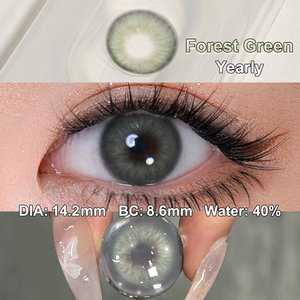
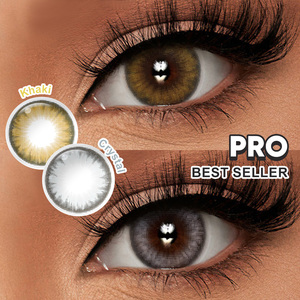
Engineered via proprietary sandwich encapsulation technology, ensuring zero epithelial contact with pigments while delivering outstanding oxygen permeability across diverse wear cycles.
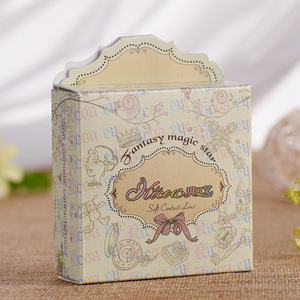
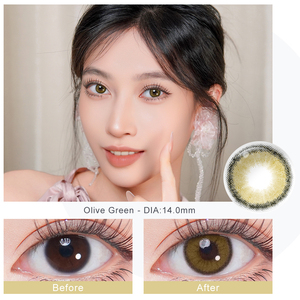
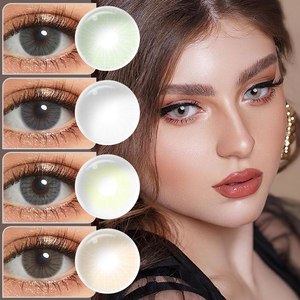
The Ophthalmic Engineering of Hazel Contact Lenses: Optical Precision Meets Chromatic Realism
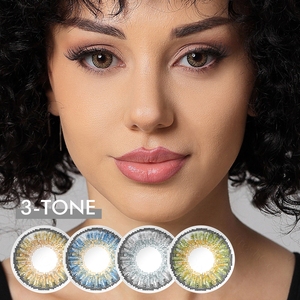
In the global cosmetic contact lens sector, hazel remains the most sought-after and complex color profile to formulate and manufacture. Unlike monochromatic lenses such as jet black or solid blue, an authentic hazel hue requires a subtle transition between amber, golden brown, deep forest green, and micro-dispersed ochre pigments. In human irises, hazel pigmentation is characterized by Rayleigh scattering and a moderate concentration of melanin predominantly within the anterior border layer. Replicating this optical phenomenon on an ultra-thin hydrogel lens matrix without sacrificing corneal physiological equilibrium is the core benchmark by which top-tier contact lens factories are assessed.
Professional procurement teams, clinical optometrists, and multi-market brand owners must navigate significant engineering differentiators when evaluating hazel contact lens manufacturers. Foremost is the Pigment Encapsulation Architecture. Substandard manufacturers utilize direct surface pad printing, leaving exposed colorants that can cause mechanical friction against the palpebral conjunctiva, micro-abrasions on corneal epithelial cells, and toxic leaching of iron oxides or reactive color pastes. Premium contract manufacturers enforce a sandwich cast-molding encapsulation process, permanently isolating the pigment layer between two layers of clear optical polymer (typically poly-HEMA or fluorosilicone hydrogel). This guarantees that neither corneal nor lid surfaces ever come into contact with microscopic pigment particles.
Furthermore, optical zone engineering determines consumer visual performance. A hazel contact lens must integrate a clear central optical zone measuring between 4.0 mm and 4.8 mm to accommodate photopic and scotopic pupil dilations while ensuring the printed pattern does not induce peripheral haloing or tunnel vision. The peripheral graphic diameter (G.DIA) must be meticulously calibrated relative to the total lens diameter (typically 14.0 mm to 14.5 mm) to preserve corneal limbal metabolic respiration while satisfying the consumer’s aesthetic requirement for iris enlargement or hyper-realistic color transformation.
Top 10 Hazel Contact Lenses Factories & Exporters: Global Evaluation
This industry audit profiles the leading global contact lens manufacturing plants, analyzing automated manufacturing infrastructure, regulatory dossier availability, pigment encapsulation technology, and B2B private label support capabilities.
| Manufacturer / Brand | Manufacturing Base | Primary Substrate | Molding & Print Technology | Key International Compliance | Wholesale / OEM Profile |
|---|---|---|---|---|---|
| Velalens Technology | China (GMP Cleanroom) | HEMA Hydrogel / Si-Hy | Dual-Sided Cast Molding + Sandwich | CE, ISO 13485, US FDA 510(k) Ready | Agile OEM/ODM, Low MOQ (~300 pairs) |
| Pegavision Corporation | Taiwan | Silicone Hydrogel | High-Speed Automated Injection | US FDA, CE 0197, TFDA, PMDA | Large Retail Volume Private Label |
| Interojo Co., Ltd. | South Korea | Ultra-Thin Hydrogel | Multi-Layer Cast Pad Matrix | CE, KFDA, ISO 13485, JP MHLW | Cosmetic Brand Sourcing & Toric Lenses |
| Bescon Co., Ltd. | South Korea | Cast HEMA / Poly-HEMA | Full Cast Semi-Dry Coating | CE 0434, ISO 9001, KFDA | Long-cycle (6M / Yearly) Specialists |
| St. Shine Optical | Taiwan | Ocufilcon D / HEMA | Fully Automated Wet Molding | US FDA 510(k), CE, ISO 13485 | High-Volume Daily Disposables |
| G&G Contact Lens | South Korea | Hydrogel Polymeric Resin | Dual Cast Enclosed Sandwich Layer | CE, KFDA, Health Canada | Realistic Multi-Tone Hazel Lenses |
| Neo Vision Co., Ltd. | South Korea | 2-HEMA Polymers | Cast Molding Sandwich Micro-Drop | CE, ISO 13485, KGMP | Circle Lens & Novelty Cosmetic Series |
| Belmore Contact Lens | South Korea | Silicone-Modified Hydrogel | Continuous Wet Compression | ISO 13485, CE, KFDA | High Oxygen Dk/t Cosmetic Contracts |
| MaxVue Vision | Malaysia / Global | Hydrogel Terpolymer | Precision Colour-Lock Pad Printing | CE Marking, ISO 9001 | Distribution Chains & Boutique Brands |
| Menicon / Innova Tech | Japan / Singapore | High-Dk/t Silicon Hydrogel | Nano-Precision Lathe / Cast Hybrid | US FDA, PMDA, CE MDR | Premium Optical & Therapeutic Supply |
Velalens stands at the forefront of high-precision cosmetic colored contact lens manufacturing, providing agile, fully compliant contract manufacturing for international distributors, beauty influencers, and optical groups. Operating strictly under ISO 13485-certified Class 100,000 cleanroom environments, Velalens utilizes high-precision automated cast molding and a proprietary Pigment Sandwich Isolation Process. This guarantees 100% biological isolation between the pigment formulation and the ocular tissues. Specializing in complex 3-tone hazel, pure hazel, and natural hidrocor designs, Velalens offers rapid sample turnaround (3–7 days), customized blister/vial configurations, tailored carton printing, and complete technical documentation to streamline regulatory import clearances in North America, the European Union, the Middle East, and Latin America.
Pegavision is renowned for its robotic production efficiency, producing millions of single-use lenses per month. Their hazel lens formulations feature ultra-fine micro-dot matrices designed for daily disposable cosmetic lines. With substantial automated inspection rigs ensuring uniform edge profiles and exact center thickness, Pegavision remains a premier manufacturing partner for large-scale enterprise pharmaceutical and optical retail chains demanding multi-container volume shipments.
Interojo is recognized for combining fashion cosmetic aesthetics with clinical vision correction. Their hazel contact lens collection utilizes aspheric design optics to diminish spherical aberrations under dim lighting conditions. Incorporating sodium hyaluronate wetting agents into the packaging solution, their multi-tone hazel lenses serve high-end European and Asian beauty markets requiring certified therapeutic and refractive reliability.
As one of the earliest pioneers in colored contact lens manufacturing in East Asia, Bescon operates specialized casting systems that synthesize high-tensile hydrogel matrices. Their hazel designs emphasize dimensional stability, allowing wearers to preserve comfortable lens geometry over 6-month and yearly replacement cycles with minimal protein deposition.
St. Shine operates extensive contract manufacturing plants, producing cosmetic lenses under strict GMP guidelines. Their hazel pad printing processes enable uniform tone replication across massive production batches. Distributors seeking turnkey private labeling for international chain stores often leverage St. Shine's reliable mass-scale manufacturing pipelines.
G&G Contact Lens has earned international acclaim for its intricate chromatic designs, offering cosmetic lenses that blend seamlessly with naturally dark Asian, Hispanic, and Middle Eastern eyes. Their multi-tone starburst hazel patterns simulate the radial striations and natural crypts of the human iris, eliminating artificial flat appearances.
Neo Vision specializes in the "sandwich" pigment method, ensuring the biocompatibility of their circle and natural hazel lenses. Their production facilities utilize digital micro-drop casting, creating precise limbal definition that provides subtle iris enhancement suitable for both retail optical channels and cosmetic e-commerce platforms.
Belmore focuses on solving corneal hypoxia issues frequently associated with poorly manufactured cosmetic lenses. By integrating silicone-modified hydrogels with high oxygen transmissibility (Dk/t), their hazel lenses ensure that consumers can enjoy striking cosmetic color enhancement during extended 12-hour workdays without experiencing corneal swelling or redness.
MaxVue Vision combines direct production capabilities with exceptional global branding and wholesale distribution logistics. Their hazel series, spanning honey hazel, warm pure hazel, and hazel circle variants, are distributed in more than 60 countries. They offer established packaging standards, making them a safe choice for boutique optical distributors looking for ready-to-sell cosmetic SKUs.
Menicon, a premier Japanese contact lens multinational, engineered the Miru and related cosmetic colored lines to meet strict ophthalmic standards. Utilizing smart touch blister packaging that ensures the lens is always positioned face down for hygienic insertion, Menicon’s hazel lens options represent the highest tier of medical-grade engineering, clinical research, and consumer safety.
Future Procurement Trends: Where B2B Sourcing Is Heading (2025–2030)
Procurement directors and brand managers are adapting to significant market changes driven by stricter medical device regulations, rising consumer expectations for ocular comfort, and evolving omnichannel fulfillment models. Understanding these structural shifts is essential for optimizing procurement strategies over the next five years:
1. Mass Migration to Silicone Hydrogel (Si-Hy)
Traditional poly-HEMA materials (Dk/t around 15–25) are increasingly seen as inadequate for extended daily wear. Buyers are shifting procurement allocations toward silicone hydrogel formulations boasting Dk/t ratings above 65. This transition requires factories to upgrade from conventional pad printing to plasma-treated surfaces that prevent pigment degradation and lipid buildup while supporting prolonged ocular hydration.
2. Stringent EU MDR Class IIa Audits
The transition from the EU Medical Device Directive (MDD 93/42/EEC) to the Medical Device Regulation (EU MDR 2017/745) has reshuffled export markets. Cosmetic colored contact lenses (even non-corrective plano versions) fall under strict Annex XVI classifications. Importers now require factories to provide comprehensive Technical Documentation Files (TDF), clinical biocompatibility audits (ISO 10993), and verified Notified Body certificates before issuing letters of credit.
3. Flexible Supply Chains & On-Demand Drops
The historical model requiring 10,000 pairs per SKU is giving way to agile, data-driven procurement. Direct-to-consumer (DTC) beauty brands demand initial production runs starting from 300 to 500 pairs per color, combined with rapid regional replenishment pipelines. Factories like Velalens, which support responsive modular private labeling, enable brands to test niche color variations (such as amber hazel vs. olivine hazel) without incurring excessive warehouse holding costs.
Technology Trends: The Next Generation of Hazel Contact Lens Manufacturing
Continuous innovation in polymer synthesis and color printing is revolutionizing cosmetic contact lens performance, ocular safety, and aesthetic versatility. Key technological developments include:
Nano-Encapsulation & Micro-Slit Matrices
Advanced factories now deploy nano-scale, FDA-approved cosmetic colorants encased within bio-inert hydrophilic shells. By engineering micro-slit optical patterns, manufacturers allow dissolved oxygen to permeate directly through pigment boundaries. This balances rich color saturation with healthy corneal respiration.
Digital HD Multi-Layer Jet Printing
Moving beyond physical silicone pad stamping, state-of-the-art facilities utilize automated piezoelectric inkjet printing directly into the female mold half. This yields droplet resolutions exceeding 2400 DPI, allowing multi-layer hazel gradients (combining caramel, honey, and charcoal limbal rings) to blend seamlessly with real iris textures.
Hyaluronic Acid (HA) Infused Blister Buffers
To mitigate the end-of-day dryness often associated with high-pigment lenses, leading exporters now package lenses in buffered isotonic saline solutions enriched with sodium hyaluronate (HA) and Poloxamer. This creates a moisture cushion around the lens surface, reducing initial insertion friction and improving comfort for dry-eye wearers.
Integrated Class II UV & HEV Blue Blocking
Modern hazel contact lenses are increasingly engineered as multifunctional ocular shields. By polymerizing organic benzophenone UV absorbers directly into the lens matrix, factories achieve >98% UVB and >85% UVA photoprotection without degrading color clarity or altering the realistic warmth of the hazel hues.
Factory Competence & Production Strengths: The Velalens Advantage
As a leading Chinese manufacturer and global exporter of cosmetic colored contact lenses, Velalens Technology Co., Ltd. bridges the gap between affordable OEM production and world-class medical device manufacturing standards. When sourcing from Velalens, global distributors secure tangible engineering advantages:
Certified Class 100,000 Cleanrooms
Every casting, molding, hydration, inspection, and autoclave sterilization cycle takes place within strictly monitored, temperature- and humidity-controlled cleanrooms. We enforce comprehensive bioburden controls, zero-dust air filtering, and automated gowning airlocks meeting international medical device standards.
Proprietary Color-Lock Sandwich Method
Our hazel colorants are locked permanently between biocompatible HEMA polymer layers. We subject every batch to strict 121°C autoclave steam sterilization and alcohol rub tests to ensure zero pigment shedding, keeping eyes protected and compliant with consumer safety norms.
Complete In-House Testing Laboratory
Our quality control unit runs 100% video-optical inspections for center thickness, edge contour smoothness, base curve stability (BC 8.5 to 8.7 mm), graphic diameter accuracy, refractive index consistency, and dissolved oxygen transmissibility (Dk/t) on every lot.
Custom Packaging & Fast Sampling
From personalized foil blister peel-packs to luxury cardboard packaging and multi-vial kits, we manage private label production from end to end. In-stock hazel styles can be sampled in just 3 to 7 days, while custom ODM patterns typically ship within 2 to 3 weeks.
Broad Prescription Range (0.00 to -8.00 D)
Unlike novelty costume lens makers limited to non-prescription (plano) lenses, Velalens produces hazel lenses across accurate myopic powers from -1.00 to -8.00 D, with selected options for toric and multifocal needs.
Complete Regulatory Dossier Support
We provide international distributors with complete ISO 13485 certificates, Certificate of Free Sale (CFS), Declarations of Conformity, biocompatibility test files, and English labeling artwork to simplify local health authority registrations.
Frequently Asked Questions for Hazel Contact Lens Sourcing
Below are clear, practical answers to common questions asked by B2B buyers, retail category managers, and regulatory officers when evaluating contract manufacturing partners:
What is the realistic MOQ for private label hazel contact lenses?
How do you verify that pigments do not leach or cause ocular irritation?
What is the difference between Cast Molding and Lathe Cutting for colored contact lenses?
Can hazel contact lenses effectively cover very dark brown or black irises?
What documents are required to import cosmetic contact lenses into the US and European Union?
What are typical sample turnarounds and mass production lead times?
Ready to Launch or Expand Your Hazel Contact Lens Line?
Connect with our OEM/ODM export team today to request a comprehensive product catalog, pricing matrices, sample kits, and technical documentation customized to your target retail markets.