Navigating the Global Cosmetic & Fashion Contact Lens Manufacturing Landscape
Deciphering ophthalmic manufacturing standards, Class II/III medical device safety barriers, biocompatible pigment isolation, and procurement dynamics for private label ocular beauty brands.
The global cosmetic contact lens sector has evolved far beyond novelty and theatrical accessories. Driven by the convergence of fast beauty aesthetics, vision correction demographics, and advanced ophthalmic polymer chemistry, fashion contact lenses represent one of the highest-growth categories in cross-border retail. However, for optical brand owners, pharmacy retail distributors, and e-commerce aggregators, sourcing from a vetted fashion contact lenses manufacturer requires strict adherence to international regulatory frameworks, specifically regarding corneal physiological integrity.
Unlike standard clear soft contact lenses, color lenses involve multi-layer micro-encapsulated colorants embedded into polymeric hydrogels (such as Poly-HEMA or Silicone Hydrogel). Substandard manufacturing that exposes bare pigment to corneal epithelium can precipitate microbial keratitis, mechanical corneal abrasion, and hypoxia. This procurement analysis delivers comprehensive, verifiable engineering data to help procurement directors evaluate manufacturing certifications (US FDA 510(k), EU Medical Device Regulation MDR (EU) 2017/745, ISO 13485), assess pigment encapsulation reliability, and streamline volume supply contracts with minimum commercial risk.
High-Velocity Cosmetic Contact Lens Lines for Private Label Brands
Engineered for high oxygen permeation, zero-pigment-leakage comfort, and lifelike iris realism across daily, monthly, and yearly wear modalities.
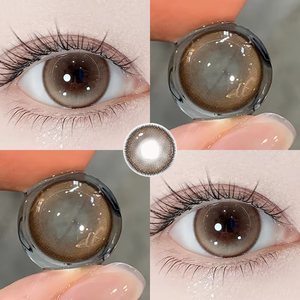
Haipurecon Natural New Series Soft Contact Lenses Beautiful Big Eyes Wholesale Colored Contact Lenses for Eye Enhancements
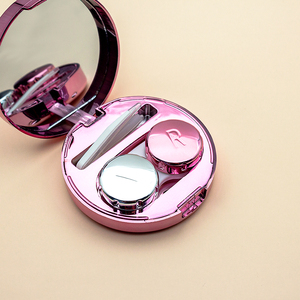
Lalens Cyber Grey Eyes For Dolls Anime Lens Wholesale Coloured Contacts Lentes De Contacto Contact Lens Wholesale

High Quality Comfortable Soft Crazy Cosmetic Three-Tone Colored Contact Lenses Red/Gray/Green 2-Piece Pack 38% Water Content
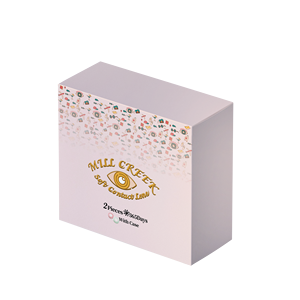
MILL CREEK Estuche Para Lentes de Contacto Cosmetic Contact Lens Case Box Wholesale OEM Custom Logo Travel
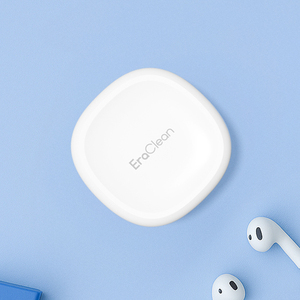
105KHz High Frequency Ultrasonic Cleaner for Ortho-K Contact Lenses Cleaning Machine 800mAh Magnetic Charging with UVC Light
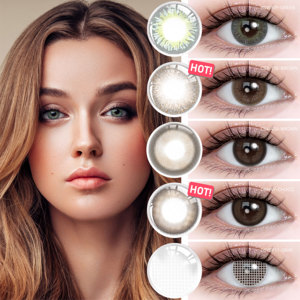
Free Sample Wholesale Soft Colored Contact Lenses Hidrocor Prescription Contact Lenses Natural Colored Eye Lenses
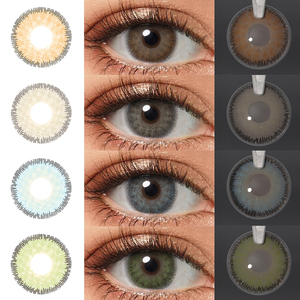
Freshgo Wholesale Korea 1 Year Color Eye Contact Lenses Fashion Soft Colored Contacts Natural Color Contact Lens
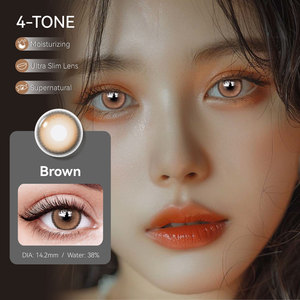
Autumn Cornfield Brown Non-Prescription Contact Lenses Natural Soft 14mm Diameter Available in Grey and Purple Colors
Top 10 Fashion Contact Lenses Manufacturers: Global Manufacturing Matrix
A rigorous comparative analysis of dominant global conglomerates and high-agility OEM/ODM manufacturing facilities worldwide.
| Manufacturer | Primary Production Technology | Polymer Specialization | MOQ Flexibility | Lead-Time (Mass OEM) | Regulatory Cleared Markets |
|---|---|---|---|---|---|
| Velalens (OEM Specialist) | Triple-Layer Sandwich Micro-Cast | Silicone Hydrogel & HEMA | High (From ~300 pairs) | 3–4 Weeks | FDA, CE MDR, NMPA, SFDA |
| Alcon Vision LLC | Cast Molding LightStream Tech | Delefilcon A (Water Gradient) | Very Low (Proprietary Only) | Corporate Distribution | Global (FDA, CE, PMDA) |
| Johnson & Johnson (Acuvue) | Stabilized Dual-Curvature Cast | Senofilcon A / Etafilcon A | None (Own Brand Distribution) | Wholesale Allocation | Global (FDA, CE, Health Canada) |
| CooperVision | UltraSync Cast Lathe Polished | Somofilcon A / Ocufilcon D | Restricted to Global Chains | 12–16 Weeks | Global Tier 1 Markets |
| Bausch + Lomb | Automated Cast Hydrophobic Coating | Nesofilcon A / Bafilcon A | Institutional Only | 10–14 Weeks | Global Major Territories |
| Interojo Co., Ltd. (Korea) | Cast Molding Multi-layer Pad Print | HEMA Hydrogel | Moderate (3,000–5,000 pairs) | 6–8 Weeks | CE, KFDA, selected FDA 510(k) |
| Pegavision Corporation (Taiwan) | Fully Automated High-Volume Cast | HEMA / High-Dk Hydrogel | High Volume (10,000+ units) | 8–10 Weeks | CE, FDA, TFDA, PMDA |
| St. Shine Optical | Precision Cast Molding | Ocufilcon Hydrogel | High Volume (5,000+ pairs) | 7–9 Weeks | CE, FDA, TFDA |
| Menicon Co., Ltd. (Japan) | High-Precision Lathe & Cast | Silicone Hydrogel / Asmofilcon | Low (Exclusive B2B Contracts) | 12+ Weeks | PMDA, CE, FDA |
| Seed Co., Ltd. (Japan) | Nano-sandwich UV blocking Cast | Ionic / Non-ionic Hydrogel | Custom Tiering | 8–12 Weeks | PMDA, CE |
Strategic Sourcing Takeaway for Independent Brands
While ophthalmic giants like Alcon and Johnson & Johnson dominate retail shelf share with clinical corrective lines, they operate closed closed-loop distribution channels with virtually zero private-label OEM accessibility for external brands. Conversely, East Asian specialist manufacturers—headlined by Velalens and specialized contract facilities in Taiwan and South Korea—offer the precise flexibility, rapid design-to-mold iteration, low opening MOQs, and proprietary aesthetic customization required by modern beauty disruptors and digital D2C brands looking to launch compliant cosmetic collections.
The Science of Corneal Safety: Sandwich Print Technology & Hydrogel Synthesis
Understanding the micro-engineering difference between cheap, unregulated colored lenses and medical-grade ophthalmic products.
Full Sandwich Encapsulation
Lenses produced using surface pad-printing expose insoluble dye pigments directly to the palpebral conjunctiva and corneal epithelium, which can lead to pigment shedding and mechanical irritation. Velalens utilizes Triple-Layer Cast Molding, fusing colorants between two micro-thin layers of medical polymer to ensure zero pigment-corneal contact.
Oxygen Transmissibility (Dk/t)
Hypoxic stress causes corneal edema and limbal vascular injection. By balancing hydration profiles (38% to 55% water content) and transitioning select product lines to advanced Silicone Hydrogel matrices, our manufacturing process maintains sufficient atmospheric oxygen flux to sustain healthy tear exchange across extended wear cycles.
Optical Zone & Edge Geometry
Off-center optical apertures can blur vision when pupils dilate in low-light environments. Velalens standardizes clear pupillary apertures between 5.5mm and 6.2mm, accompanied by automated Beveled Edge Buffing that lowers friction against the eye during the normal 15,000 daily blinks.
Future Sourcing & Procurement Trends: 2025–2030 Market Outlook
Anticipate shifting consumer demographics, clinical transitions, and operational disruptions shaping fashion contact lens manufacturing.
1. Transition to Dailies
Driven by ocular hygiene awareness and fast-paced lifestyles, wholesale demand is shifting rapidly from annual vials to Daily Disposable 10-Packs & 30-Packs, reducing lens care compliance friction and elevating buyer lifetime value (LTV).
2. Hybrid Multifocal & Toric
Color cosmetics are no longer restricted to plano wearers. Sourcing specifications increasingly mandate Cosmetic Toric (Astigmatism) and Presbyopia Multifocal optics integrated into multi-tone cosmetic patterns, unlocking an underserved high-margin demographic.
3. Natural Iris Micropatterns
Oversized circle lenses are maturing into sophisticated, low-contrast micro-dot patterns that enhance dark and light irises realistically in daylight and high-definition video environments (TikTok, Instagram, 4K streaming).
4. Tightened Global Audits
The enforcement of EU MDR 2017/745 and stringent US FDA 510(k) substantial equivalence verifications are removing non-compliant gray-market factories from international commerce, consolidating market volume into certified facilities.
Why Tier-1 Brands & Global Distributors Partner with Velalens
Combining vertically integrated cleanroom manufacturing with design flexibility and full technical dossier support.
Automated Class 100,000 Cleanrooms
Our production facilities utilize automated casting lines, continuous dry-cast hydration cycles, and high-pressure steam terminal autoclaving at 121°C for 30 minutes, ensuring an inspected Sterility Assurance Level (SAL) of 10⁻⁶ across all sterile barrier blister packs.
Full Regulatory Dossier Support
We supply buyers with comprehensive technical files per SKU: cytotoxicity screening (ISO 10993-5), ocular irritation evaluation (ISO 10993-10), accelerated aging shelf-life reports (ASTM F1980), residual monomer extractions, and microbial bioburden testing for local registrations.
Agile Prototyping & Custom Packaging
From initial Pantone color matching to functional copper plate engraving and hydrogel sampling within 2 to 3 weeks. Full OEM packaging services include luxury outer boxes, tamper-evident seals, localized multilingual leaflets, and unique serial lot barcodes.
Frequently Asked Questions: Sourcing & Contract Manufacturing
Clear, unvarnished guidance on operational lead-times, regulatory registrations, and supply chain logistics.
What are the minimum order quantities (MOQ) for custom private label production? +
How do you verify pigment containment within the polymer matrix? +
What regulatory documentation is provided for customs clearance and regional registration? +
What is the typical production timeline from artwork sign-off to international dispatch? +
Can you manufacture corrective prescription lenses alongside plano cosmetic contacts? +
Ready to Engineer Your Brand's Next-Generation Cosmetic Lens Line?
Consult with our ophthalmic manufacturing engineers to request physical evaluation samples, review our master formulation files, or configure your bespoke private-label packaging.