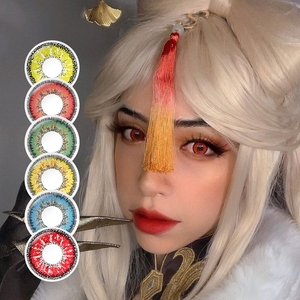
 Costume / Cosplay
Hot Sales Pseyeche Halloween Contact Lenses Crazy Lens Dolly Eye Soft Lens Circle Lenses
Diameter: 14.50mm | Base Curve: 8.6mm | Opacity: High-Density Pigment Layer | Period: Yearly
Engineered for high oxygen transmissibility, physiological comfort, and optical stability. Fully compliant with US FDA, CE, and ISO 13485 manufacturing protocols.
Costume / Cosplay
Diameter: 14.50mm | Base Curve: 8.6mm | Opacity: High-Density Pigment Layer | Period: Yearly
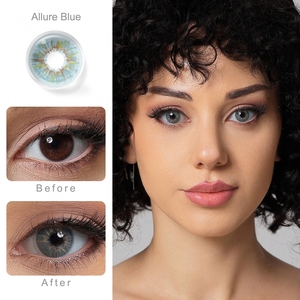 Limbal Enlarging
Graphic DIA: 13.8mm | Water Content: 40% | Material: Hydrogel (HEMA) | Wear: 12-Month Replacement
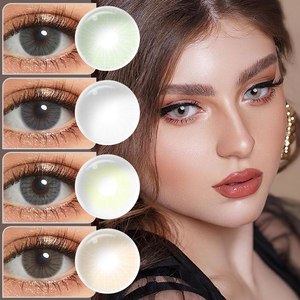 Natural Iris Blend
Diameter: 14.20mm | Water: 42% | Edge Design: Multi-Curve Comfort Bevel | Prescription: Plano to -8.00
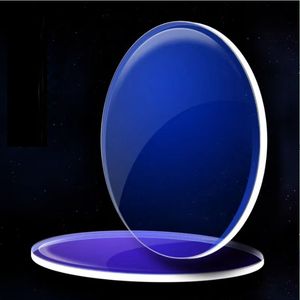 Optical Protection
Protection: 420nm Blue Light Cut | Transmittance: 95% | Base: Glass HD Substrate | Wear Cycle: 1 Year
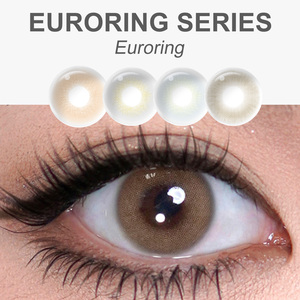 K-Beauty Aesthetics
Tone: Dual & Tri-tone Dot Matrix | DIA: 14.0mm - 14.2mm | Packaging: Fully Branded Blister Packs
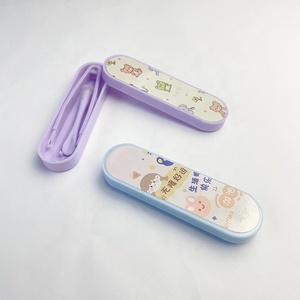 Accessory & Hygiene
Material: Medical-grade Non-toxic PP | Components: Storage Case, Suction Wand, Soft-Tip Tweezers
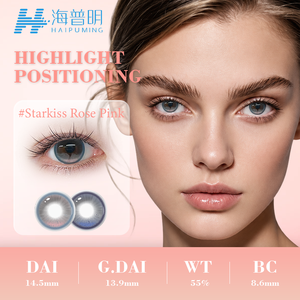 Daily Disposable
Cycle: Daily Wear (Single Use) | Water: 55% High Hydration | Oxygen Dk/t: Optimized | MOQ: 500 Boxes
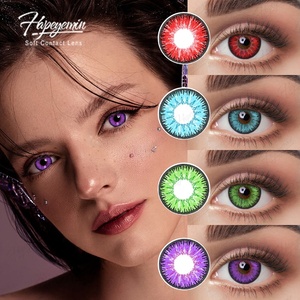 Medical CE Certified
Certificates: CE 0197, ISO 13485 | Production: Cast Molding Cleanroom Class 100,000 | Custom Branding
Combining automated cast-molding precision with bio-compatible polymer engineering, we operate as a dedicated manufacturing partner providing end-to-end supply stability.
Unlike cheaper cosmetic alternatives that pad-print ink directly on the lens surface, our Micro-Sandwich Encapsulation embeds colorants safely between two layers of bio-hydrogel. The ocular surface and inner palpebral conjunctiva never come into direct contact with color pigments, preventing mechanical friction and dye leaching.
Our production facilities leverage computerized cast-molding lines capable of turning out up to 300,000 units daily. Automated edge-buffing systems generate an ultra-thin, smooth beveled profile, ensuring high tear exchange, constant corneal rehydration, and zero rotational displacement during standard eye movement.
We supply buyers with thorough technical documentation per SKU. Our export files encompass comprehensive biocompatibility testing (cytotoxicity, systemic toxicity, ocular irritation), stability data, shelf-life verification, and sterilizer batch logs to fast-track approval with US FDA 510(k), EU MDR (2017/745), and local Ministry of Health agencies.
Strategic market intelligence for visual health retailers, distributors, and e-commerce leaders preparing their forward supply chains.
Historically, circle lenses (aesthetic enlarging lenses characterized by a dark, distinct limbal ring) have been formulated using Poly-HEMA (2-hydroxyethyl methacrylate) hydrogels. While HEMA materials allow high water content (38% to 55%), oxygen delivery is restricted to passive fluid diffusion, yielding an oxygen transmissibility (Dk/t) typically hovering between 15 to 25 Barrer/cm.
Driven by strict optometrist guidelines and consumer demand for 12+ hour daily wear, the market is undergoing a decisive shift toward Silicone Hydrogel matrices (such as Filcon V formulations). Silicon polymers allow gaseous oxygen to dissolve directly across the lens material without depending exclusively on water transport, pushing oxygen transmissibility above 80–120 Dk/t. B2B sourcing agents must prioritize suppliers that possess precision cast-molding tech capable of handling silicone polymers without clouding the colorant layer or destabilizing the sandwich barrier.
While traditional yearly circle contact lenses remain profitable in emerging markets due to end-user price sensitivity, developed markets (North America, Western Europe, Japan, and South Korea) are experiencing exponential growth in daily disposable circle lenses. Daily disposable modalities systematically eradicate the hazards of protein build-up, microbial biofilm development, and preservative-induced ocular allergy caused by multipurpose cleaning solutions.
For brands and distributors, daily modalities generate a significantly higher Lifetime Value (LTV) per customer, transition purchasing from occasional cosmetic use to monthly recurring replenishment subscriptions, and drastically decrease customer service complaints tied to lens degradation or improper hygiene habits.
The boundary between purely corrective medical devices and daily cosmetic beauty enhancers has evaporated. Leading optical developers are embedding non-toxic, high-transmittance chromophores directly into the monomer formulation. As demonstrated in our Rehoboth High-definition Series, modern circle lenses incorporate selective narrow-band filters that block up to 95% of high-energy visible (HEV) blue light (400nm–450nm) and provide Class II UV absorbing capabilities (blocking >95% UVB and >70% UVA) while preserving real-world color fidelity.
| Evaluation Parameter | Legacy HEMA Hydrogel Lenses | Next-Gen Silicone Hydrogel (SiHy) | Velalens Certified Standard |
|---|---|---|---|
| Oxygen Transmissibility (Dk/t) | 15 – 25 Barrer/cm | 80 – 130 Barrer/cm | 85 – 110 Barrer/cm (Custom Line) |
| Pigment Printing Mechanism | Surface Pad-Printing (High Friction) | Cast Mold Interlayer Entrapment | Proprietary Micro-Sandwich Encapsulation |
| Modalities / Wear Cycle | Mainly 6-Month to Yearly | Daily Disposable & Monthly | Daily, Monthly, 6-Month, Yearly |
| Limbal Ring Dispersion | Coarse pixelation, sharp unnatural edge | Micro-dot gradience, natural fade | High-Definition Aspheric Dot Matrix |
| Regulatory Classification | Medical Class II (FDA) / Class IIa (CE) | Medical Class II / Class IIb (MDR) | Full 510(k), CE 0197, ISO 13485 Records |
How procurement professionals eliminate border-clearance roadblocks, ensure product safety, and secure high gross margins.
Contact lenses are invasive medical devices regulated under strict jurisdictions. Never partner with trading intermediaries who cannot supply an ISO 13485 certificate directly referencing the manufacturing plant. Inquire if their European Notified Body certificate is updated to the stringent EU Medical Device Regulation (MDR 2017/745), as grandfathered MDD certificates will no longer clear customs in EU member states.
Before issuing purchase orders, request physical laboratory verification of pigment entrapment. The industry standard testing protocol entails immersing the hydrated contact lens in an organic solvent (such as isopropyl alcohol) and subjecting the optical surfaces to repeated mechanical abrasion under microscopic inspection. Zero pigment displacement or discoloration should be visible on the rubbing swab.
Circle contact lenses achieve cosmetic enlargement by enlarging the outer limbal diameter (often up to 14.5mm with a graphic diameter of 13.8mm). However, poorly engineered designs intrude upon the clear central optical zone (<5.0mm). When the user's pupil dilates in low-light environments, an inadequately sized optical zone induces blurry vision, halos, and "tunnel effect" complaints. Inspect pupil aperture specs across every diopter power.
A capable contract manufacturer must accommodate customized secondary packaging (multi-pack cartons, blister foil design, barcode compliance, multidirectional package inserts in required languages) with sensible Minimum Order Quantities. Velalens facilitates new market launches by offering private label blister packaging starting from as low as ~300 pairs per SKU.
Comprehensive solutions to real-world customs, material, engineering, and private label questions.
Direct factory pricing, comprehensive technical dossiers, uncompromised physiological safety, and low starting MOQs. Speak with our global OEM engineering and export consultants today.