Factory-Direct 14.2mm Cosmetic Lens Series & OEM Accessories
Precision-engineered cast-molded contact lenses with graphic diameters ranging from 13.0mm to 13.6mm. Fully customizable under OEM/ODM contract terms with complete export dossier validation.
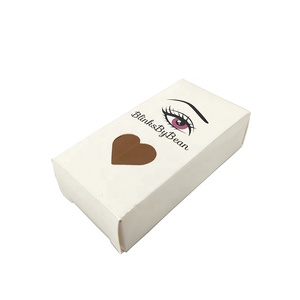
Wholesale Custom Logo Colored Contact Lenses Box Glossy & Matte Lamination
Clinical-grade secondary packaging engineered specifically for 14.2mm blister packs and 10ml vials. High barrier protection, luxury soft-touch or glossy coating, and embedded anti-counterfeiting tracking.
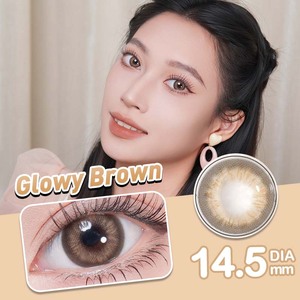
Magister Glowy Wholesale Colored Contact Lenses 14.2mm Natural Iris Series
Ultra-subtle limbal transition designed for realistic everyday eye color enhancement. Micro-dot matrix printing preserves the authentic depth of the wearer's stroma without blocking peripheral light transmission.
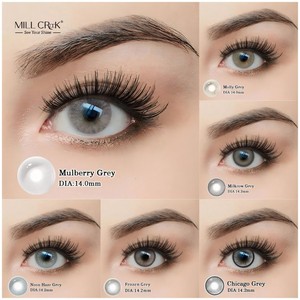
OEM Private Label Gray Series 14.2mm Colored Lenses Factory Direct Supply
High-opacity cool gray formula explicitly formulated to achieve natural coverage over dark irises. Features dual-aspheric edge curvature for optimal tear turnover and extended end-of-day lubricity.
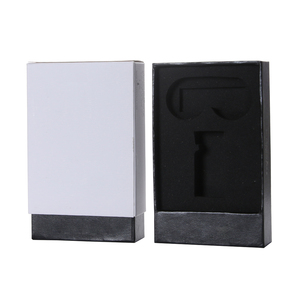
Custom Logo Magnetic Drawer Beauty Packaging Boxes for Contact Lenses
Premium rigid drawer box tailored for influencer kits, high-end retail counters, and private doctor brands. Holds 2 blisters alongside an applicator tweezer with form-fit protective foam.
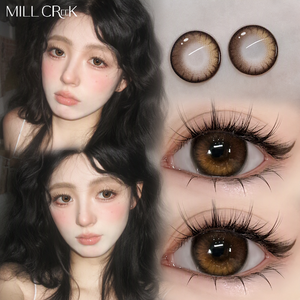
Haipurecon Soft 3 Tone 14.2mm Contact Lenses Wholesale HEMA 40% Water
Tri-concentric pigment architecture seamlessly fusing an amber pupillary collar, a vivid iris body, and a delicate limbal ring. Provides radiant dimensional enlargement without artificial pixelation.
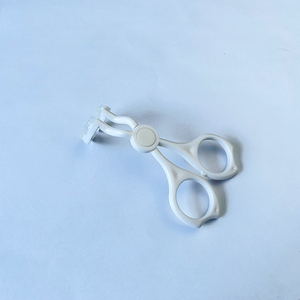
Koncci Ergonomic Contact Lens Applicator Case & Eye-Opener Insertion Tool
Precision hygienic insertion instrument engineered to simplify application for first-time colored lens wearers. Prevents fingernail punctures, bacterial contamination, and corneal scratches during insertion.
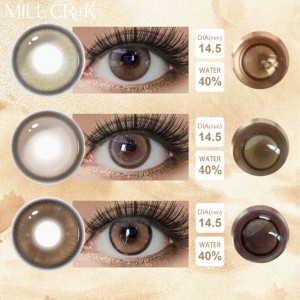
Haipurecon 14.2mm Soft Hydrogel Natural Brown Cosmetic Contact Lenses
Warm honey and chestnut shades cast-molded with high hydration stability. Specifically formulated for markets seeking understated natural radiance and smooth ocular lubricity throughout long digital workdays.
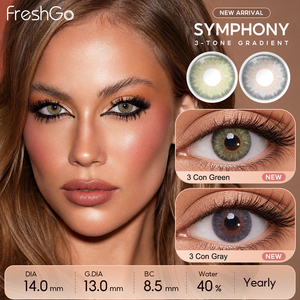
Freshgo Yearly Emerald Green 14.2mm Wholesale Colored Contact Lenses
Striking emerald green chromatic formulation boasting extreme resistance to protein fouling. Uses fully entrapped organic pigments suitable for salon, cosplay, fashion retail, and daily cosmetic lines.
The Biomechanical Authority of 14.2mm: Why It Dominates Global Sourcing
In the international contact lens sector, the 14.2mm total diameter (DIA) has emerged as the unchallenged architectural benchmark for cosmetic hydrogel and silicone-hydrogel lenses. To understand why global distributors and optical chains consolidate over 78% of their stock-keeping units (SKUs) around 14.2mm, sourcing directors must examine the intersection of corneal topography, sagittal depth (SAG), and chromatic graphic diameter (GDIA).
Human corneal physiology exhibits an average Horizontal Visible Iris Diameter (HVID) of approximately 11.8mm ± 0.5mm across Caucasian, Asian, Hispanic, and Middle Eastern populations. An optimal soft contact lens must provide complete corneal coverage, extending roughly 1.0mm to 1.2mm beyond the limbus onto the sclera to maintain stability, prevent localized peripheral drying, and ensure smooth tear exchange beneath the lens during the blink cycle. A total diameter of 14.2mm paired with a base curve (BC) of 8.5mm to 8.6mm generates the exact capillary tension and peripheral edge clearance required to stabilize the lens against lid shear stress without inducing limbal compression or conjunctival indentation.
Technical Insight for Optical Importers: While a lens may measure 14.2mm in total mechanical diameter, its aesthetic impact is determined by its Graphic Diameter (GDIA)—typically calibrated between 13.0mm and 13.6mm. This leaves an optically clear 0.3mm to 0.6mm peripheral edge zone that facilitates adequate oxygen delivery to the limbal stem cell niches while delivering believable cosmetic enlargement.
Material Performance: PolyHEMA vs. Next-Gen Silicone Hydrogel
A major differentiation factor among leading contact lens factories is their polymer formulation. Traditional cosmetic lenses rely on Poly-2-hydroxyethyl methacrylate (PolyHEMA) hydrogels with water contents between 38% and 42%. These materials offer exceptional mechanical softness, low modulus (0.3 to 0.5 MPa), and reliable cast-molding repeatability. However, their oxygen transmissibility ($Dk/t$) is fundamentally restricted by water content, hovering around 15 to 25 Barrers/cm.
Modern medical exporters have developed advanced fluorosilicone hydrogel platforms capable of boosting oxygen transmissibility to $Dk/t > 80$, drastically reducing nocturnal hypoxia risk, corneal edema, and neovascularization. For distributors entering highly regulated markets like the European Union (EU MDR 2017/745 Class IIa) or the United States (US FDA 510(k) Class II Medical Device), validating the polymer's oxygen profile alongside biocompatibility reports (ISO 10993) is mandatory.
Top 10 Global 14.2mm Colored Contact Lens Manufacturers & Exporters
Our engineering audit evaluates the world's premier colored contact lens factories based on cleanroom automation, micro-encapsulation technology, production yields, and international regulatory clearance dossiers.
| Manufacturer / Exporter | HQ / Plant Base | Core Materials | Printing Technology | Certifications | Standard MOQ | Turnaround |
|---|---|---|---|---|---|---|
| Velalens Technology / haipurecon | China (Jiangsu / Jilin) | HEMA / Si-Hy Hybrid | Full Sandwich Automated Cast | CE 0197 / ISO 13485 / NMPA | 300 Pairs / SKU | 14–25 Days |
| Innova Vision Inc. | Taiwan | HEMA 42% | Cast-Molded Micro-Pad Print | CE / US FDA 510(k) / TFDA | 3,000 Pairs | 30–45 Days |
| Pegavision Corporation | Taiwan | Silicone Hydrogel | High-Precision Automated Inkjet | CE / US FDA / PMDA Japan | 5,000 Pairs | 45–60 Days |
| Bescon Co., Ltd. | South Korea | Polymacon / Cast Mold | Cast-Molded Encapsulation | KGMP / CE / ISO 13485 | 1,000 Pairs | 25–35 Days |
| G&G Contact Lens | South Korea | PolyHEMA 40% | Dual-Layer Sandwich Matrix | KGMP / CE 1023 | 1,000 Pairs | 30 Days |
| Interojo Inc. (Clalen) | South Korea | Ultra-Soo High Water HEMA | Multi-Tone Iris Layering | US FDA / CE / ISO 13485 | 5,000 Pairs | 40–50 Days |
| Seed Co., Ltd. | Japan | Zwitterionic Material (SIB) | Internal Micro-Pigment Dispersal | PMDA Approved / CE | 10,000 Packs | 60 Days |
| St. Shine Optical | Taiwan | Oculfilcon D / HEMA | Rotary Cast-Mold Printing | US FDA / CE / ISO 13485 | 5,000 Pairs | 30–45 Days |
| Menicon Co., Ltd. | Japan | Silicone Hydrogel | Laser-Etched Color Boundary | Global Medical Clearance | Proprietary Line | Contract Basis |
| Bausch + Lomb (Cosmetics Div.) | Global / Ireland | Hilafilcon B | Integrated Surface Layering | Global FDA / CE / PMDA | Enterprise Scale | Contract Only |
For independent brands, optical wholesalers, and e-commerce leaders, partnering with an agile manufacturer like Velalens Technology provides a distinct strategic edge. While legacy Taiwanese and Japanese factories require exorbitant minimum commitments (3,000 to 10,000 pairs per SKU) and multi-month production horizons, Velalens bridges the gap with medical-grade ISO 13485 compliance, full Class 100,000 automated cast-molding, and accessible entry volumes starting from 300 pairs per tone.
Velalens Engineering Prowess & Factory Capabilities
State-of-the-art cleanroom facilities, closed-loop optical casting, and complete clinical test portfolios designed to insulate your brand from regulatory risk.
Tri-Layer Sandwich Technology
Color pigments (iron oxides, titanium dioxide, phthalocyanines) are permanently sealed between two pristine, optical-grade HEMA layers. The dye never contacts the corneal endothelium or palpebral conjunctiva, completely eliminating chemical leaching and toxic keratopathy.
100% Automated Optical Inspection (AOI)
Every single lens undergoes sub-micron automated vision system inspection prior to blister packing. High-speed telecentric cameras verify diameter tolerance (±0.05mm), base curve concentricity, edge burrs, color print centering, and particulate inclusion.
Turnkey OEM & Regulatory Support
We supply full technical documentation: Biocompatibility (cytotoxicity, systemic toxicity, ocular irritation), stability aging data, and sterilized barrier validation. We provide full carton customization, blister foil sealing, and multi-language patient instructional leaflets (IFU).
Future Procurement & Product Trends (2025–2030)
Anticipate shifting consumer demographics, material sciences, and clinical regulatory policies to maintain competitive product margins.
Silicone Hydrogel Transition
Buyers are shifting from standard PolyHEMA toward breathable Si-Hy substrates with Dk/t > 60, catering to heavy screen users and preventing end-of-day conjunctival redness.
Micro-Limbal & 3D Depth
Consumer demand has evolved past cartoonish enlargement toward nuanced, realistic iris micro-textures that simulate natural human collarette and crypt structures.
Daily Disposable Dominance
Single-use daily blister formats are outpacing monthly and annual vials. Optical chains prefer dailies for recurring repurchase cycles and near-zero post-purchase microbial risk.
Stricter Global Compliance
The enforcement of the EU Medical Device Regulation (MDR) and tightened Saudi FDA / US FDA classifications requires verifiable factory batch audits and certified audit trails.
B2B Importer & Distributor Procurement FAQ
Essential answers compiled by our senior optical engineers to streamline your sourcing pipeline.
Why is 14.2mm considered the optimal standard for cosmetic lenses?
The 14.2mm diameter correlates mathematically with human corneal anatomy (average 11.8mm HVID). It guarantees approximately 1.2mm of total scleral skirt support around the cornea. This geometry maximizes movement dynamics (0.5mm to 1.0mm push-up recovery) for metabolic tear circulation while providing sufficient canvas for vibrant graphic patterns.
What distinguishes Total Diameter (DIA) from Graphic Diameter (GDIA)?
DIA represents the total physical width of the lens edge to edge (14.2mm). GDIA indicates the printable diameter of the colored ink pattern (usually 13.0mm to 13.6mm). An optical zone of at least 5.5mm to 6.0mm must remain pristine and unprinted in the center to prevent pupillary obstruction during low-light scotopic dilation.
How do you verify that color pigments are encapsulated?
We employ SEM (Scanning Electron Microscopy) and cross-sectional microtome rub testing. The color layer is nested within an inner matrix channel between the anterior and posterior lens curvatures. Cotton-swab friction tests using organic solvents (such as acetone and ethanol) confirm zero surface dye transfer, complying with ISO 18369 physical safety benchmarks.
What documentation is provided for custom clearance and national registration?
Every OEM shipment includes ISO 13485:2016 manufacturing facility certificates, CE Declarations of Conformity, full Certificate of Analysis (CoA) per lot, steam sterilization validation reports (EN 556-1), real-time shelf-life stability test results, and complete toxicological evaluation files.
What are the minimum order quantities (MOQ) and production lead times?
For our existing verified print libraries, our private-label packaging MOQ starts at just 300 pairs per color tone. Bespoke new pattern development (ODM custom colorway plates and casting molds) requires 1,500 pairs per design. Standard bulk shipping turnaround runs 14 to 25 business days via temperature-controlled air freight.
Can 14.2mm colored lenses correct astigmatism (Toric) or presbyopia?
Yes. Using advanced back-surface dynamic prism stabilization and front-surface aspheric optics, our automated lines can produce 14.2mm colored toric lenses for astigmatism (up to -2.75D CYL with precision axis marking) as well as concentric multifocal additions (+1.00D to +2.50D ADD) on custom OEM schedules.