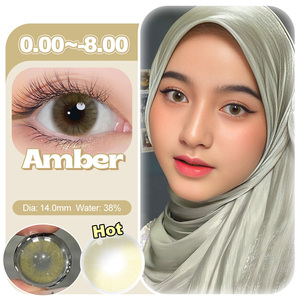
Free Shipping Magister Hidrocor Colored Contact Lenses Soft Eye Lens Natural Color Prescription Contact Lenses Lentes Decontacto
DIA: 14.0mm
BC: 8.6mm
Water: 40%
Browse our precision cast-molded cosmetic contact lens series, tested for cellular cytotoxicity, pigment non-leachability, and hydration stability across rigorous 30-day wear protocols.
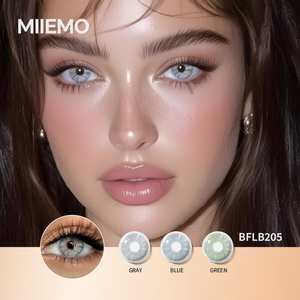
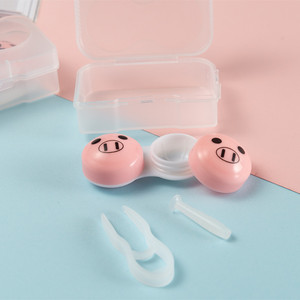
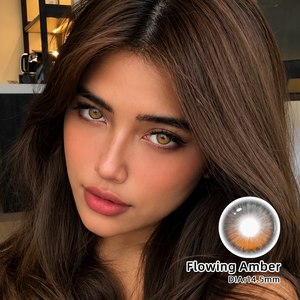
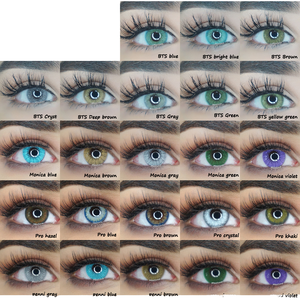
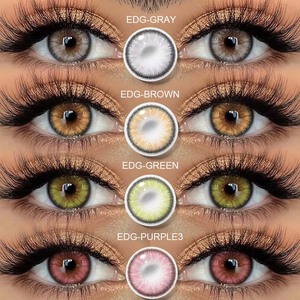
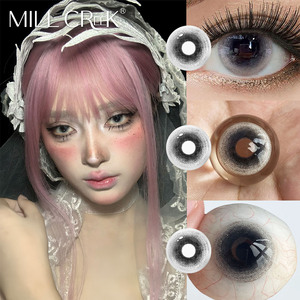
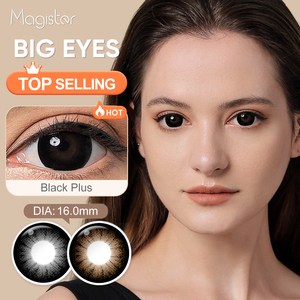
Unlike ordinary daily disposables, monthly colored contact lenses must maintain structural integrity, bio-lubricity, and surface lipid resistance through 30 days of consecutive disinfection cycles. Here is how our OEM/ODM facilities solve the core trade-offs of comfort, coloration, and corneal breathability.
Surface pigment printing is the primary cause of keratitis and allergic giant papillary conjunctivitis (GPC) in low-grade cosmetic contacts. Our cast-molding line locks bio-compatible colorants securely inside the poly-HEMA hydrogel matrix.
The eye tissue and palpebral conjunctiva touch only ultra-smooth, hydrated polymer—never raw inorganic iron oxides or copper phthalocyanine pigments.
Corneal oxygen demand does not stop for aesthetics. Our monthly cosmetic lenses achieve optimal Dk/t balances (oxygen transmissibility) tailored for daily 8-to-12 hour wearing modalities without induced hypoxic edema.
Formulated with intrinsic wetting agents and low-modulus crosslinking monomers to resist tear-film lipid accumulation and surface dehydration across day 1 to day 30.
Poorly centered circle lenses distort visual acuity and induce peripheral blur. Our automated CNC mold diamond-turning produces perfectly centered optical zones with gradual aspheric transitions.
The rounded, multi-curve peripheral edge profile facilitates continuous tear exchange with every blink, flushing metabolic waste while maintaining stable sagittal lens positioning.
| Technical Parameter | Standard Cosmetic Hydrogel | Premium Silicone Hydrogel (Si-Hy) | OEM Customization Range |
|---|---|---|---|
| Base Polymer | Poly-2-hydroxyethyl methacrylate (poly-HEMA) + NVP | Fluorosilicone Hydrogel Macromer | Custom Monomer Blends / Bio-mimetic MPC |
| Oxygen Permeability (Dk/t) | 20 – 28 Dk/t | 85 – 110 Dk/t | Adjustable based on center thickness balance |
| Water Content (%) | 38% – 42% (Low-to-Mid Hydration) | 45% – 55% (High Water Retention) | 38% to 58% depending on regional market climate |
| Color Encapsulation | Full Cast-Molded Micro-Embedding | Patented Dual-Phase Layer Sealing | 1-Tone, 2-Tone, 3-Tone, 4-Tone Multi-Layer Dot Matrix |
| Power Range Availability | Plano (0.00) to -8.00D (0.25D / 0.50D steps) | Plano (0.00) to -10.00D (Toric / Astigmatism options) | Custom optical centers & Presbyopic Multifocal zones |
| Packaging Modality | PP Blister Pack in Saline Buffer + Hyaluronic Acid | Medical Class 1 Glass Vials or Alu-Alu Blisters | Custom printed foil foils, luxury retail sleeves, sterile kits |
Navigating medical device production requires unmatched process transparency, stringent cleanroom hygiene, and proactive regulatory file support. We operate as an extension of your brand’s technical procurement team.
Every phase of polymerization, hydration, and primary blister packaging occurs within temperature- and humidity-controlled cleanrooms that prevent airborne bioburden contamination.
High-speed machine vision cameras inspect 100% of manufactured lenses for edge nicks, pigment displacement, surface bubbles, and foreign inclusions prior to final autoclaving.
Full support for international dossiers: ISO 13485 audit reports, CE marking declarations, US FDA 510(k) master file cross-referencing, and Saudi SFDA clearance paperwork.
From Pantone color matching on human dark irises to 3D packaging layout and localized compliance warning labeling, our in-house optical studio reduces time-to-market by 60%.
B2B buyers, distributors, and optical retail chains must anticipate changing demographic preferences, stricter compliance enforcement, and polymer advancements to secure sustainable market share.
While daily disposables dominate mature mass markets, monthly colored contact lenses remain the undisputed revenue powerhouse for beauty direct-to-consumer (D2C) brands and specialty optical retail chains. Monthly lenses offer the optimal balance of consumer affordability, high repeat order lifetime value (LTV), and lower shipping unit logistics costs. Sourcing teams are doubling down on 2-pack and 6-pack monthly SKUs as core recurring-revenue drivers.
Historically, cosmetic contact lenses relied primarily on standard HEMA materials due to the ease of pigment adhesion. However, stricter regulatory scrutiny and consumer awareness regarding corneal hypoxia have accelerated the transition toward Silicone Hydrogel (Si-Hy) cosmetic lenses. Factories with patented chemical matrix treatments that prevent silicone hydrophobic repulsion while anchoring vivid pigment dots will command competitive market advantages.
Consumer aesthetic demand has decisively shifted away from harsh, artificial "doll-eye" solid limbal borders toward sophisticated biomimetic coloration. Contemporary procurement orders favor 13.0mm to 13.4mm graphic diameters (G.DIA) featuring randomized micro-speckle patterns, radial striations, and translucent pupil boundaries that seamlessly enhance natural brown, hazel, and dark-amber irises under daylight illumination.
Over 30% of vision correction wearers require astigmatic or presbyopic corrections, yet historically were excluded from cosmetic lens catalogs. Leading OEM suppliers are integrating prism ballast stabilization and back-surface toric designs into monthly color lens lines, enabling brands to tap into high-margin corrective aesthetic segments with minimal product returns.
Global brand owners are shifting away from rigid 10,000-unit-per-color production commitments toward flexible supplier programs. Modern contracts require low trial run MOQs (300 to 500 pairs per SKU) backed by factory-held semi-finished stock, allowing distributors to test emerging viral trend colors on social media before committing to full-scale container orders.
Environmental mandates across the EU and North America are pushing contact lens factories to reduce secondary packaging bulk. Innovations include thinner polypropylene blister foils, biodegradable secondary carton sleeves, and the complete elimination of hazardous chemical preservatives in the buffered saline packaging fluid in favor of natural moisturizing agents such as Sodium Hyaluronate (HA).
Critical operational, regulatory, and quality control answers compiled by our international supply chain and clinical engineering teams.
Connect directly with our senior OEM/ODM engineering and regulatory team. We provide sample trial kits, factory audit dossiers, and comprehensive wholesale quotation matrices within 24 business hours.