Core OEM/ODM Halloween & SFX Contact Lens Collection
Direct manufacturer deployment of specialized novelty, cosmetic, toric, and automated packaging series. Engineered with 3-layer pad printing encapsulation to prevent ocular tissue dye migration.
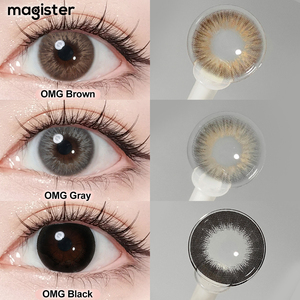
New Arrival Color Lenses Eye Contact Cosmetic Comfortable Eye Contact Lenses Magister
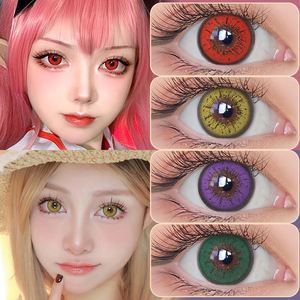
Free Sample Eye Contact Lens Flame Deep Color Halloween Party Use Soft Lenses
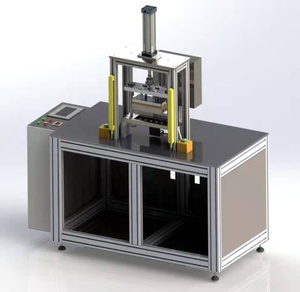
LanJing Semi-automatic PP Sealer for Contact Lenses Blister Pack Filling Machine
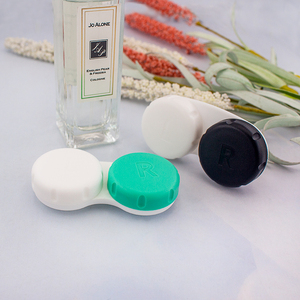
Custom Colored Contact Lenses Daily Contact Lens Box Packaging Clear Prescription OEM
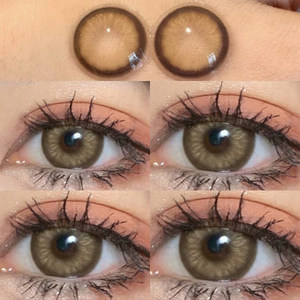
Haipurecon Prescription Soft Colored Contact Lenses for Astigmatism Three Tone 14mm
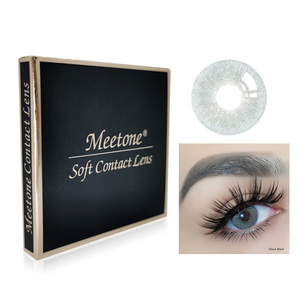
Private Label OEM Paper Packaging Wholesale Cosmetic Meetone Color Contact Lenses
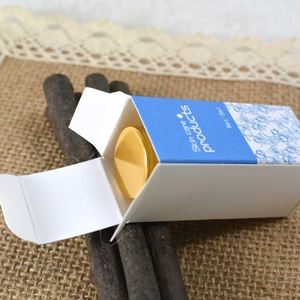
Custom Logo Folding Paper Packing Boxes for Lens Wholesale Contact Lenses Packaging
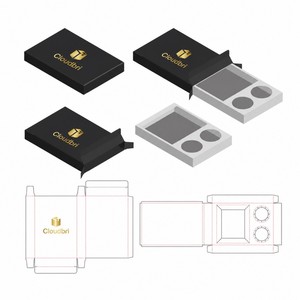
Custom Printed Multi Design Paper Boxes With Logo for Cosmetic Contact Lens & Beauty
Advanced Contract Manufacturing & Quality Architecture
Why Tier-1 optical brands, licensed cosmetic distributors, and medical distributors source their private label Halloween, theatrical SFX, and circle lenses from our automated production plants.
Triple-Layer Dye Encapsulation
Unlike illicit novelty lenses where industrial colorants are screen-printed on the posterior or anterior surfaces, our plant employs genuine internal layer entrapment. The reactive pigment layer is micro-injected between two cast-moulded hydrogel layers, guaranteeing that organic dyes never encounter the corneal epithelium or palpebral conjunctiva.
Sub-Micron Cast Moulding Optical Stability
Utilizing high-precision automated lathe-cut copper alloy master moulds, each lens achieves geometric repeatability down to ±0.01mm. This eliminates irregular edge profiles, reduces peripheral edge lift, and prevents lens decentration during blinking—crucial for full-sclera, pupil-occluding, and crazy Halloween patterns.
Automated Optical Quality Inspection (AOI)
100% of finished lenses pass through our automated high-speed visual inspection machines. The AI-guided camera arrays detect pinhole perforations, peripheral burrs, pigment bleeding into the 5.0mm clear optical zone, and axial thickness variances in real-time, eliminating human fatigue error prior to blister sealing.
Medical-Grade Polypropylene Blister Packaging
Our sealing cleanrooms deploy medical-grade PP blister packaging with peelable multi-layer aluminum foils. Autoclave steam sterilization at 121°C for 30 minutes ensures sterility assurance level (SAL) of 10^-6 without warping the hydrogel polymer or degrading visual color saturation.
Comprehensive Dossier & Technical File Support
We supply buyers with full technical documentation: Biocompatibility reports (ISO 10993 cytotoxicity, sensitization, ocular irritation), physicochemical data, shelf-life accelerated stability test logs, and labeling artwork compliant with US FDA 21 CFR 886.5925 and EU MDR Annex II.
Agile Private Label Turnkey Integration
From initial motif sketch and Pantone color matching to secondary custom folding carton printing, shrink wrapping, and unique UDI (Unique Device Identification) barcode engraving, we streamline time-to-market down to 4-6 weeks for private label orders.
Engineering High-Opacity SFX Contact Lenses: The OEM/ODM Technical Whitepaper
Cosmetic and special effects (SFX) contact lenses engineered for theatrical performances, cosplay conventions, and seasonal Halloween retail belong to one of the most rigorously scrutinized sub-categories of Class II (US FDA) and Class IIa (EU MDR) medical devices. While commercial novelty lenses were historically produced via simplistic manual pad-printing methodologies that resulted in high rates of microbial keratitis and mechanical abrasions, contemporary OEM/ODM production necessitates cutting-edge macromolecular engineering.
1. The Chemistry of Pigment Fixation and Oxygen Transmissibility (Dk/t)
A persistent dilemma in manufacturing high-opacity Halloween lenses (such as full-white zombie, blood-red vampire, dragon slit-pupil, and black-out sclera designs) is reconciling dense pigment barriers with adequate oxygen permeability (Dk). Traditional Poly-HEMA (2-hydroxyethyl methacrylate) polymers offer an inherent water content of 38% to 42%, yielding a center Dk/t typically ranging between 8.5 × 10^-9 and 12 × 10^-9 (cm/s)[ml O2/(ml × mmHg)]. When inorganic metal oxide pigments (iron oxides, titanium dioxide, phthalocyanine green, carbon black) are introduced across a large surface area, they act as an impervious barrier to dissolved oxygen transport.
Factory Insight: Our engineering plant overcomes oxygen depletion through a patented microscopic dot-matrix distribution protocol. By utilizing digital micro-pad printing, opaque pigments are deposited in micro-clusters interspersed with sub-visible polymer channels. This enables trans-lens oxygen diffusion to reach a verified Dk/t of 16-18, significantly reducing corneal hypoxia and conjunctival injection even during extended 8-hour costume wear.
2. Physicochemical Parameters & Comparative Manufacturing Standards
When selecting an OEM or ODM manufacturing partner for novelty and Halloween party contact lenses, professional procurement directors must evaluate lens geometry across calibrated metrics:
| Evaluation Parameter | Standard Low-Grade Novelty Lenses | Velalens OEM/ODM Medical-Grade Standard |
|---|---|---|
| Printing Technology | Surface screen printing / Single-sided stamp | Triple-Layer Sandwich Encapsulation (Cast Molded) |
| Corneal Contact Layer | Direct exposure of mineral pigments | 0.015mm virgin clear hydrogel boundary buffer |
| Clear Optical Center Zone | 3.5mm – 4.2mm (causes tunnel vision/blur) | Precision calibrated 5.0mm – 5.5mm non-occluded pupil |
| Edge Configuration | Chiseled / Knife-edge profile (micro-friction) | Continuous tangential rounded comfort contour |
| Base Curve (BC) Regularity | ± 0.20 mm variance between lots | ± 0.03 mm verified via optical spherometry |
| Microbial & Cytotoxicity Testing | Random non-standard sampling | Full lot sterility test under ISO 11737-2 / ISO 10993-5 |
3. Mitigating Vision Distortion in SFX Optical Zones
A frequent customer complaint with Halloween cosmetic lenses is visual occlusion—the sensation of "tunnel vision" or persistent peripheral blur. In dim club or nocturnal party environments, the human pupil naturally dilates from its photopic diameter of 2.5–3.0mm up to 6.5–7.5mm in scotopic conditions. If an opaque SFX pattern restricts the non-pigmented center zone to under 4.5mm, the dilated pupil captures the opaque pigment rim, inducing significant optical aberration and risk of accidents. Velalens ODM architectures dynamically adjust the clear optical zone between 5.0mm and 5.8mm, maintaining rich graphic intensity while assuring clear night-time spatial orientation for the end-user.
Product Sourcing Trends & Industry Developments (2025–2030)
Strategic procurement intelligence for global brand managers, optical wholesalers, and beauty chain buyers preparing their seasonal inventory.
Shift from Hydrogel to Silicone Hydrogel SFX Formulations
Historically, dramatic theatrical and Halloween lenses relied exclusively on hydrogel polymers due to ease of pigment pad-printing bonding. However, modern consumer demand for day-long cosplay comfort has propelled our R&D into formulating specialized Silicone Hydrogel (SiHy) matrices compatible with sandwich pigmenting.
- Dk/t Leap: Oxygen transmissibility increases from ~15 to >65 Dk/t, mitigating corneal swelling during long conventions.
- Lower Modulus Formulations: Elimination of the typical stiff, rubbery feel of first-generation SiHy, delivering silky glide across the ocular surface.
- Resistance to Lipid Deposition: Proprietary plasma surface treatment minimizes tear-film lipid adherence on the lens face.
The 120-Day Seasonal Procurement Window Strategy
Halloween contact lenses represent a highly concentrated seasonal sales spike, with over 72% of retail sell-through occurring between September 15 and October 31. Sourcing directors who delay procurement to Q3 face severe bottlenecks in factory cleanroom allocation, sea shipping delays, and customs holds.
- Q1 Planning Phase (Jan–Mar): Concept design finalization, Pantone lab dips, and sample fitting sign-offs.
- Q2 Production Phase (Apr–Jun): Mass cast-molding, automated blister packaging, and secondary blister box printing.
- Early Q3 Logistics (Jul–Aug): Regulatory customs clearance, batch COA issuance, and sea/air consolidation to regional distribution hubs.
Strict Enforcement of EU MDR & US FDA 510(k) Oversight
Global regulatory agencies have re-categorized plano (non-corrective) cosmetic and novelty contact lenses under strict Class II medical device requirements. Distributors attempting to import unverified novelty lenses risk cargo seizure, severe regulatory penalties, and brand reputation devastation.
- Mandatory UDI Barcoding: Every blister unit and multi-pack folding carton must display traceable GS1-compliant Datamatrix codes.
- MDR Transition Deadline: Importers to the EU must verify that the OEM plant possesses valid ISO 13485 certification and an active MDR audit file.
- Full Leachability Assays: Proof that heavy metal pigments (lead, cadmium, mercury, hexavalent chromium) yield zero detectable leaching.
UV Reactive, Toric Halloween & Daily Disposable Packaging
The consumer market is rapidly maturing beyond basic annual vials. Premium cosmetic brands are shifting their assortments toward hygienic single-use formats and prescription inclusivity:
- Single-Day Disposable (Daily) Formats: Eliminates cleaning, cases, and cross-contamination risks for one-night partygoers.
- Toric Halloween SFX Lenses: Prism ballast stabilization allowing consumers with astigmatism to wear crazy motifs without cylindrical vision loss.
- Blacklight Luminescent Reactive Dyes: Safe phosphorescent and fluorescing colorants that glow under 365nm UV nightlife illuminations.
Frequently Asked Questions for B2B Importers & Brand Owners
Crucial commercial, technical, and regulatory clarity addressing the realities of contact lens contract manufacturing.