Yearly / 14.5mm
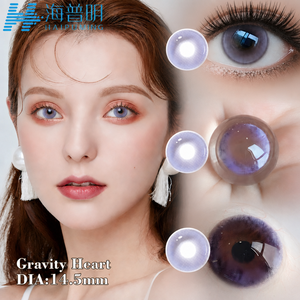
Prescription Contact Lenses Purple Yearly 14.5mm Cosmetic Color
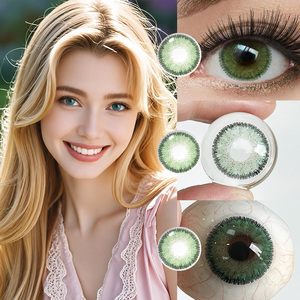
High-saturation chromatic gradient with a graduated limbal ring engineered for seamless aesthetic iris enlargement and long-term durability.
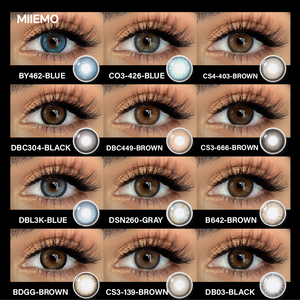
Engineered for vivid ocular depth, visual comfort, and certified biometric safety. Select an optimized reference SKU below for custom formula engineering or express dispatch.
Yearly / 14.5mm
High-saturation chromatic gradient with a graduated limbal ring engineered for seamless aesthetic iris enlargement and long-term durability.
Multi-Wear / 14.2mm
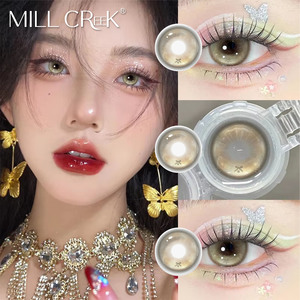
Soft architectural pattern crafted to simulate natural crystalline patterns, blending effortlessly over deep brown eyes with superior limbal edge blending.
Doll Eye / 14.5mm
Doll-eye aesthetic structure utilizing dual-layered peripheral pigmentation to deliver pronounced circular expansion without inducing visual halo effects.
Cosmetic / 14.5mm
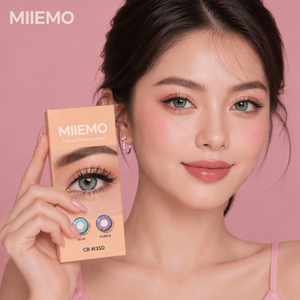
Luminescent sapphire tones combined with micro-dot matrix printing to deliver natural transparency, vivid daylight reproduction, and tear circulation.
Private Label Base
Engineered specifically for B2B brand launches. Fully compliant HEMA formulation offering flexible wear cycles, reliable modulus, and low coefficient of friction.
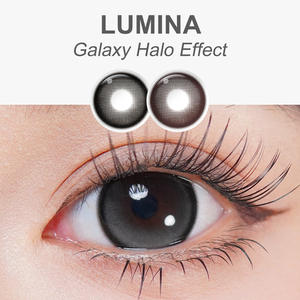
Cosplay & Character
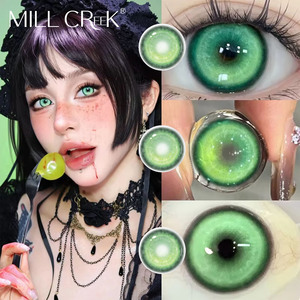
Total pigment occlusion designed for cinematic SFX, cosplay, and theatrical retail. Fully encapsulated reactive dyes guarantee zero ocular surface contact.
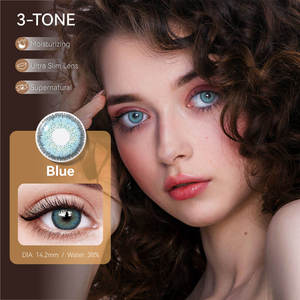
Three-Tone / 14.5mm
Three-dimensional depth layering combining inner hazel accents, balanced body pigments, and an external dark circle for natural magnification.
Rapid Turnaround
Balanced optical formulation optimized for high-volume consumer accessibility, featuring uniform edge geometry and extensive color consistency across production lots.
In global cosmetic contact lens sourcing, circle lenses and enlarging contact lenses represent the single largest value-added category in optical retail. However, achieving aesthetic enlargement without compromising ocular biomechanics requires rigorous polymer formulation and optical engineering. Conventional lenses often suffer from edge awareness, reduced corneal oxygen tension, or pigment leaching. As a premier OEM/ODM manufacturer, Velalens utilizes precision cast-molding coupled with proprietary Sandwich Micro-Encapsulation Technology to resolve the fundamental trade-off between physical lens enlargement and physiological wearability.
While standard cosmetic contacts typically feature an overall physical diameter (DIA) between 14.0mm and 14.2mm with a graphic diameter (GDIA) of 13.0mm to 13.3mm, enlarging lenses expand the visible iris footprint to GDIA 13.6mm–14.0mm within a 14.5mm total diameter frame. The primary challenge in contract manufacturing lies in edge profiling: as the graphic print boundaries extend toward the lens periphery, conventional pad printing can alter surface topography, resulting in eyelid friction and reduced tear exchange. Our cleanroom facilities employ cast-molding techniques where medical-grade iron oxide and organic color pigments are isolated completely between non-reactive, hydrated polymer matrices. Neither corneal epithelial cells nor the upper palpebral conjunctiva ever come into direct contact with pigment particulate.
Furthermore, our precision optic zone diameter is strictly maintained between 4.0mm and 4.3mm. Maintaining this unprinted clear aperture guarantees that as the patient's pupil responds to photopic and mesopic lighting conditions, visual field integrity remains unobstructed. This eliminates visual vignetting and chromatic aberration, ensuring our OEM lenses qualify not merely as aesthetic novelty items, but as fully functional Class II/Class IIa medical devices conforming to US FDA and European MDR standards.
From independent beauty innovators to multi-national optical retail chains, our integrated manufacturing infrastructure eliminates supply chain fragility and regulatory hurdles.
Our sandwich printing embeds micronized pigments within the hydrophilic layers. Lenses pass stringent cytotoxicity and extractables testing, ensuring total compliance with global ophthalmic biocompatibility directives.
Offering end-to-end packaging development: foil blister sealing, glass vials, custom carton boxes, IFUs, and compliance labeling with automated GS1 Datamatrix barcode serialization ready for retail shelving.
We supply full Technical Documentation Files (CE MDR compliant), 510(k) supporting clinical and bench data, Certificate of Analysis (CoA), Free Sales Certificates (FSC), and ISO 13485 audit trail access.
Scale your catalog across Daily Disposable (1-Day), Monthly Replacement, and Annual Wear modalities. Complete optical ranges supporting Plano (0.00) cosmetic lenses and refractive correction up to -8.00D.
Rapid color matching from physical pantones or visual digital mockups. Our industrial pattern designers generate pilot samples in under 14 days, verifying realistic iris depth across dark and light eye phenotypes.
Automated edge-finishing units generate a proprietary tapered micro-edge profile that promotes consistent laminar tear exchange across each involuntary blink cycle, eliminating mechanical eyelid drag.
B2B procurement leaders and category managers must align their inventory development with critical market transformations occurring in the cosmetic ophthalmic sector. Based on production run analytics, international trade tariffs, and consumer telemetry, we project three primary procurement shifts over the coming five years:
1. Acceleration from Conventional Hydrogel toward Silicone-Hydrogel Formulations: While poly-HEMA remains the industry benchmark for colored contact lens manufacturing due to its predictable dye-binding properties and low production cost, consumer awareness around corneal health is driving the demand for high-Dk silicone-hydrogel cosmetic lenses. Silicone-hydrogel materials achieve oxygen transmissibility ratings (Dk/t) exceeding 80–100 barriers, compared to 15–25 for traditional hydrogel. B2B buyers investing in early-stage ODM formulation are increasingly booking pilot production slots for surface-treated, wetting-agent-embedded silicone cosmetic lines.
2. Dominance of Short Replacement Cycles (Daily Disposables): Global regulatory authorities and ophthalmic associations continue to discourage yearly wear modalities in mature markets due to patient non-compliance with disinfectant protocols. Consequently, brand procurement budgets are systematically shifting toward 10-pack and 30-pack daily disposable circle lenses. Daily lenses command higher customer lifetime value (LTV), eliminate consumer solution purchases, and reduce post-market adverse event reporting to virtually zero.
3. Micro-Translucent Multi-Tone Prints Replacing Heavy Opaque Blocks: The early generation of "anime circle lenses" relied on stark, heavy black outer limbal rings that appeared artificial under close inspection. Contemporary consumer demand emphasizes "effortless enhancement" — nuanced iris enlargement featuring irregular starbursts, broken limbal gradients, and three-tone layering that simulates the human eye's natural trabecular meshwork. Retailers whose catalogs feature these hyper-realistic designs experience lower return rates and higher social media organic engagement.
Essential guidance on minimum order quantities, cleanroom testing, custom tooling, and international compliance documentation.
Consult with our lead ophthalmic engineers today. We provide free design evaluations, regulatory compliance assessments, and physical pilot sample kits to accredited distributors and brand directors worldwide.