Verified OEM / ODM Lens Formats & Optical Hardware
Explore our core medical-grade polymer color series, precision packaging solutions, and optical accessories engineered for high shelf appeal and exceptional ocular tolerance.
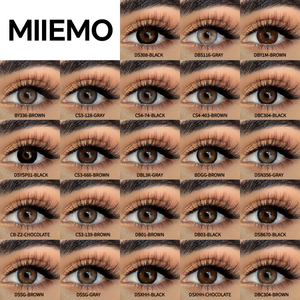
MIIEMO Soft Natural Three Tone Color Contact Lenses 2-Piece Blister Pack 38% Water Content Private Label Cosmetic Wholesale
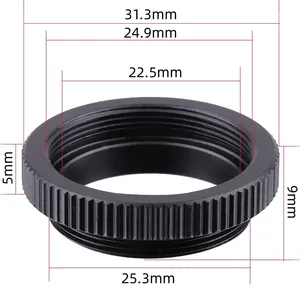
China Manufacturer Aluminum 5.0mm C-Mount CS-Mount Lens Adapter Ring for Industrial Camera FotoHigh Brand Aluminum Alloy CNC
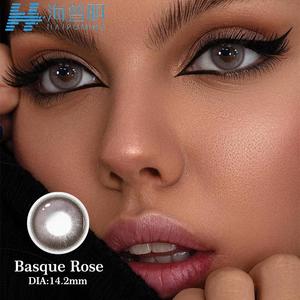
Haipurecon Fixed-Axis Highlight Contact Lenses Lentilles De Contact De Couleur Color Contacts Lenses for Eyes Non Prescription
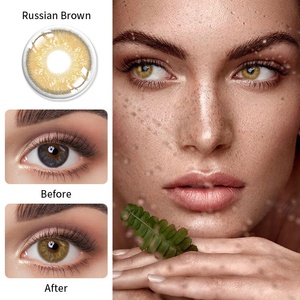
Element Storm Three Tone Cosmetic Colored Lens Circle Design Little Wild Cat Eye Makeup Soft Hema 14mm Diameter Haipurecon 2023
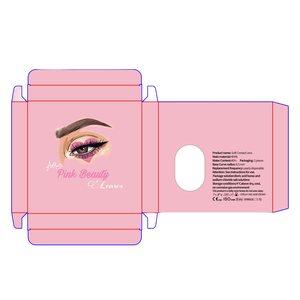
Custom Glossy Lamination Self Erecting Recyclable Colored Contact Lens Packaging Box with Four-Color Logo Printing
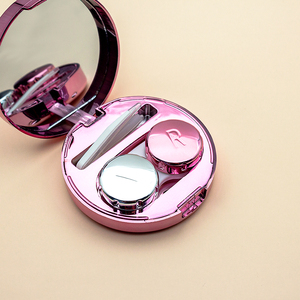
Lalens Cyber Grey Eyes For Dolls Anime Lens Wholesale Coloured Contacts Lentes De Contacto Contact Lens Wholesale
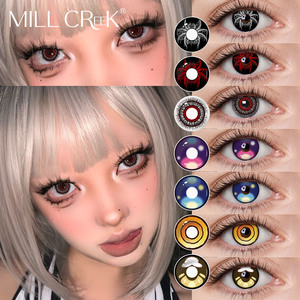
Haipurecon Halloween Cosplay High Quality Soft Crazy Contact Lenses 14.5mm Three Tone Big Eyes Makeup Wholesale
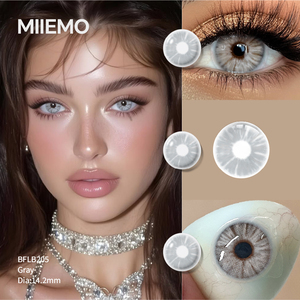
DSC Factory Half Year Disposable Soft HEMA Three Tone ISO 13485 Certified Dream Color Style Korean Design Safe Contact Lenses
Engineered Green Color Matrices: From Emerald Depth to Translucent Olive
Green colored contact lenses represent one of the most commercially profitable yet technically challenging segments in cosmetic ophthalmic manufacturing. The natural human iris features complex radial micro-fibers, crypts of Fuchs, and varying concentrations of lipochrome pigments that produce nuanced green and hazel tones. For OEM brand owners, creating a green cosmetic contact lens that delivers both high covering power over dark Asian/Latin brown irises and subtle natural brilliance on lighter European eyes requires precise multi-layer printing architecture and tailored graphic diameters (G.DIA).
As a specialized custom OEM contact lens manufacturer, our facilities employ specialized multi-layer cast-molding and micro-pad printing technology. Rather than depositing a solid, flat pigment layer that induces an artificial "doll-eye" appearance, our optical engineering team designs proprietary dot-matrix screens featuring variable dot density from the pupil edge to the limbal ring. This eliminates pixelation even under direct macro photography and indoor retail lighting.
Matcha & Olive Subtle Tones
Engineered with semi-translucent 1-tone and 2-tone transitions. Formulated with warm yellow-green undertones that blend seamlessly with dark brown irises without unnatural fluorescent reflection.
Tri-Tone Emerald & Jade
Featuring a delicate golden-honey inner starburst, rich emerald intermediate matrix, and a soft charcoal outer limbal boundary. Provides dramatic depth and enlargement favored by high-fashion cosmetic brands.
High-Opacity Cosplay Green
Designed for anime, cosplay, and cinematic media. Formulated with a completely opaque titanium dioxide sub-base that completely blocks out native eye coloration while ensuring an expansive optical aperture.
Customizable OEM Physical & Optical Parameters
All private label formulations can be configured to target specific market demographics and clinical distribution requirements. Below are standard technical capabilities verified across our automated casting lines:
| Physical Metric | Standard HEMA Hydrogel Line | Advanced Silicone Hydrogel Line | Custom OEM Tolerance Range |
|---|---|---|---|
| Base Curve (BC) | 8.50 mm – 8.70 mm | 8.60 mm – 8.80 mm | ±0.02 mm (Cast Mold Precision) |
| Total Diameter (DIA) | 14.0 mm – 14.5 mm | 14.0 mm – 14.3 mm | ±0.05 mm |
| Graphic Diameter (G.DIA) | 12.8 mm – 13.8 mm | 13.0 mm – 13.6 mm | Custom screen tailoring available |
| Center Thickness (CT) | 0.07 mm – 0.09 mm (-3.00D) | 0.06 mm – 0.08 mm (-3.00D) | Optimized for tear exchange & mechanical handling |
| Water Content | 38% – 42% (Low dehydration) | 45% – 55% | ±1.5% analytical titration standard |
| Oxygen Permeability (Dk/t) | 11 – 15 Fatt units | 65 – 100+ Fatt units | Polarographic sensor verified |
| Diopter Power Range | Plano (0.00) to -10.00D (0.25D/0.50D steps) | Plano (0.00) to -8.00D | Toric (Astigmatism) & Multifocal options |
| Encapsulation Standard | Sandwich Micro-Polymer Layering | Inter-Polymer Matrix Sealing | Zero direct ocular contact (ISO 10993 compliant) |
Global Sourcing Trends: Custom Green Contact Lenses (2025–2030)
Procurement directors and brand strategists operating within the cosmetic eyewear sector must navigate significant shifts in global consumer expectations and regulatory governance. Historically treated as seasonal novelty items, green colored contact lenses have evolved into mainstream daily cosmetic staples. Strategic purchasing analysis indicates three dominant trends redefining global contract manufacturing:
Transition to Daily Disposables
While yearly vials continue to maintain steady demand in specific price-sensitive wholesale regions, mature cosmetic markets (North America, Japan, South Korea, Western Europe) are overwhelmingly transitioning toward 1-Day daily disposable blister packaging. Daily modalities eliminate compliance-related lens care issues, minimize corneal microbial contamination, and generate substantially higher recurring customer lifetime value (LTV) for e-commerce direct-to-consumer (DTC) brands.
Natural Iris Emulation vs. Exaggeration
Consumer preferences have shifted decisively from stark, exaggerated circle lenses toward "bare-face enhancement" (my-eyes-but-better). In green colorways, demand is concentrating on muted olive, sage, and hazel-green tones that offer translucent iris blending. Modern consumers scrutinize products under ultra-high-definition cameras and social media video feeds; print screens that display visible dots or abrupt borders suffer high return rates and poor brand loyalty.
Rigorous Supply Chain Traceability
Global regulatory agencies—including the US FDA, European Notified Bodies under EU MDR 2017/745, and the Saudi SFDA—have intensified regulatory enforcement on cosmetic contacts. Importers and brand owners can no longer afford white-label goods without clear lot-by-lot sterilization reports, bio-compatibility certifications (ISO 10993), and full Device Master Record (DMR) backing from the primary factory.
Future Engineering Breakthroughs in Cosmetic Contact Lens Manufacturing
As competition intensifies among global eyewear brands, product differentiation hinges on proprietary material science and precision manufacturing engineering. Velalens Technology invests heavily in cleanroom automation, digital optical metrology, and advanced polymer synthesis to provide our B2B partners with sustainable competitive advantages.
1. Micro-Encapsulation Sandwich Technology (Zero Pigment Exposure): Historical cosmetic lenses often utilized surface pad printing, where bio-incompatible pigments came into direct contact with the palpebral conjunctiva and corneal epithelium. This caused friction, dye leaching, and micro-abrasions. Our advanced automated cast-molding lines encapsulate the formulated inorganic pigments (iron oxides, chromium oxide greens, phthalocyanine green) inside a micro-polymer sheath. Both the anterior and posterior surfaces of the lens remain completely smooth, pristine, and optical-grade polymer, ensuring absolute physiological safety.
2. Next-Generation Silicone Hydrogel Formulations for Color Lenses: Integrating vibrant color pigments into silicone hydrogel polymers historically presented serious manufacturing bottlenecks; siloxane components often repel hydrophilic pigment carriers, resulting in phase separation, clouding, or brittleness. Our proprietary compatibilizing monomer system enables high oxygen transmissibility (Dk/t > 80) while maintaining flawless print registration and high surface wettability without plasma treatment, significantly extending comfortable wearing time for sensitive eyes.
3. Advanced Wavefront Aberration Correction & Toric Colored Optics: Astigmatic and presbyopic consumers represent an underserved multi-billion-dollar demographic in the cosmetic contact lens landscape. By incorporating back-surface toric geometries, prism ballast stabilization zones, and aspheric front optical surfaces, our OEM factory provides custom green contact lenses that correct vision up to -2.75D cylinder while maintaining perfectly oriented aesthetic radial graphics that do not rotate during rapid blinks.
Enterprise Manufacturing Capabilities: Dedicated B2B Production Infrastructure
Velalens Technology Co., Ltd. serves as an end-to-end original equipment and design manufacturer (OEM/ODM) engineered specifically to empower optical brands, fast-fashion conglomerates, clinical retailers, and high-growth e-commerce ventures worldwide. Our vertically integrated production model eliminates intermediary markups and guarantees total batch-to-batch repeatability.
Full Regulatory File Access
We supply comprehensive technical dossiers (Technical Documentation Files), sterilization validation protocols (ISO 11137), biocompatibility cytotoxicity profiles, and stability aging data to support your local registration with the US FDA 510(k), EU MDR, TGA, or local health ministries.
Bespoke Pattern & Packaging ODM
Our in-house optical styling studio converts your Pantone references, mood boards, or competitor samples into high-resolution printing plates. Complete private-label turnkey solutions include PP blisters, glass vials, custom foil sealing, outer cartons, and multi-lingual user instruction leaflets.
Agile Scaling & Rapid Sampling
Avoid massive capital lockup. We support entry-level private label launches with flexible MOQs starting from approximately 300 pairs per color for catalog designs. Prototype samples for photography, clinical fit testing, and influencer evaluation ship in as fast as 3 to 7 business days.
Frequently Asked Questions for B2B Importers & Brand Owners
Direct technical answers addressing critical production, compliance, logistics, and quality assurance checkpoints encountered during factory audits and international procurement.
How do you verify pigment safety and prevent dye migration?
Every pigment formulation undergoes strict physical and chemical encapsulation checks. We conduct 100-hour saline soak tests, ultrasonic extraction assays, and mechanical rub testing across the anterior and posterior polymer surfaces. In accordance with ISO 10993 standards, our lenses demonstrate zero pigment elution and negative cytotoxicity, ensuring the dye remains permanently locked inside the matrix.
What is the minimum order quantity (MOQ) for custom private label green lenses?
For existing factory patterns relabeled under your brand name, our starting MOQ is exceptionally accessible, typically starting from 300 pairs per colorway. For fully customized ODM patterns requiring new high-precision silicon printing pads and custom steel cliché plates, the initial run usually begins at 2,000 to 5,000 pairs depending on the modality (daily vs. monthly) to amortize tooling overhead.
Can you customize the central optical clear zone diameter?
Yes. The central clear pupil opening is critical for balancing cosmetics and visual field acuity. Our standard clear zone diameter is engineered at 4.0 mm to 4.3 mm, ensuring normal scotopic vision without peripheral visual obstruction. We can narrow this zone for intense cosmetic effect or expand it up to 4.8 mm for clinical visual clarity upon request.
What secondary packaging formats and finishes do you manufacture?
We provide medical-grade polypropylene (PP) blister packs with custom printed heat-sealed foil lids (aluminum/PP composite) as well as traditional USP Type I glass vials with aluminum tear-off caps. For retail boxes, we provide full structural box design, CMYK + Pantone offset printing, soft-touch matte lamination, spot UV, holographic foil stamping, and anti-counterfeiting QR/barcode integration.
What documentation is provided for customs clearance and medical device import?
We provide full Certificate of Analysis (CoA) per lot, Certificate of Free Sale (CFS), ISO 13485:2016 Quality Management certificates, CE compliance declarations, ethylene oxide/moist heat sterilization validation logs, and material safety data sheets (MSDS). Our regulatory affairs specialists assist in preparing product dossiers for local health authorities.
What are standard lead times from initial design sign-off to delivery?
Pre-production color approval samples typically require 2 to 3 weeks for bespoke designs (3 to 7 days for catalog patterns). Following sample authorization and packaging artwork sign-off, bulk production and automated sterilization cycles are completed within 4 to 6 weeks. Air express or consolidated sea freight options are coordinated globally.