Engineered Cosmetic, Prescription & Novelty Contact Lenses
Source high-permeability, bio-compatible contact lenses and accessories built in medical-grade cleanrooms. Below are 8 core OEM/ODM series engineered for market compliance, ocular health, and superior wearer comfort.
Strategic Procurement Trends: The Next Era of Global Contact Lens Sourcing
The global contact lens landscape has shifted decisively from simple beauty novelty sourcing to stringent medical-device supply chain governance. Brand owners, ophthalmic distributors, and cross-border e-commerce networks face unprecedented operational challenges, from regulatory harmonization under the European Union Medical Device Regulation (EU MDR 2017/745 Class IIa) to tightened United States FDA 510(k) Premarket Notifications. Choosing an experienced custom OEM colored eye contacts supplier is no longer just a pricing decision; it is a critical calculation of clinical compliance, polymer biocompatibility, and manufacturing reliability.
In mature optical markets, end consumers demand non-invasive ocular comfort coupled with hyper-realistic aesthetic effects. Sourcing directors must now evaluate vendors based on their chemical matrix formulation, raw monomer purity, automated defect detection, and full-dossier technical support. Below are the structural purchasing trends dominating the international colored contact lens market.
Rapid Transition to Daily Disposables
While monthly and yearly replacement cycles remain strong in price-sensitive territories, high-tier retail markets are transitioning heavily toward daily disposable colored lenses (1-Day Dailies). Dailies eliminate cleaning-solution compliance errors, drastically reduce corneal ulcer risks, and generate continuous repeat purchase velocity for private label brands.
Rigorous Traceability & UDI Packaging
International regulatory authorities now enforce mandatory Unique Device Identification (UDI) systems with Machine Readable GS1 2D DataMatrix codes on primary blisters and secondary cardboard packaging. OEM suppliers lacking automated track-and-trace packaging systems risk mass border detentions and loss of retailer distribution licenses.
Micro-Batch Customization & Fast Sampling
Digital-native beauty labels require rapid iterative testing. Suppliers capable of offering baseline pilot runs starting around 300 to 500 pairs per color variant—without sacrificing the stability of computerized lathe-cut master moulds—hold a decisive advantage over legacy high-volume factories that enforce rigid 10,000-unit minimum order quantities.
Material Evolution: Hydrogel vs. Next-Generation Silicone Hydrogel
Historically, cosmetic colored contact lenses relied almost universally on Poly-HEMA (2-hydroxyethyl methacrylate) hydrogels with water contents between 38% and 42%. While Poly-HEMA provides exceptional mechanical handling and stable dimensional elasticity, its oxygen transmissibility (Dk/t around 15 to 25 × 10-9) can limit daily wearing schedules, leading to corneal hypoxia, vascularization, and end-of-day dryness in sensitive wearers.
The contemporary OEM frontier lies in the formulation of custom Silicone Hydrogel (SiHy) colored matrices. By incorporating siloxane macromers, the oxygen transmissibility climbs past 80 to 100+ Dk/t, while surface hydrophilic plasma coatings prevent lipid deposition and sustain tear break-up times (TBUT). When sourcing, optical brands must weigh patient physiological safety against the technical difficulty of pigment immobilization within siloxane chains.
| Polymer Chemistry | Oxygen Flux (Dk/t) | Water Content | Key Advantages | Target Market Segment |
|---|---|---|---|---|
| Standard Hydrogel (Poly-HEMA) | 18 - 28 | 38% - 45% | Superior cost efficiency, robust tensile strength, flawless pigment adhesion. | Mass retail, cosplay/costume lines, entry-level cosmetic series. |
| Glycerol Methacrylate (GMA/HEMA) | 30 - 38 | 55% - 58% | Resistant to dehydration, high initial wettability, smooth edge profile. | Mid-tier beauty brands, dry-eye prone wearers, boutique salon private label. |
| 3rd Gen Silicone Hydrogel (SiHy) | 80 - 120+ | 40% - 48% | Maximum corneal oxygenation, zero limbal hyperemia, extended wearing time. | Clinical ophthalmology chains, premium daily cosmetic contacts, licensed optical dispensaries. |
Engineering Paradigms: Coloration Safety & Production Technology
The greatest liability in cosmetic lens contract manufacturing lies in pigment migration. Direct-printed or pad-stamped lenses that leave raw pigments exposed on either the anterior or posterior surface will irritate the corneal epithelium, induce Giant Papillary Conjunctivitis (GPC), and violate ISO 10993 cytotoxicity protocols. Premium suppliers implement rigorous Sandwich Encapsulation (Cast-Moulding Immobilization).
Sandwich Micro-Encapsulation
Color pigments are printed onto a micro-thin virgin polymer base and instantly locked beneath a second medical monomer layer before thermal/UV polymer crosslinking. This embeds the iron oxides and phthalocyanines completely within the inert plastic matrix—the eyeball never touches the ink.
Multi-Tone Dot-Matrix Optics
Realistic iris replication requires sophisticated dot dispersals. Rather than a flat, opaque block of color, advanced ODM facilities use algorithmic stochastic printing: merging deep limbal rings, feathered transitional radial spokes, and golden pupillary highlights that simulate real human eye depth without blocking the visual field.
Fully Automated Vision Inspection
Every single manufactured blister passes through high-resolution AOI (Automated Optical Inspection) systems. Machine vision algorithms check for micro-bubbles, peripheral edge flash, concentricity deviations, surface tears, and incorrect graphic diameters at sub-micron resolutions.
Ocular Ergonomics: Edge Geometries & Fitting Parameters
The difference between an amateur cosmetic lens and a medical-grade contact lens lies in the peripheral edge design. Contact lenses do not merely rest statically on the eye; with every human blink (averaging 15,000 to 20,000 times per day), the superior eyelid traverses the anterior surface of the lens. If the lens edge profile is blunt, overly thick, or presents sharp flashings from worn moulds, it will cause chronic micro-trauma, subconjunctival friction, and lens instability.
Our OEM manufacturing protocols utilize specialized rounded knife-edge and chisel profiles. By minimizing the edge profile down to 0.04 - 0.06 mm and incorporating dynamic tear-exchange micro-channels, tear fluid circulates seamlessly underneath the optic zone with every blink cycle. This facilitates metabolic waste evacuation, preserves epithelial cell vitality, and keeps the lens centered over the visual pupil, preventing off-center blurriness.
Enterprise Advantages: Why Global Sourcing Teams Partner With Us
Building an internationally recognized contact lens brand requires an agile manufacturing backbone capable of supporting your business from initial regulatory submission to mass commercial delivery. As an established direct manufacturing enterprise, we eliminate middlemen markups and communicate directly with your engineering and quality assurance teams.
Full Regulatory Dossier Support
We provide full technical documentation files, including Biocompatibility Reports (ISO 10993), Stability & Shelf-Life Validations (accelerated and real-time up to 5 years), Sterilization Validation (ISO 11137 / ISO 17665), and clinical literature reviews to expedite your national licensing.
Turnkey Private Label Incubation
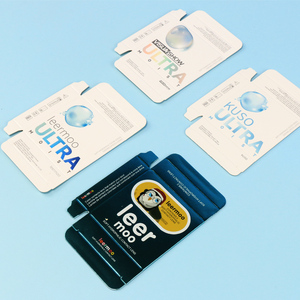
From custom primary blister foil heat-sealing to luxury FSC-certified soft-touch folding boxes, tamper-evident holographic labels, instruction leaflets (IFU), and sterile saline buffer compounding, we handle every detail under one quality roof.
Optical Precision Across Diopters
Whether you require Plano (0.00D) lenses for cosmetics or full prescription ranges from -0.50D to -10.00D (as well as custom Toric astigmatism correction and Presbyopic Multifocals), our automated cast moulding maintains sub-micron refractive index consistency across every power tier.
B2B Buyer FAQ & Technical Clarifications
Clear, uncompromised answers to the technical, legal, and operational questions asked by purchasing directors and regulatory affairs managers.
What is the absolute minimum order quantity (MOQ) for custom private label colored contacts?
For existing, proven color patterns produced under your custom private label blister and box, our standard entry threshold begins at approximately 300 to 500 pairs per color variant. For fully customized, proprietary graphic patterns that require bespoke casting pins, master mould tooling, and custom printing plates, the initial pilot run typically requires 2,000 to 5,000 pairs per pattern to absorb tooling calibration and color-matching verification costs.
How do you guarantee that pigments will not leach or rub off on the cornea?
We employ a strict sandwich cast-moulding encapsulation architecture. Pigments are completely sealed within the interior matrix of the contact lens polymer. During production, samples from every batch undergo chemical extraction testing in harsh solvents according to ISO 10993-18 and continuous mechanical friction testing against simulated corneal tissue. Raw pigments never contact either the cornea or the palpebral conjunctiva.
What regulatory certificates and test dossiers are provided with our OEM shipment?
Every batch ships with a dedicated Certificate of Analysis (CoA) recording optical parameters, base curve, diameter, center thickness, refractive index, water content, and sterility assurance verification. For brand registration in your home country, we support your filing with ISO 13485:2016 quality management certificates, Free Sale Certificates (FSC), full biocompatibility reports, accelerated stability reports, and steam autoclave validation dossiers.
Can you manufacture prescription colored contacts for astigmatism (Toric) and presbyopia?
Yes. We possess dedicated cast-moulding and precision back-surface lathing technology to incorporate dynamic prism-ballast and peri-ballast designs for Toric astigmatism correction (Cylinder ranges from -0.75D to -2.75D, with axes from 10° to 180°). For presbyopia, we engineer concentric and aspheric multifocal optics with center-near and center-distance options, preserving clear central pupillary visual pathways while maintaining realistic color depth.
What is the typical lead time for physical sampling versus full mass production?
For existing series from our design library, sterile sample blisters are dispatched within 3 to 7 business days for clinical and aesthetic fit assessment. For newly commissioned custom color schemes and customized primary foil artwork, sampling requires 2 to 3 weeks. Mass production cycles typically average 4 to 6 weeks from finalized packaging sign-off, which includes terminal steam autoclaving at 121°C for 20 minutes and mandatory 14-day bioburden quarantine incubation.
Build Your Compliant Contact Lens Brand Today
Schedule a direct engineering consultation with our optical specialists. Request sample kits, review technical compliance dossiers, or receive an exact manufacturing quote tailored to your brand's specifications.