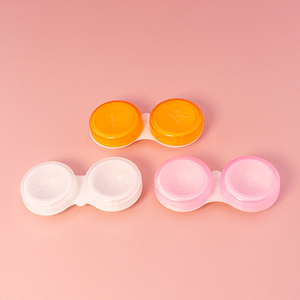
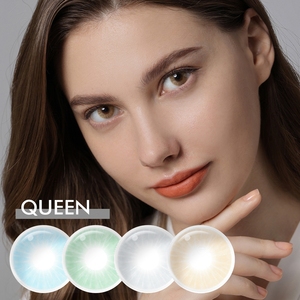
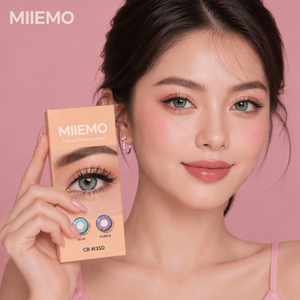
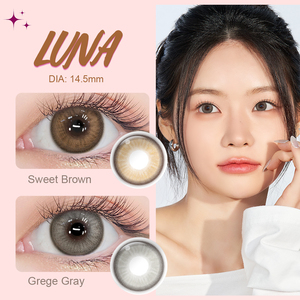
Explore our export-ready collection engineered with sandwiched micro-encapsulated color technology. Designed for optical distributors, chain beauty retailers, and global brand owners requiring compliance, vivid rendering, and clinical ocular hydration.
Combining biomedical polymer precision, advanced print-alignment engineering, and end-to-end regulatory support to transform high-concept cosmetic eyewear into safe, commercially viable global product lines.
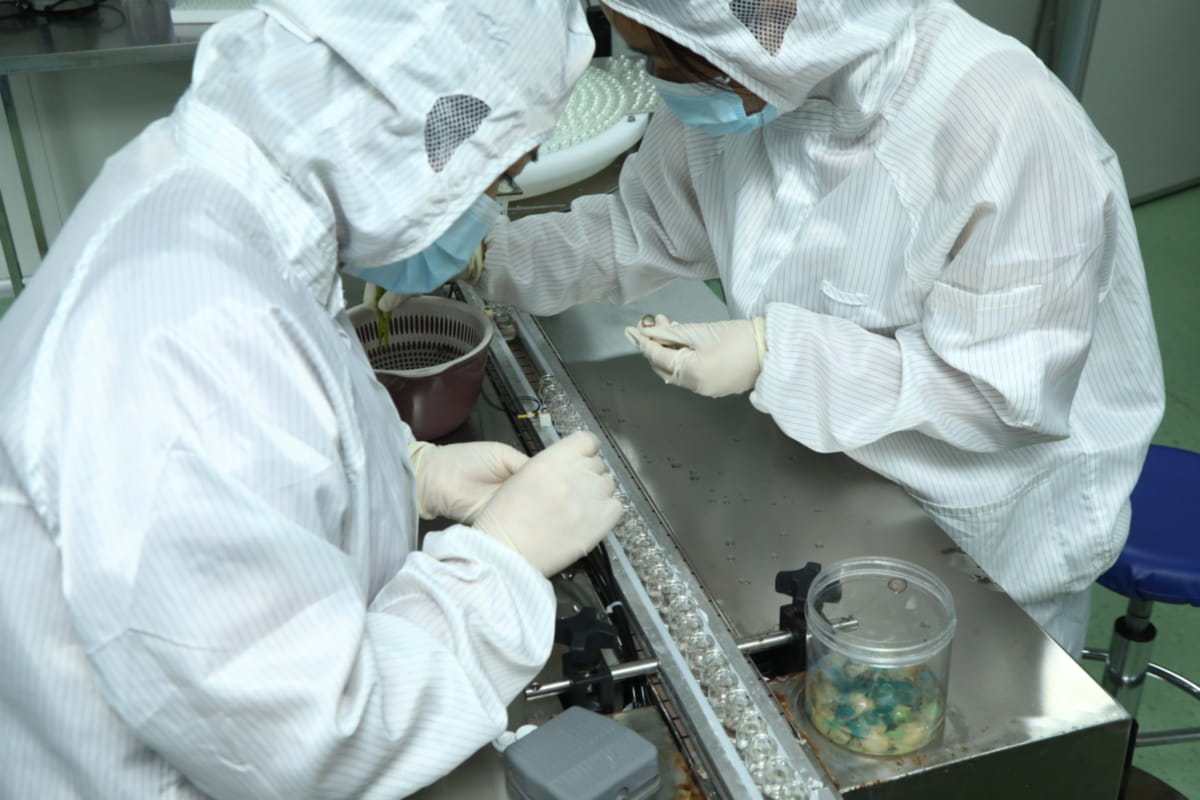
In the contemporary ophthalmic marketplace, cosmetic colored contact lenses operate at the strict intersection of personal aesthetic enhancement and class-regulated medical optics. As an established Chinese manufacturer and exporter, our facility bridges this complex gap by applying rigid medical-grade cleanroom protocols to high-fashion color science. Utilizing computer-controlled cast molding systems alongside multi-channel pad-printing technology, every lens is formed with absolute dimensional uniformity.
Our micro-encapsulation sandwiching process ensures that raw biocompatible pigments (iron oxides, titanium dioxide, and phthalocyanine dyes) remain permanently locked between non-ionic HEMA or high-performance silicone hydrogel polymer layers. No pigment particles migrate to the posterior surface contacting the delicate corneal epithelium, nor do they leach onto the inner palpebral conjunctiva. This technical architecture completely eliminates mechanical friction abrasion and foreign body sensations, ensuring sustained all-day lubricity, predictable tear turnover, and superior user safety profiles.
We provide full-spectrum parametric customizability across our daily, monthly, and yearly cosmetic hydrogel platforms.
| Base Curve (BC) | 8.50 mm – 8.70 mm (±0.05 mm precision) |
|---|---|
| Overall Diameter (DIA) | 14.0 mm – 14.5 mm (Customizable up to 14.8 mm) |
| Graphic Diameter (G.DIA) | 13.0 mm – 14.0 mm (Targeted iris blending) |
| Hydration (Water Content) | 38% – 42% (Low dehydration HEMA) / 55% |
| Polymer Substrate | Poly-HEMA Hydrogel / Fluorosilicone Hydrogel |
| Optical Center Zone | Clear optical aperture > 3.8 mm (Zero vision obstruction) |
| Prescription Power Range | Plano 0.00D to -8.00D (0.25D/0.50D increments) |
A strategic white-paper evaluation of shifting consumer behaviors, technological evolutions, and operational procurement strategies driving the global cosmetic eye-enhancement sector through 2026–2030.
Global consumer demand is rapidly shifting toward higher oxygen permeability (Dk/t > 80). Procurement teams are migrating high-end portfolios from conventional HEMA to fluorosilicone hydrogel networks to combat screen-induced ocular fatigue and dry eye symptoms.
Sanitary awareness and e-commerce convenience are accelerating the decline of long-wear yearly lenses across Europe and the Americas. Daily disposable 10-packs and 30-packs represent the highest CAGR segment, demanding automated cleanroom blister packaging lines.
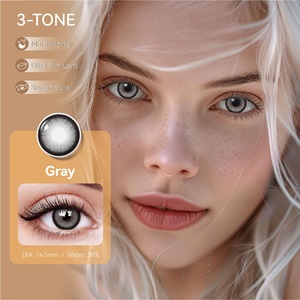
Heavy artificial limbal rings are giving way to biophilic, gradient multi-tone dot matrices. Modern buyers specify subtle translucent patterns that interact organically with dark and light irises, requiring sub-micron digital plate etching and zero-pixel-bleed print registration.
As international regulatory bodies tighten surveillance over medical device imports (notably the European Union's MDR 2017/745 Annex XVI covering cosmetic contacts and the US FDA 510(k) enforcement programs), procurement strategies must prioritize direct factory partnerships over domestic intermediaries. Forward-thinking distributors are standardizing on factories that supply lot-traceable biological biocompatibility data, ISO 13485 audited quality control records, accelerated shelf-life stability tests, and complete English technical dossiers. Aligning with an integrated manufacturer ensures that fluctuating maritime logistical costs and evolving package labeling requirements (such as UDI barcode integration) are addressed early in the production cycle, protecting brand equity from customs delays and commercial non-compliance.
Trace every phase of our manufacturing cycle—from raw monomer synthesis to automated steam autoclave sterilization—engineered to satisfy international medical device standards.
Liquid biomedical-grade monomers (HEMA/NVP/EGDMA) are dosed into high-precision quartz-optical molds using automated micro-dispensers, guaranteeing base curve consistency down to ±0.03mm.
Color layers are applied via multi-color silicone transfer pads into the mold matrix before polymerization, fully encapsulating pigments inside the polymer backbone to avoid surface exposure.
Molds enter temperature-controlled UV curing tunnels to form crosslinked polymer networks. Strict environmental regulation prevents air pockets, internal mechanical stress, and visual distortion.
Hard polymer blanks undergo controlled de-molding and physiological saline hydration. Unreacted monomers and processing agents are thoroughly extracted over multiple washing cycles.
Every single hydrated lens is magnified and scanned by Automated Optical Inspection (AOI) systems to identify edge tears, center de-centering, pinholes, and foreign particulate contaminants.
Lenses sealed in polypropylene blister packs or glass vials are subjected to validated terminal moist heat sterilization at 121°C for 30 minutes, achieving a Sterility Assurance Level (SAL) of 10⁻⁶.
Essential guidance addressing international compliance, minimum order quantities, packaging customization, and clinical safety verification for enterprise buyers.
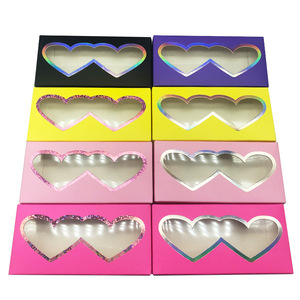
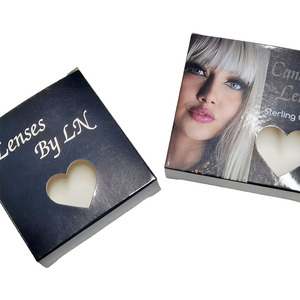
For in-stock factory formulations with custom private labeling (overprinted packaging boxes and foil blister lidding), our baseline MOQ starts at approximately 300 to 500 pairs per color across standard diopter distributions. For entirely bespoke pattern designs—which require customized printing cliche plates, specialized pad-etching, and automated color calibration—the baseline production run starts from 2,000 to 5,000 pairs. We also offer tiered sampling runs and prototyping packs for brand owners conducting regional clinical trials or market evaluation before scaling to full volume production.
We deploy a validated multi-layer Sandwich Printing Encapsulation technique. Rather than printing inks directly onto the posterior or anterior surfaces of the lens where friction occurs, colorants are embedded securely within the core matrix of the biocompatible HEMA polymer. The lens surface that directly contacts the ocular conjunctiva and cornea consists exclusively of clear, virgin hydrogel. Every production batch undergoes solvent extraction testing and cell cytotoxicity validation in compliance with ISO 10993 biological evaluation standards, ensuring zero dye elution under prolonged exposure to ophthalmic solutions.
As a medical device manufacturer, we furnish comprehensive documentation sets tailored to the regulatory mandates of your destination country. Standard export packages include ISO 13485:2016 Medical Devices Quality Management System certification, CE Conformity Declarations, Factory Certificate of Analysis (CoA) per individual production lot, Sterilization Validation Certificates, Material Safety Data Sheets (MSDS), and Free Sale Certificates (FSC). For United States buyers, our facilities support FDA Device Master File references, medical device establishment listings, and GUDID-compliant UDI barcode labeling architectures.
Yes. Our automated cast-molding operations accommodate mixed-power production batches. You can allocate your order volume across non-prescription plano (0.00D) units for pure cosmetic/retail fashion applications, as well as prescription power ranges spanning -0.50D to -8.00D (-0.25D steps up to -6.00D; -0.50D steps from -6.00D to -8.00D) for optical dispensary sales. Specialized astigmatism toric corrections and multifocal add powers can also be manufactured on pre-scheduled production schedules.
Physical pre-production stock samples typically dispatch within 3 to 7 business days via international air courier. Customized color prototyping and bespoke packaging mockups require 2 to 3 weeks for tooling preparation and pilot molding. Full commercial mass production for private label orders generally requires 4 to 6 weeks, depending on total blister volume, customized outer packaging embellishments, and post-packaging autoclave sterilization hold periods. We offer sea freight, temperature-controlled air freight, and door-to-door DDP logistics routing.
Partner with an authoritative Chinese manufacturing facility equipped with advanced automated molding, sandwich encapsulation safety, and turnkey OEM/ODM export solutions. Contact our technical engineering team for quotes, custom sample kits, and comprehensive regulatory files.