Featured OEM/ODM Daily & Cosmetic Optical Products
Precision-manufactured medical devices and accessory solutions manufactured under ISO 13485 cleanroom protocols for international optical chains, beauty distributors, and private brands.
The Engineering Behind China’s Daily Disposable Colored Contact Lens Sector
A comprehensive analysis of precision cast-molding, biocompatible polymer science, and clinical regulatory standards governing high-throughput optical exports.
The global transition toward daily disposable colored contact lenses (single-use cosmetic lenses) represents the most significant shift in optical consumer behavior over the past two decades. As consumers prioritize ocular health, hygiene, and immediate cosmetic versatility, traditional monthly and annual replacement modalities are rapidly losing market share to daily disposables. For B2B optical buyers, private label beauty brands, and healthcare conglomerates, China has emerged as the premier manufacturing epicentre. China's contract manufacturing ecosystem pairs cutting-edge fully automated cast-molding infrastructure with sophisticated multi-layer pad-printing technology, providing high yields, cost efficiency, and rigorous regulatory compliance.
Cosmetic lenses are classified under international medical device directives as Class II (or Class III depending on jurisdiction, such as US FDA 510(k) or EU MDR 2017/745 Annex VIII Rule 16). Consequently, industrial manufacturing requires far more than aesthetic pigment design. The polymer matrix must retain precise tensile modulus, high oxygen transmissibility (Dk/t), accurate dimensional stability across hydration cycles, and physiological tear film wettability. China's state-of-the-art contact lens factories maintain strict Class 100,000 and Class 10,000 cleanroom environments, deploying computer-controlled spin-casting and automated cast-molding lines that deliver optical tolerances down to the sub-micron scale.
The foundational safety benchmark in contemporary daily cosmetic lens manufacturing is pigment micro-encapsulation, widely known in the industry as the "Sandwich Technology" or Full Matrix Inclusion. Historically, inferior printing processes deposited colorant directly on the posterior or anterior surfaces of the lens, exposing corneal tissue and palpebral conjunctiva to abrasive physical friction and potential dye leaching. Modern Chinese export facilities universally employ dual-mould polymer isolation: colorants (specifically non-toxic, ophthalmically approved pigments such as iron oxides, copper phthalocyanine, and titanium dioxide) are printed onto an intermediate polymer layer and cured, then enveloped entirely within two transparent monomer layers. This structural configuration completely eliminates direct contact between ocular tissue and cosmetic dyes, preventing complications such as corneal staining, micro-abrasions, and allergic giant papillary conjunctivitis (GPC).
Future Procurement Trends for Global Contact Lens Importers (2025–2030)
Key market vectors shaping high-margin retail channels, supply-chain resilience, and material transitions in the international eye aesthetics market.
The Shift to Silicone Hydrogel (SiHy) Daily Lenses
While traditional 2-HEMA (hydroxyethyl methacrylate) hydrogels dominate the price-sensitive volume market, procurement is rapidly shifting toward third-generation Silicone Hydrogel (SiHy) daily formulations. SiHy matrices deliver Dk/t ratings exceeding 80–120 Barrer/cm, significantly attenuating end-of-day corneal hypoxia, limbal hyperemia, and epithelial edema. Importers targeting high-end clinical and dermatological retail channels are prioritizing SiHy daily disposables to capture premium margins and minimize customer dropout rates.
Ultra-Low Run Customization & Agile Supply Chains
The traditional requirement of committing to 50,000 pairs per individual color SKU has been dismantled by modern digital plate-making and automated small-batch blister sealing lines in China. B2B buyers now leverage flexible OEM arrangements with MOQs starting as low as 300 to 1,000 units per shade. This flexibility allows direct-to-consumer (DTC) brands and fast-beauty retailers to test viral micro-trends, seasonal Pantone palettes, and influencer-led capsule collections without high inventory holding risks.
Heightened Global MDR & FDA Registration Stringency
Regulatory convergence under the European Union Medical Device Regulation (EU MDR 2017/745) has eliminated grandfathered MDD certificates, placing cosmetic non-corrective lenses under strict Annex XVI oversight. Procurement directors now conduct rigorous supply-chain audits, prioritizing Chinese manufacturers that maintain fully updated Technical Documentation Files (TDF), ISO 13485:2016 audited Quality Management Systems, and comprehensive biocompatibility evaluations covering cytotoxicity, sensitization, and ocular irritation per ISO 10993 series.
Technological & Aesthetic Evolution in Colored Contact Lens Manufacturing
Bridging optical physics, digital iris topography, and biomimetic surface engineering to formulate the next generation of ocular lifestyle products.
High-Definition 3D Micro-Dot Pad Printing
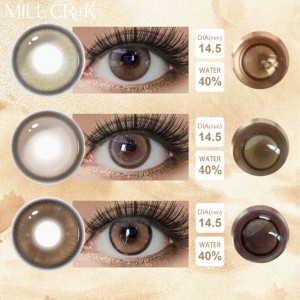
Early-generation cosmetic lenses suffered from flat, pixelated graphics that looked unnatural under close inspection. Today’s top-tier Chinese exporters utilize multi-tonal dot-matrix patterns (up to 4 distinct color layers) that emulate the intricate fibrous architecture of human iris stroma. By graduating pigment density from an inner golden collar through radial striated fibers to a diffused, semi-translucent limbal ring, modern lenses achieve natural aesthetic depth across both light and dark ocular phenotypes.
Internal Wetting Agents & Moisture-Locking Monomers
Modern daily disposable formulations integrate internal hydrophilic wetting agents, such as polyvinylpyrrolidone (PVP) or sodium hyaluronate (HA), directly into the prepolymer mix before polymerization. This creates a permanent, lubricious surface network that resists tear film protein and lipid deposition. By keeping water contact angles below 45 degrees, modern daily lenses maintain comfort throughout 14+ hours of continuous wear, preventing dry-eye symptoms caused by digital screen exposure.
Sustainable, Mono-Material Blister Packaging
In response to international ESG directives and retail retailer packaging mandates, packaging architecture is undergoing an environmental overhaul. Leading exporters are transitioning away from multi-laminated aluminum foil-polypropylene strips toward 100% recyclable mono-material polypropylene blisters, utilizing thermal peelable films with food-grade preservation gas flushing. This reduces the plastic footprint per box by up to 28% while extending unopened sterile shelf life to 5 full years.
Standard OEM Technical Specifications Comparison
Baseline operational parameters available for custom brand formulation and bulk container procurement.
| Parameter | Standard Hydrogel (2-HEMA) | Advanced Hydrogel (NVP / GMA) | Silicone Hydrogel (SiHy Daily) | Inspection Benchmark |
|---|---|---|---|---|
| Water Content (%) | 38% – 42% | 55% – 58% | 45% – 50% | ISO 18369-4 Gravimetric |
| Oxygen Transmissibility (Dk/t) | 12 – 18 Barrer/cm | 25 – 32 Barrer/cm | 80 – 120 Barrer/cm | Polarographic / Coulometric |
| Base Curve (BC) Range | 8.50 mm – 8.70 mm (±0.05) | 8.60 mm – 8.80 mm (±0.05) | 8.50 mm – 8.70 mm (±0.04) | Optimec Optical Projection |
| Total Diameter (DIA) | 14.0 mm – 14.5 mm (±0.1) | 14.0 mm – 14.5 mm (±0.1) | 14.0 mm – 14.2 mm (±0.08) | High-Resolution Image Analysis |
| Graphic Diameter (GDIA) | 13.0 mm – 13.8 mm | 13.0 mm – 14.0 mm | 12.8 mm – 13.6 mm | Precision Reticle Microscopy |
| Center Thickness (CT @ -3.00D) | 0.08 mm | 0.07 mm | 0.065 mm – 0.08 mm | Electronic Thickness Gauge |
| Refractive Power Range | Plano (0.00) to -10.00 D | Plano (0.00) to -8.00 D | Plano (0.00) to -12.00 D | Automated Focal Lensmeter |
| Pigment Encapsulation | Sandwich Micro-Layered | Sandwich Micro-Layered | Inter-matrix Polymerized | Cross-Sectional SEM Microscopy |
Frequently Asked Questions for B2B Contact Lens Importers
Critical commercial, logistical, and compliance considerations addressed by our supply-chain and regulatory engineering teams.
- ISO 13485:2016 Certified Quality Management System Documentation
- Declaration of Conformity (DoC) and CE Certification under applicable MDD/MDR directives
- Full ISO 10993 Biocompatibility Test Reports (Cytotoxicity, Ocular Irritation, Delayed-Type Hypersensitivity, Extractables & Leachables)
- Sterilization Validation Reports per ISO 11137 / ISO 17665 (Moist Heat Autoclaving at 121°C)
- Real-Time and Accelerated Aging Shelf-Life Stability Reports confirming 3- to 5-year sterility and parameter integrity
- Finished Product Release Specifications, Batch Release COAs, and Material Safety Data Sheets (MSDS)
Why Partner with Our Chinese Manufacturing Facilities?
Combining world-class production capacity, stringent clinical quality control, and end-to-end OEM supply chain management.
Automated High-Capacity Cleanroom Infrastructure
Our partner facilities operate advanced Class 100,000 cleanroom environments equipped with automated servo-controlled cast-molding machinery. With automated liquid monomer dispensing, multi-color micro-pad printing, robotic demolding, and continuous autoclave sterilization lines, we achieve an annual output exceeding 120 million sterile blisters. This high-capacity automation ensures batch-to-batch consistency and dependable supply chains for major global retailers.
Multi-Tier Optical and Biological Inspection
Every single manufactured lens undergoes thorough quality inspection. In addition to sub-pixel Automated Optical Inspection (AOI) for edge integrity, dimensional profiles, and pattern alignment, our quality labs conduct daily bioburden testing, endotoxin screening, moisture content titration, and spectral transmittance profiling. This medical-device approach minimizes defective returns and guarantees a high-performing product for your end consumers.
Comprehensive Turnkey Brand Incubation
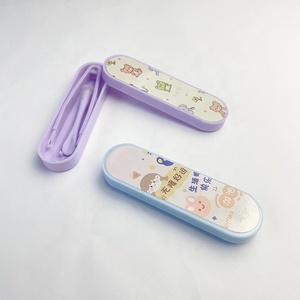
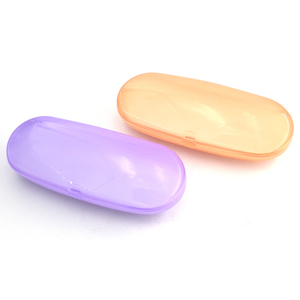
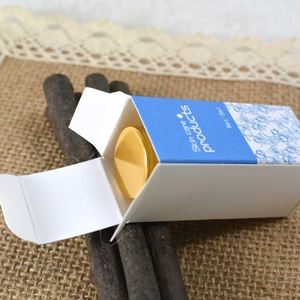
We provide full-spectrum OEM and ODM private label support that extends well beyond lens manufacturing. Our industrial packaging engineers and design specialists assist in the structural development of custom folding boxes, multi-pack retail packaging, compliance-audited instruction leaflets, and tamper-evident blister lidding foil. We ensure your retail-ready products comply with local labeling regulations while delivering an unboxing experience that builds lasting customer loyalty.
Ready to Launch or Scale Your Private Label Lens Brand?
Connect with our technical optical engineering and export compliance team today. Request free factory samples, custom shade prototypes, regulatory technical files, and wholesale volume pricing.
Contact Us