Packaging
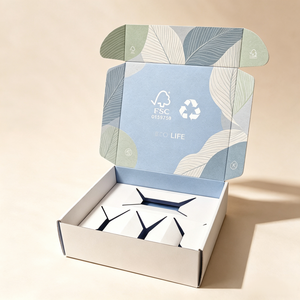
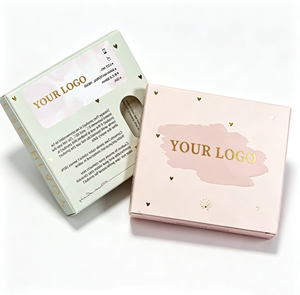
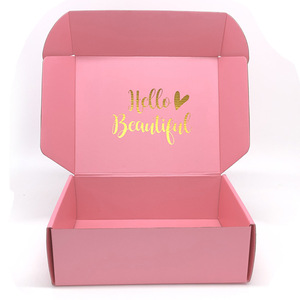
Custom Your Logo Empty Cardboard Paper Magnetic Contact Lens Packaging Box
- Closure: Neodymium Magnet
- Material: 1200gsm Rigid Greyboard
- Application: Luxury Multi-Lens Kits
Explore direct-from-factory turnkey contact lens hardware, sterile secondary packaging lines, and diagnostic retail display units engineered for high-throughput global distribution.
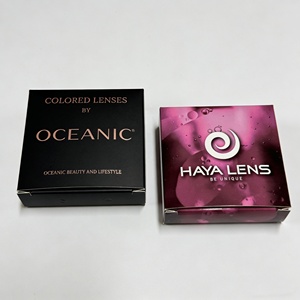
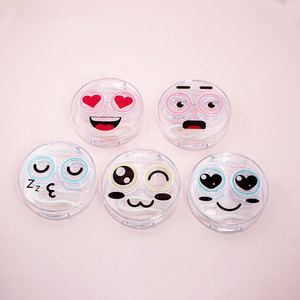
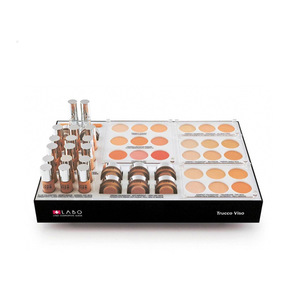
The global ophthalmic device marketplace has undergone a radical structural reconfiguration over the past five years. Where contact lens manufacturing was historically concentrated among a legacy oligopoly in Western Europe and North America, China has emerged as an engineering powerhouse capable of delivering Class II and Class III medical-grade contact lenses with unprecedented micro-optical tolerances. Operating within an integrated industrial ecosystem that merges fine chemical synthesis, automated micro-injection cast molding, and precision printing, certified Chinese contact lens factories now produce high-reproducibility hydrogel and silicone hydrogel matrices that comply with the world's most demanding regulatory regimes, including the European Union Medical Device Regulation (EU MDR 2017/745) and United States FDA 510(k) clearances.
For international procurement executives, optical distributor networks, and independent cosmetics enterprises, partnering directly with a primary Chinese contact lens manufacturer is no longer merely a cost-arbitrage maneuver. It is an innovation strategy. By cutting through multi-tiered brokerages, global brand directors gain immediate command over custom toric stabilization systems, multifocal aspheric optical geometries, proprietary graphic diameters, and full-spectrum custom packaging. Below is an exhaustive structural evaluation of modern factory capabilities, material sciences, manufacturing automation, and regulatory pathways designed to inform global sourcing initiatives.
The baseline distinction between non-regulated novelty items and clinical-grade cosmetic lenses lies in the automated synthesis environment. Velalens and its advanced manufacturing alliances maintain continuous Class 100,000 (ISO Class 8) and Class 10,000 (ISO Class 7) cleanroom facilities that govern every production phase from raw monomer compounding to post-autoclave visual verification.
Unlike historical lathe-cutting techniques that leave micro-striations on the posterior lens surface, modern high-speed production lines leverage fully automated double-sided cast molding. Virgin optical molds machined from ultra-pure polyolefin resins receive sub-microliter monomer injections under robotic atmospheric control. High-intensity ultraviolet (UV) or thermal curing stations ensure polymer cross-linking occurs uniformly across both concave and convex surfaces, yielding reproducible sagittal heights, ultra-smooth edge geometry, and standardized center thicknesses (typically 0.06mm to 0.08mm for -3.00D).
Surface printing on finished lenses is an obsolete, hazardous method that breaches modern medical device regulations. Our automated pad-printing lines apply multi-tone cosmetic patterns directly to the internal face of the anterior mold before monomer filling. When cross-linked, the pigment matrix is encapsulated within two protective layers of hydrated clear polymer. The ocular surface and palpebral conjunctiva touch only mirror-smooth, biocompatible hydrogel, assuring frictionless blinking and optimal tear film breakup time (TBUT).
Every single finished lens undergoes 100% computerized optical scrutiny prior to blister packaging. High-resolution CCD cameras capture sub-pixel images in liquid suspension to detect edge tears, bubbles, eccentric color rings, foreign particulate matter, and power deviations. Lenses exhibiting deviations greater than ±0.02mm in graphic centering or ±0.12D in dioptric power are systematically ejected by pneumatic rejectors, guaranteeing an Acceptance Quality Limit (AQL) that surpasses commercial standards.
The table below illustrates the standard parametric capabilities engineered within our certified production lines, serving as a baseline reference for B2B brand formulation development:
| Parameter | HEMA Hydrogel Standard | High-Dk Silicone Hydrogel | Custom Toric / Astigmatic |
|---|---|---|---|
| Oxygen Transmissibility (Dk/t) | 18 – 28 Fatt Units (@ -3.00D) | 80 – 130+ Fatt Units (@ -3.00D) | 25 – 90 Fatt Units (Design Dependent) |
| Water Content (%) | 38% – 45% (High dimensional stability) | 45% – 55% (Optimized water/silicone ratio) | 40% – 48% (Balance of stability & hydration) |
| Base Curve (BC) | 8.50mm – 8.70mm (±0.02mm) | 8.40mm – 8.80mm (±0.02mm) | 8.50mm – 8.70mm with Back-Surface Toric |
| Total Diameter (DIA) | 14.0mm – 14.5mm | 14.0mm – 14.3mm | 14.2mm – 14.5mm |
| Graphic Diameter (G.DIA) | 12.8mm – 14.0mm (Natural to Enlarging) | 13.0mm – 13.6mm (Natural Cosmeceutical) | 13.2mm – 13.8mm |
| Sphere Power Range | Plano (0.00) to -10.00D (0.25D / 0.50D steps) | Plano (0.00) to -12.00D (+0.50D to +4.00D) | Plano to -9.00D (Cyl: -0.75 to -2.75D, Axis 10°-180°) |
| UV Filtration Capability | Class II UV (UVA > 50%, UVB > 95%) | Class I UV (UVA > 90%, UVB > 99%) | Integrated Class II Standard |
| Sterilization Method | Moist Heat Autoclave (121°C, 30 min) | Moist Heat Autoclave (121°C, 30 min) | Moist Heat Autoclave (121°C, 30 min) |
Procurement leaders must position their brand pipelines ahead of macro consumer shifts and tightening healthcare governance. Based on proprietary factory export audits, supplier intelligence, and retail velocity analysis, we project four dominant purchasing patterns over the upcoming half-decade:
While yearly lenses retain niche share in emerging markets, tier-one brands are aggressively deprecating extended-wear SKUs in favor of 1-Day daily disposables. Driven by consumer awareness surrounding microbiological safety, zero-maintenance compliance, and sterile unit dosing, global daily disposable colored lens orders from Chinese factories have compounded at over 28% annually.
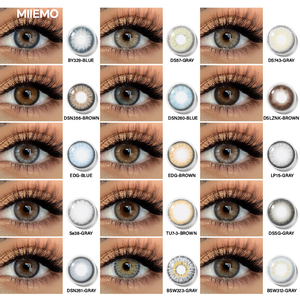
The cosmetic lens category is shedding its reputation as purely "costume" fashion. The fastest-growing volume segment comprises clinical visual correction combined with subtle, iris-enhancing color rings: specifically colored toric lenses for astigmatism and center-near multifocal colored contacts for presbyopic populations who refuse to sacrifice youthfulness for vision.
Single-use contact lenses face heightened ecological scrutiny. Importers are requiring secondary packaging engineered from FSC-certified sustainable carton stocks, water-based non-toxic inks, and polypropylene blister shells engineered with reduced plastic grammage. Modern Chinese factories provide unified, eco-compliant blister-to-shipper configurations out of the box.
Launching a differentiated private label contact lens line requires synchronizing design creativity with rigorous industrial staging. Our engineering teams operate under a standardized 6-stage gateway methodology:
Stage 1: Formulation & Graphic Chromatic Prototyping: Sourcing directors supply reference photography, target pantones, or digital artwork. Our optical design lab produces calibrated printing film positives with micro-dot dithering tuned specifically for light or dark natural irises.
Stage 2: Pilot Mold Tooling & Sampling: High-precision steel tooling creates customized master inserts. Pilot sample runs (typically 50–100 pairs) are cast, hydrated, sterilized, and express-couriered to the client within 14–21 business days for fit and cosmetic evaluation.
Stage 3: Regulatory Dossier Assembly: While sampling undergoes client validation, our compliance office compiles the technical construction file (TCF), including material safety data sheets (MSDS), bio-compatibility studies (cytotoxicity, systemic toxicity, ocular irritation ISO 10993), and sterilization validation reports (ISO 11137 / ISO 17665).
Stage 4: Automated Bulk Run & Encapsulation: Upon client sign-off, high-speed automated lines execute high-volume cast molding. Temperature and cleanroom relative humidity are locked at 22°C ± 1°C and 50% ± 5% respectively to prevent micro-structural crystallization deviations.
Stage 5: Hermetic Sealing & Terminal Autoclave Sterilization: Lenses are packed into medical-grade polypropylene blister packs filled with buffered saline solution (with integrated hyaluronic acid or poloxamer moisture locks), sealed with peelable multi-layer aluminum foils, and loaded into computerized steam autoclaves.
Stage 6: Secondary Cartoning & Freight Execution: Blisters are transferred to automated cartoning machines that insert multi-language instructions for use (IFU), imprint variable lot numbers and 5-year expiration dates, and package the goods into tamper-evident magnetic or foldable airplane boxes for immediate air or sea dispatch.
Actionable answers to core operational, regulatory, and logistics queries encountered by international buyers sourcing medical contact lenses from China.