Direct-from-Factory Private Label Lens Portfolios
Engineered for beauty brands, optical chains, and multi-channel retailers worldwide. Explore our verified export configurations spanning cast-molded cosmetic tints, toric prescriptions, and specialized optical lenses manufactured under stringent cleanroom protocols.
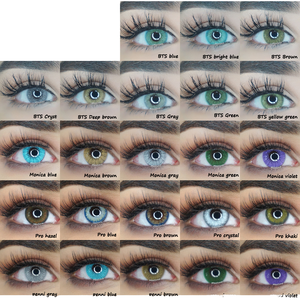
For DSC Pro Penni Soft Natural Colored Contact Lenses Private Label Cosmetic Wholesale Color Contact Lens
Get Catalog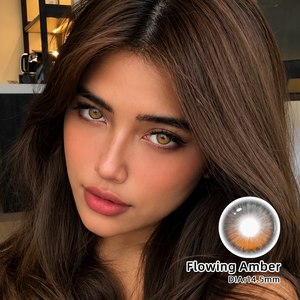
Wholesale Colored Contact Lenses 14.5mm OEM ODM Cosplay Halloween Party Eyes Factory Direct Private Label CE ISO 13485 Certified
Get Catalog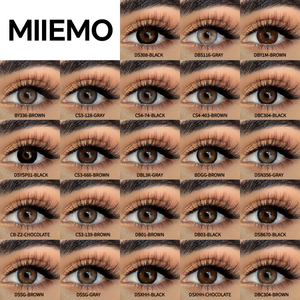
MIIEMO Soft Natural Three Tone Color Contact Lenses 2-Piece Blister Pack 38% Water Content Private Label Cosmetic Wholesale
Get Catalog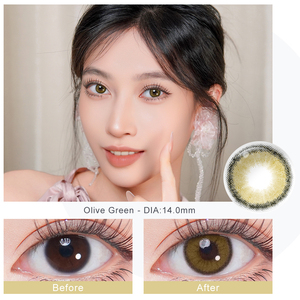
Customized Package Contact Lenses Natural Wholesale Color Contact Lenses OEM Hidrocor Contact Lenses Lentes De Contacto De Color
Get Catalog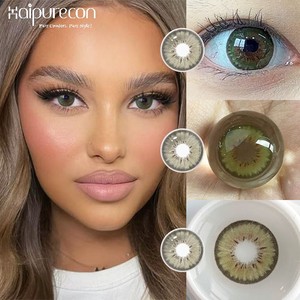
Haipurecon 14.5mm Colored Contact Lenses Yearly Disposable Big Eye Soft Natural Lenses OEM ODM Factory Direct Wholesale Custom
Get Catalog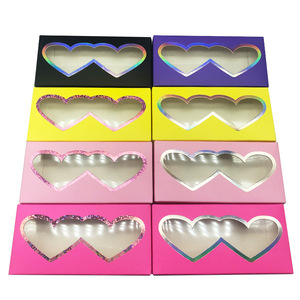
Custom Color Contacts Lenses for Eyes Box Packaging Colorful Customizes Package Own logo
Get Catalog
Factory Engineering Strengths: Medical Grade Integrity
As China's leading private label contact lenses manufacturer and international exporter, our manufacturing infrastructure bridges aesthetic trend velocity with ophthalmic-grade precision. Our facilities integrate micro-pigment encapsulation, automated edge contouring, and end-to-end batch traceability.
Patented Sandwich Intercalation
Unlike inferior cosmetic lenses where dyes sit directly against surface tissue, our lines utilize 3-Layer Poly-HEMA Sandwich Encapsulation. Micro-pigment layers are locked firmly within clear polymer matrix boundaries, guaranteeing zero leachability, uncompromised epithelial integrity, and sustained corneal protection under continuous shear stress.
Ultra-Smooth Rounded Edges
Each cast mold is precision machined using high-definition computerized lathes to guarantee our trademark Comfort Bevel Profile. This continuous curvature minimizes lid interaction throughout daily blink cycles (averaging 15,000 blinks/day), promoting unimpeded tear exchange, stable hydration dynamics, and rapid initial wearer adaptation.
Turnkey OEM / ODM Packaging
Full-spectrum commercial customization allows private label partners to establish distinctive shelf equity. From individual foil-sealed sterile blisters and glass storage vials to bespoke outer box printing with high-security anti-counterfeit QR tracking, our in-house packaging lines accommodate bespoke barcodes, localized multi-language leaflets, and regulatory artwork validation.
Future Procurement Trends: Where The Global Market Is Heading
Procurement directors and brand strategists must adjust their inventory structures to align with rapid consumer behavioral shifts, ophthalmological health awareness, and stringent retail channel compliances through 2026–2030.
Daily Disposable Dominance
While yearly contact lenses traditionally represented the volume core in emerging beauty markets, brand sourcing is radically pivoting toward Daily (1-Day) Disposables. Driven by higher hygiene expectations, cross-contamination concerns, and zero maintenance requirements, daily packs generate substantially higher recurring Lifetime Value (LTV) across digital retail channels.
Silicone Hydrogel Material Shift
Oxygen transmissibility (Dk/t) has entered mainstream consumer vernacular. High-end cosmetic private labels are transitioning from standard HEMA hydrogel matrices toward Third-Generation Silicone Hydrogel polymers. Offering Dk/t ratings exceeding 80–110, these formulations mitigate corneal hypoxia, supporting longer daily wear times in air-conditioned and dry screen environments.
Prescription & Astigmatism Integration
Plano (cosmetic-only 0.00 D) sourcing represents an incomplete market capture. Over 45% of potential wearers require refractive adjustment. Global forward-buyers are expanding their portfolios to integrate full power increments (-1.00 to -8.00 D) alongside custom Cosmetic Toric (Astigmatism) and Presbyopia (Multifocal) configurations to out-position non-prescription competitors.
Technological Development Evolution: The 2026 Matrix
How production line engineering has advanced to solve legacy color contact lens friction points: dry eye syndrome, unnatural flat visuals, and off-axis pupil occlusion.
| Technical Dimension | Legacy Contract Manufacturing | Our Modern Factory Standard | Buyer Commercial Advantage |
|---|---|---|---|
| Pigment Printing | Pad surface transfer; risk of abrasive friction | 3D Micro-Dot Sandwich Casting with enclosed dye | Zero pigment loss claims; medical grade safety |
| Graphic Design Depth | Flat 1-tone solid rings; artificial costume appearance | Multilayer 3-tone translucent micro-stippling | Ultra-natural daylight eye blending for daily cosmetics |
| Base Curve Precision | Mechanical lathe cutting; standard ±0.05 mm tolerance | Automated cast injection molding; ±0.01 mm repeatability | Flawless centration; reduced lens slip and blur complaints |
| Moisture Retention | Conventional HEMA hydrogel relying entirely on tears | Biomimetic MPC / HA embedded wet-polymer networks | Up to 16 hours of continuous tear-film retention |
Small Graphic DIA Patterns
Shifting away from obsolete 15.0mm doll-eye circle lenses, modern markets demand subtler Graphic Diameters (G.DIA 13.0mm–13.4mm) that augment rather than distort iris borders.
Class II UV & Blue Blocker
Embedding monomer-level UV inhibitors (absorbing >95% UVB and >70% UVA) directly protects internal intraocular structures without yellowing the aesthetic tint matrix.
Hyper-Targeted Demographics
Engineered base patterns specifically calibrated for dark brown/black Asian and Latin irises, contrasting against high-luminance formulas optimized for lighter Caucasian irises.
Audit-Ready Medical Files
Complete 510(k), EU MDR Technical Files, and Free Sale Certificates (FSC) verified by accredited notified bodies to ensure friction-free international customs processing.
Frequently Asked Questions for B2B Importers
Direct operational answers to regulatory, manufacturing, and logistic inquiries typically raised during preliminary supplier due-diligence.
What are the minimum order quantities (MOQ) for custom private label runs?
For factory-stocked color formulations paired with customized private brand outer packaging, our initial entry MOQ starts from as low as 300 to 500 pairs per shade. For fully custom, brand-exclusive print plates (bespoke color geometry not found in our catalog), production minimums begin at 2,000 to 5,000 pairs depending on the chosen replacement cycle (Daily, Monthly, or Yearly).
Are cosmetic colored contact lenses legally classified as medical devices?
Yes. Across virtually all major import jurisdictions—including the US (FDA Class II), the European Union (EU MDR Class IIa/IIb), the UK (UKCA), Canada, and the Middle East—even zero-power (plano) cosmetic contact lenses are legally categorized as medical devices. Sourcing from a facility operating under an accredited ISO 13485 quality management system is legally mandatory to clear customs and retail legally.
What is the standard production and shipping lead time?
In-stock reference sample units for clinical, aesthetic, and fit evaluation typically ship via express courier within 3 to 7 business days. Custom private label production cycles, including automated blister sealing, steam sterilization verification, lot printing, and bespoke box boxing, run approximately 25 to 40 days following digital artwork sign-off and deposit confirmation.
Can you provide regulatory documentation to assist our domestic product registration?
Absolutely. Our dedicated regulatory affairs department provides comprehensive compliance packages for authorized distributors. This encompasses valid ISO 13485 certificates, CE certifications, Certificates of Free Sale (CFS), biocompatibility and cytotoxicity test reports (ISO 10993), steam autoclave sterilization validation, and material formulation declarations.
What is the difference between blister packs and glass vials in procurement?
Blister packs (typically PP plastic shells sealed with medical-grade aluminum peel foil) are the standard for modern daily, monthly, and quarterly wear cycles, optimizing shipping weight and matching high-end pharmacy/beauty retail shelves. Glass vials with rubber stoppers and crimped aluminum caps are traditional packaging solutions predominantly utilized for annual lenses in specialized international distributor sectors.
How do you guarantee color consistency between different production batches?
Color consistency across manufacturing batches is maintained through automated digital spectrophotometer calibration, precision high-viscosity ink dispensing systems, and closed-loop environmental controls in our cleanrooms. Furthermore, reference retention lenses from every approved lot are kept in temperature-controlled archive lockers for five years to compare against subsequent production runs.
Build Your Private Label Contact Lens Line With Direct Factory Support
Connect with our OEM/ODM technical project team to review shade rings, custom pattern engineering, cleanroom compliance files, and wholesale volume tiering.
Get Catalog