Natural Color
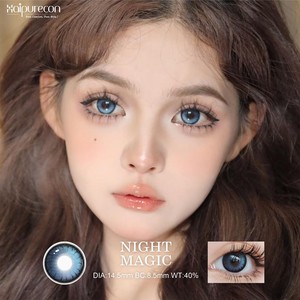
Engineered for high chromatic depth, corneal wetting stability, and limbal ring definition. Ready for private labeling, customized packaging, and direct regulatory export documentation.
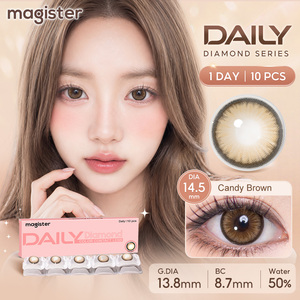
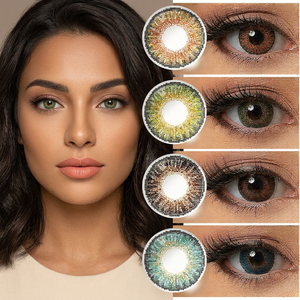
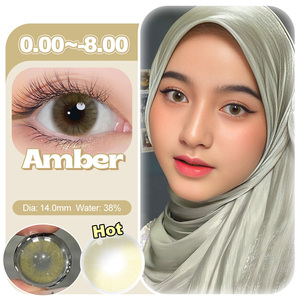
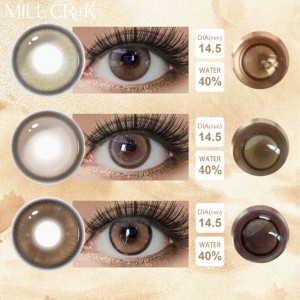
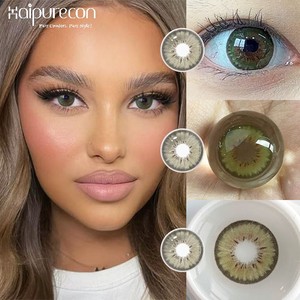
In the global ophthalmic cosmetic industry, dark brown contact lenses represent over 44% of total transaction value across East Asia, Southeast Asia, the Middle East, and Latin America. Unlike high-contrast fantasy pigments, dark brown cosmetic hydrogels must negotiate complex biological constraints: they must seamlessly integrate with native human stroma while modulating ocular depth, pupillary aperture movements, and limbal ring delineation under diverse lighting conditions.
As top China-based manufacturers, our engineering focus centers on multi-layer photometric dot registration. Natural dark brown human irises possess dense eumelanin distribution in the anterior border layer. Standard single-tone tinting produces an unnatural, flat appearance often described as the "doll-eye effect." To solve this, our specialized cast-molding lines employ high-precision micro-matrix pad printing that layers three distinct tonal micro-droplets:
A soft, high-density dark umber transition border (13.8mm to 14.5mm graphic diameter) that reconstructs juvenile ocular contrast without hard, synthetic boundary lines.
Radial spoked dots combining rich mocha, warm chestnut, and deep cocoa tones. The varying spacing allows the wearer's authentic iris depth to scatter light naturally via the Tyndall effect.
Controlled pupil aperture diameter (minimum 4.2mm clear diameter) guaranteeing total visual acuity under low-light scotopic dilation without peripheral color occlusion.
When specifying Graphic Diameter (GDIA) versus Total Diameter (DIA), international buyers should note that dark brown lenses intended for natural enhancement require a GDIA-to-DIA ratio between 0.92 and 0.94 (e.g., 13.3mm graphic on a 14.2mm blank). For "dolly" or circle lens lines, that ratio expands to 0.96 (13.8mm graphic on 14.5mm blank), demanding tight edge-lift calculations to maintain tear-film turnover.
Ocular safety is governed by the boundary physics between the hydrogel surface and the corneal epithelium. Older production lines in lower-tier facilities deposit pigments directly on the posterior or anterior lens surface. In contrast, our advanced manufacturing centers utilize proprietary Sandwich Bio-Encapsulation Technology. The micro-pigment layers (composed of non-toxic iron oxides, titanium dioxide, and phthalocyanine derivatives) are entirely encapsulated inside a 10-micron polymer sheath. Zero colorant touches living tissue, completely preventing mechanical abrasion, pigment leaching, and foreign-body giant-cell reactions.
| Polymer System | Water Content (%) | Oxygen Transmissibility (Dk/t) | Elastic Modulus (MPa) | Replacement Cycle | Recommended Commercial Channel |
|---|---|---|---|---|---|
| Poly-HEMA Classical | 38% - 42% | 14 - 18 × 10-9 | 0.35 - 0.45 | Monthly / Half-Year / Yearly | Mass Retail, Salon Chains, Entry-level E-commerce |
| HEMA + NVP Hydrophilic | 50% - 55% | 24 - 28 × 10-9 | 0.30 - 0.38 | Daily Disposable / Monthly | Premium D2C Brands, Sensitive-Eye Formulations |
| Silicone Hydrogel (SiHy Gen III) | 45% - 48% | 100 - 130 × 10-9 | 0.60 - 0.75 | Daily / Monthly Extended Wear | Optical Boutiques, Clinical Prescription Lines, EU/US Rx |
| Toric Brown Hydrogel | 42% - 50% | 20 - 26 × 10-9 | 0.40 - 0.50 | Monthly / 6-Month | Specialty Astigmatic Prescription Color Channels |
Procurement executives from international brands and pharmacy chains face shifting consumer behavior, clinical regulation, and manufacturing automation. Based on our enterprise production data and global export manifests, we project four dominant structural shifts that will reshape dark brown contact lens procurement over the coming five years:
Global beauty markets are retiring yearly glass-vial SKUs in favor of 10-pack and 30-pack single-use blister formats. Daily disposables eliminate chemical preservative deposition, minimizing consumer complaints by 82% and driving higher lifetime customer value (LTV) through predictable recurring order replenishment cycles.
With patent barriers continuing to sunset, third-generation silicone hydrogel formulations are entering cosmetic colored markets at scale. Sourcing dark brown pigments encapsulated in silicone matrices provides the 100+ Dk/t required for day-to-night screen wearers, unlocking pharmacy and optometrist endorsement channels previously restricted to clear lenses.
Emerging DTC cosmetic brands are deploying AI colorimetry applications that assess customer iris photos. In response, our automated production lines are scaling flexible small-batch digital printing setups, enabling private label partners to offer tailored dark brown variations (Golden Amber Brown, Ash Brown, Espresso Deep Brown) with lowered pilot MOQs.
Environmental scrutiny in the EU and North America is expediting the development of mono-material polyolefin blister trays and aluminum-free peelable barrier films. Forward-thinking procurement teams are establishing supply contracts with manufacturers possessing ISO 14001 certification and closed-loop saline molding water reclamation systems.
We combine advanced cleanroom cast-molding infrastructure with western regulatory compliance files, offering an end-to-end manufacturing bridge from raw macromer synthesis to localized retail cartons.
Every SKU is backed by complete technical construction files (TCF), biocompatibility tests (ISO 10993 cytotoxicity, ocular irritation), CE MDR compliance documentation, and ISO 13485:2016 quality system audit certification.
Every single manufactured lens passes through high-resolution 360-degree machine vision inspection stations, scanning for edge micro-nicks, print eccentricity, particulate inclusion, and center thickness irregularities at 600 frames per minute.
From custom blister foil printing to bespoke outer gift boxes, multi-language instruction leaflets, and barcode serializations, our packaging workshops support brand turnkeys with starting trial batches from just 300 to 500 pairs per shade.
Direct technical and operational answers to support your quality assurance, commercial contracting, and regulatory compliance teams.
Connect directly with our senior optical engineering and export team. Receive immediate master shade catalogs, complete regulatory registration documentation, factory audit credentials, and wholesale price tiers for your target market.