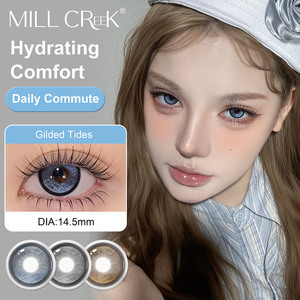
 Bulk MOQ
Precision Catalog
Featured Optical & Cosmetic Product Lines
Explore our core series of soft prescription contacts, cosmetic enhancement lenses, and luxury custom packaging solutions manufactured directly at our cleanroom facilities.
Bulk MOQ
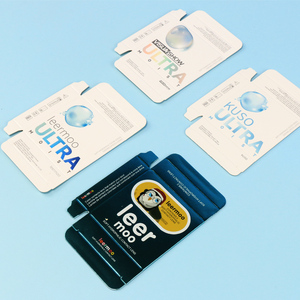 OEM Branding
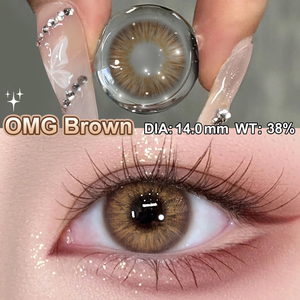 Prescription
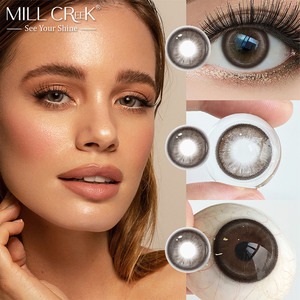 Yearly Wear
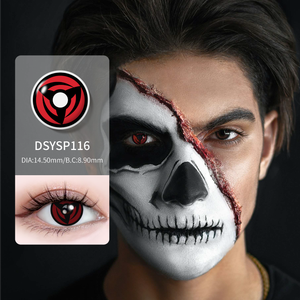 Cosplay Line
 Accessories
 EVA Shell
 Retail Ready
50,000,000+
Annual Unit Production Output
100%
Semi-Embedded Pigment Isolation
80+
Global Export Compliance Markets
< 0.02%
Edge Micro-Burr Defect Rate
Industrial White Paper Analysis
Engineering Honey Brown Contact Lenses: The Convergence of Ocular Optics and Aesthetics
A rigorous examination of pigment biocompatibility, chromophore gradients, and oxygen transmissibility in modern cosmetic lens manufacturing.
In global cosmetic optometry, Honey Brown contact lenses occupy the single highest reorder volume across European, North American, and Middle Eastern distribution channels. The technical challenge of replicating natural iris morphology lies in the transition between dark melanin irises (common in Asian and Mediterranean demographics) and lighter hazel stroma. Producing an authentic honey brown coloration demands a multi-tiered chromophore stratification: an inner golden hazel halo to soften the pupillary margin, a middle amber-honey striated pattern that mirrors the stromal crypts, and an ultra-fine limbal transition ring that imparts spatial depth without appearing artificial or solid.
From a manufacturing standpoint, color fidelity cannot compromise ocular health. Inferior cosmetic lenses rely on pad-surface printing, where pigments remain in direct friction with the palpebral conjunctiva and corneal epithelium. As a premier China manufacturer, our facility implements advanced Cast-Molding Sandwich Encapsulation. Inorganic, medical-grade colorants (iron oxides, titanium dioxides, and copper phthalocyanine) are locked within an inner cross-linked polymer layer of 2-HEMA (2-Hydroxyethyl methacrylate) or silicone-hydrogel matrix. This completely shields living tissue from micro-abrasions and toxic monomer leaching while maintaining a silky 0.06mm center thickness for unhindered tear fluid circulation.
| Evaluation Parameter | Velalens Industrial Standard | Conventional Pad-Printed Tier | Clinical Advantage for Resellers |
|---|---|---|---|
| Colorant Encapsulation | Triple-Layer Sandwich Micro-Lock | Surface Ink Layer / Mono-Dip | Zero Pigment Bleed / No Tissue Contact |
| Base Curve (BC) Regularity | 8.5mm / 8.6mm / 8.7mm (±0.02mm) | 8.6mm Standard (±0.08mm) | Optimal corneal centration without excessive tight fit |
| Oxygen Permeability (Dk/t) | Silicone Hydrogel: 85–110 / HEMA: 22–28 | HEMA Baseline: 12–16 | Prevents neovascularization during 12-hour wear |
| Edge Profile Geometry | CNC Tangential Rounded Edge (T-Edge) | Mechanical Punch Blunt Edge | Eliminates blink awareness and foreign body sensation |
| Water Content Gradient | 38% (High Stability) to 55% (High Wetting) | Fixed 38% HEMA | Engineered for varying environmental humidities |
2026–2030 Strategic Horizon
Future Sourcing & Industry Trends in Cosmetic Lenses
Data-driven insights for procurement officers, chain store category managers, and e-commerce brand builders.
1. Migration to Silicone-Hydrogel (SiHy) Daily Disposables
Global procurement records indicate a 34% year-over-year surge in daily disposable cosmetic units. Consumer demand has definitively shifted from annual glass vials to high-oxygen 10-pack and 30-pack daily blisters. Distributors sourcing Honey Brown series are aggressively prioritizing SiHy materials to cater to contact lens wearers demanding zero daily maintenance and superior corneal breathability.
2. Aesthetic Micro-Diameterization (Subtle G.DIA)
The era of exaggerated 15.0mm doll-eye circle lenses has matured into biometric realism. High-performing honey brown lenses now specify Graphic Diameters (G.DIA) between 13.0mm and 13.4mm within a 14.0mm to 14.2mm overall diameter. Modern buyers require dot-matrix patterns with graduated density to achieve an authentic eye-brightening effect that transitions seamlessly under natural sunlight and 4K digital video.
3. Regulatory Tightening & Turnkey Dossier Support
With the strict enforcement of the EU MDR (Medical Device Regulation 2017/745) and intensified US FDA 510(k) audits, importing non-compliant cosmetic lenses poses severe customs confiscation risks. Sourcing directors require suppliers who do not merely manufacture lenses, but supply complete technical files, biocompatibility assays (ISO 10993), stability reports, and compliant multilingual packaging artwork.
Precision Manufacturing Infrastructure
Why International Brands Partner with Us as Their China Manufacturing Hub
Combining automated European cleanroom technology with flexible private-label customization and responsive supply chain execution.
Fully Automated Cast Molding Lines
Our production floor utilizes robotic injection and curing cells ensuring nanometer-level consistency in mold curvature, minimizing optical aberration, cylinder drift, and power variations across multi-million piece contract runs.
Proprietary Micro-Dot Chromatic Printing
Equipped with ultra-high resolution pad-printing plates, we formulate bespoke honey brown shades, combining translucent amber rings, warm golden pigments, and feathered edges calibrated specifically to blend across all ethnic iris shades.
Class 100,000 Cleanroom & Full QC Inspection
Every single contact lens undergoes 100% optical magnification imaging check to eliminate edge chips, bubbles, or pigment anomalies prior to saline blister filling, foil sealing, and continuous terminal autoclave sterilization.
End-to-End Packaging & Accessory Engineering
From customized medical blister foils, luxury embossed folding boxes, and foil-stamped cases to FDA-grade EVA lens cases and tweezers, we provide fully assembled, retail-ready SKU packaging shipped directly from factory docks.
Low MOQ & Agile Private Label Incubation
We empower growing cosmetics entrepreneurs and established retail opticians alike, offering modular MOQs starting from 300 pairs per shade for in-stock blanks, coupled with comprehensive CAD and packaging design support.
Global Export Registration Documentation
Our regulatory affairs division supplies certificates of origin, Free Sales Certificates (FSC), ISO 13485:2016 declarations, CE certification technical documentation, and product safety datasheets (MSDS) to streamline port entry clearance.
Procurement Intelligence
Frequently Asked Questions on Sourcing Honey Brown Lenses
Essential guidance on minimum order quantities, prescription ranges, sample prototyping, and regulatory compliance.
What is the minimum order quantity (MOQ) for custom private label Honey Brown lenses?
For pre-engineered catalog designs packaged under your custom brand name, our baseline MOQ begins at approximately 300 to 500 pairs per shade with mixed diopters. For completely bespoke ODM iris patterns requiring new digital printing plates, the standard initial run starts from 2,000 to 5,000 pairs, which amortizes plate tooling costs effectively.
Can you provide prescription (myopic/hyperopic) powers in Honey Brown cosmetic lenses?
Yes. We manufacture both plano (0.00D for cosmetic wearers) and corrective power ranges from -0.50D to -8.00D (in 0.25D increments up to -6.00D, and 0.50D steps thereafter). Toric options for astigmatic patients and multifocal options are also accessible on select manufacturing lines upon technical consultation.
How do you guarantee that pigments will not cause adverse corneal reactions?
All cosmetic lenses manufactured at our plant employ our micro-encapsulated "Sandwich" cast-molding system. Color pigments are fully enclosed within the medical-grade hydrophilic polymer matrix. The pigments never touch corneal cells or the conjunctiva, proven through cytocompatibility and extractable testing in conformance with ISO 10993 biological evaluation standards.
What is the lead time for sampling and mass contract manufacturing?
Standard stock samples for shade evaluation and optical fitting can be dispatched via international air express within 3 to 5 business days. Bespoke trial print samples require 14 to 21 days for plate micro-etching and hydration balancing. Mass OEM production generally concludes within 30 to 45 days, contingent upon box packaging finishes and blister sterilization scheduling.
What wear modalities are supported for contract manufacturing?
We offer all primary wear schedules: Daily Disposables (1-day single use in sterile 5, 10, or 30-packs), Monthly Disposables (2-pack or 6-pack blisters), and Half-Year/Yearly wear configurations (vials or high-barrier blisters). We assist your procurement team in balancing water content (38% to 55%) to match the target replacement cycle.
Do you assist with brand box packaging, barcoding, and sterilization labeling?
Absolutely. Our turnkey OEM packaging service covers structural dieline provision, custom pantone cardboard printing, foil blocking, UDI/GS1 barcoding, sterile peel-pack foil design, and compliant multi-lingual instructions for use (IFU) leaflets matching regional medical device labeling acts.
Launch Your Signature Honey Brown Contact Lens Line
Connect with our technical optical engineers and private label specialists to request physical sample kits, production slot reservations, and factory direct price quotes.