Flagship Black & Cosmetic Optical Products
Engineered to comply with ISO 13485:2016, EU MDR 2017/745, and international ophthalmic safety protocols. All SKUs support private-label custom branding, multi-base curves, and versatile replenishment schedules.
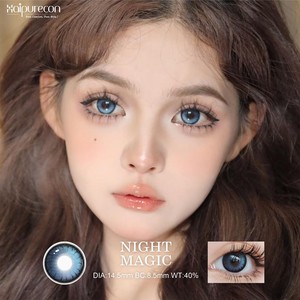
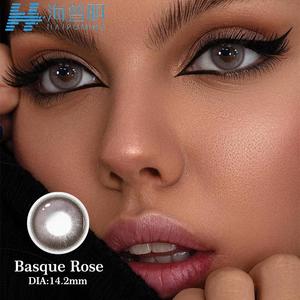
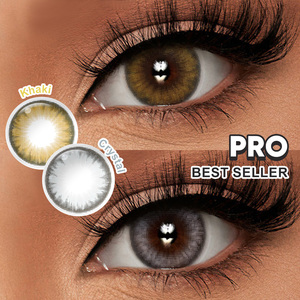
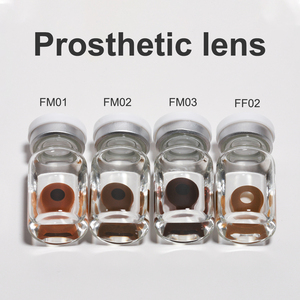
The Engineering of True Black Contact Lenses: Polymer Physics & Pigment Stability
Unlike chromatic cosmetic lenses that blend translucent greens, blues, or warm hazel tones, manufacturing medical-grade black contact lenses presents acute biomechanical and photopolymerization hurdles. Achieving saturated, non-reflective deep black pigments without impairing corneal oxygen diffusion or mechanical elasticity is where world-class Chinese facilities establish undisputed market leadership.
Triple-Layer Sandwich Micro-Encapsulation
The cardinal hazard of sub-standard black cosmetic lenses is iron oxide or carbon black pigment shedding directly onto the conjunctiva or corneal epithelium. Advanced manufacturers in China utilize automated double-sided cast-molding to hermetically trap high-density micronized colorants within the central hydrogel polymer matrix. Pigment never contacts ocular surface tissue.
Surface profilometry proves our encapsulated lenses exhibit the identical ultra-low coefficient of friction (μ ≤ 0.02) as un-tinted clear clinical lenses, mitigating the risk of giant papillary conjunctivitis (GPC) and recurrent epithelial erosions.
Oxygen Transmissibility & Matrix Porosity
Pure carbon black and iron-oxide nanoparticles present inherent barriers to gas permeation when improperly aggregated. To prevent nocturnal corneal edema and hypoxia-induced neovascularization, Chinese laboratories engineer specific hydrogel formulations (HEMA + NVP copolymer chains) and next-generation Silicone Hydrogel (SiHy) formulations.
By integrating hydrophilic macromers with micro-porous interstitial spaces around pigment clusters, our lenses sustain an optical center oxygen transmissibility of Dk/t ≥ 25 × 10-9 for conventional hydrogel and Dk/t ≥ 85 × 10-9 for silicone hydrogel daily modalities.
Pupillary Clearance & Night Glare Optics
Black circle lenses and deep-toned cosmetic lenses rely on precise Graphic Diameter (G.DIA) placement. If the clear optical zone is engineered too narrow (<4.0mm), wearers experience severe peripheral optical vignette, halos, and visual blur under scotopic (nighttime) conditions when the pupil naturally dilates to 6.0mm–7.5mm.
Our computerized optical mastering implements feathered micro-dot peripheral dithering with an unobstructed central optical aperture of 4.5mm–5.0mm, ensuring zero spherical aberration and razor-sharp retinal contrast fidelity in any lighting environment.
Black Contact Lens Optical & Physical Benchmark Specifications
Precision engineering reference metrics for international procurement directors, optometrists, and private-label distributors evaluating factory batch compliance.
| Series Archetype | Material Class | Water Content | Diameter / G.DIA | Base Curve (BC) | Oxygen (Dk/t) | Target Wear Cycle | Compliance Grade |
|---|---|---|---|---|---|---|---|
| Natural Black Limbal Ring | Poly-HEMA + NVP | 38% - 42% | 14.0mm / 13.2mm | 8.5mm - 8.6mm | 28 × 10-9 | Daily / Monthly | ISO / CE Class IIa |
| Deep Onyx Doll-Eye Circle | Hydrophilic Filcon Ib | 40% - 45% | 14.2mm - 14.5mm / 13.8mm | 8.6mm | 25 × 10-9 | Monthly / Quarterly | US FDA 510(k) Ready |
| Silicone Hydrogel Ultra Black | Balafilcon / Senofilcon Comp | 48% - 55% | 14.2mm / 13.5mm | 8.6mm - 8.7mm | 88 × 10-9 | Daily Disposable | MDR Class IIb Certified |
| Fixed-Axis Toric Black | HEMA + GMA Bio-copolymer | 42% | 14.4mm / 13.6mm | 8.6mm (Dynamic Prism) | 30 × 10-9 | Monthly Replacement | Astigmatic Corrected |
| Medical Occlusion & Sclera Black | High-Density Polymacon | 38% | 14.5mm - 17.0mm / Full | 8.8mm - 9.0mm | 22 × 10-9 | Specialist / Annual | Prosthetic Class III |
Global Procurement Trends: What Major Buyers Are Ordering for 2025–2030
The colored contact lens landscape is undergoing radical repositioning from novelty cosmetic accessories to daily dermatological-grade optical enhancements. Brand owners that align procurement with these shifts dominate regional market share.
1. The Accelerating Migration to Daily Disposables
While historically yearly lenses captured B2B volume in emerging regions due to lower price-per-wear economics, global consumer awareness around microbiological safety has led to a compound annual growth rate (CAGR) of 14.8% for 1-Day daily disposable colored lenses. Brands are ordering 10-pack and 30-pack configurations containing high-Dk silicone hydrogel, emphasizing pathogen avoidance, zero lens-case cleaning burden, and peak hydration freshness.
2. Hyper-Realistic Biomimetic 3D Radial Printing
Flat, opaque black "costume" lenses are yielding to hyper-natural biomimetic structures. Sourcing requirements now mandate high-resolution multi-pass rotary screen or high-speed inkjet micro-matrix printing. Black contact lenses must incorporate subtle charcoal transitions, feathering inner radial spikes, and translucent pupillary zones that harmonize with the wearer's real iris underneath, creating organic depth without artificial starkness.
3. Stringent Regulatory Harmonization & Technical Dossiers
Global customs enforcement is shutting out unverified white-label operations. Leading importers across the European Union (EU MDR 2017/745 transition), United States (510k device listing), Middle East (Saudi SFDA), and Southeast Asia demand complete Technical Construction Files (TCF), biocompatibility cytotoxic assays (ISO 10993), and full production traceability back to batch-specific raw monomer lot numbers before issuing purchase orders.
Why Tier-One Optical Chains Choose Our Chinese Manufacturing Facilities
We blend German-engineered cast-molding tool paths with Japanese vision inspection automation and scalable production capacity, giving OEM/ODM clients decisive margin and quality advantages.
Class 100,000 Cleanrooms
State-of-the-art closed-loop HEPA filtration maintaining strict airborne particle limits and positive pressure environmental controls according to ISO 14644-1 standards throughout monomer casting, polymerization, and hydration steps.
Automated Optical (AOI) Inspection
Every individual lens undergoes continuous 360-degree sub-micron optical camera screening. Sub-pixel analysis identifies edge burrs, air micro-bubbles, printing concentricity eccentricity, and inclusion defects, achieving a <0.01% RMA return rate.
Double Cast-Molding Mastery
Eliminating rough mechanical lathe cutting, our proprietary high-precision optical quartz and steel molds guarantee seamless surface finish, zero edge sharpness, and absolute cross-batch parameter reproducibility down to ±0.01mm.
Agile OEM / ODM Packaging
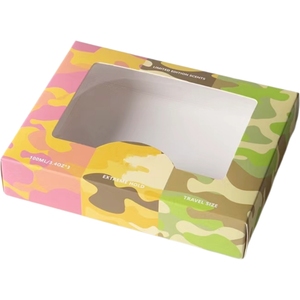
Comprehensive turnkey brand incubation: automated sterile blister strip sealing, induction foil sealing, pharmaceutical vial packaging, barcode symbology (UDI/GS1), batch lot laser etching, and tailored consumer packaging.
Frequently Asked Sourcing & Procurement Questions
Detailed answers to critical technical, compliance, logistical, and commercial inquiries routinely handled by our senior engineering and regulatory export departments.
How do you verify pigment containment and prevent color leaching in black contact lenses?
We execute exhaustive leaching tests compliant with ISO 18369 standards. Finished sterilized lenses undergo 24-hour continuous agitation in solvent baths (saline, ethanol, and artificial tear formulations) followed by UV-Vis spectrophotometry and gas chromatography mass spectrometry (GC-MS). Zero pigment migration or toxic dye degradation products are detected under rigorous mechanical and thermal stress testing.
What is the typical Minimum Order Quantity (MOQ) for custom private-label black contact lenses?
For existing certified base molds and proprietary stock black patterns with custom private packaging, our starting entry threshold begins as low as 300 to 500 pairs per SKU/power. For entirely bespoke iris diameter designs, tailored base curves, or custom toric/multifocal configurations requiring dedicated tooling and print pads, production batches generally start from 3,000 to 5,000 pairs.
Can you manufacture black contact lenses with dioptric power ranges and astigmatic toric correction?
Yes. Our automated manufacturing line handles power ranges from Plano (0.00D) to -10.00D in 0.25D and 0.50D increments. For astigmatic patients, we manufacture custom back-surface toric designs integrating dynamic prism ballasting, ensuring the deep black cosmetic pattern remains perfectly counter-balanced along the correct optical axis during rapid eye blinks.
What documentation and technical files are supplied for local medical authority registration?
Every commercial order is backed by a full Regulatory Dossier: Certificates of Analysis (CoA), ISO 13485:2016 audited facility certifications, CE conformity declarations under EU MDR, free sales certificates (CFS), stability test documentation verifying a 5-year sterile shelf life, biological evaluation reports (ISO 10993 cytotoxicity, sensitization, irritation), and packaging labeling verification.
What is the standard production lead time from PO sign-off to overseas dispatch?
For stock in-house patterns relabeled under private packaging, typical production and blister sterilization require 14 to 21 calendar days. Completely custom ODM designs (involving newly fabricated printing clichés, tint matching, and pre-production sample approvals) generally take 30 to 45 calendar days for mass fulfillment, shipped via temperature-monitored air freight or sea cargo.
How does your factory maintain batch-to-batch color density and geometric consistency?
We eliminate human visual variation by employing closed-loop computerized formulation dispensers for pigment viscosities and computer-controlled UV curing cycles. Every production run is cross-referenced with master spectrophotometric color coordinates (ΔE ≤ 0.5) and calibrated via laser interferometers, ensuring repeat orders 12 months later match the original batch appearance identically.
Scale Your Optical Brand with China's Premier Black Contact Lens Manufacturer
Direct factory quotations, clinical test reports, complete custom sample kits, and comprehensive regulatory documentation are available immediately to qualified distributors and optical brand executives.