CE / ISO
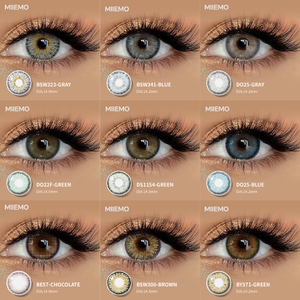
Engineered via sandwich cast-molding technology to protect corneal epithelial health while achieving optimal light transmission and visual density.
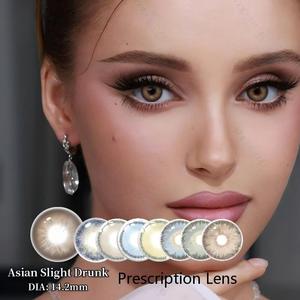
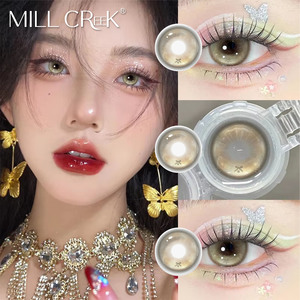
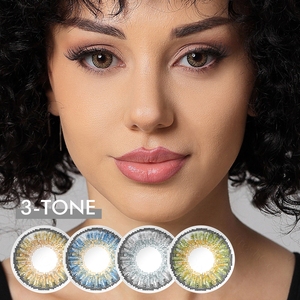
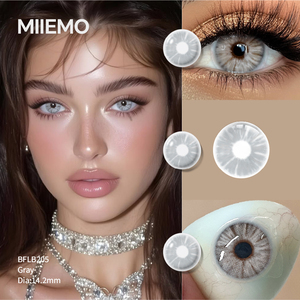
Red contact lenses—spanning cosmetic ruby tints, vibrant scarlet costume eyes, and vampire/theatrical block configurations—represent one of the most chemically sensitive manufacturing categories in soft contact lens fabrication. Unlike translucent brown or gray matrixes, intense red pigments require substantial mineral and synthesized colorant density (principally iron oxides, quinacridone reds, and approved organic lake pigments). Achieving deep chromatic saturation without triggering corneal hypoxia, pigment leaching, or mechanical friction requires advanced cast molding and polymer sandwiching technologies.
Historically, low-tier decorative lenses utilized surface printing (tampography) applied directly onto the inner or outer lens boundary. In clinical environments, this configuration causes microscopic friction on the palpebral conjunctiva and risks pigment elution through interaction with the tear fluid's lipid fraction. As a qualified manufacturer, we enforce zero-contact encapsulation across every batch: the colorant layer is locked between two micro-thin strata of 2-HEMA (Hydroxyethyl methacrylate) or silicone-hydrogel prepolymer. The lens interior and exterior surfaces remain pure, pristine polymer, guaranteeing that bio-inert boundaries make contact with the ocular surface.
Saturated pigments inherently block a portion of passive diffusion channels within the polymer hydrogel matrix. To counteract this baseline physical constraint, our R&D unit optimizes both water content (standardized at 38% to 42% for durable tear-film stability, and 55% for daily formats) and center thickness (engineered down to 0.07mm - 0.09mm at plano 0.00D). Furthermore, our laser-registered optical aperture guarantees a precise 5.5mm to 6.2mm pigment-free central pupil perimeter. This prevents the physiological night-time pupil dilation from clipping tinted areas, mitigating spherical aberration and peripheral field reduction during theatrical performance or evening wear.
How regulatory reforms, daily disposable ergonomics, and customized retail branding are reshaping international distribution networks.
While traditional HEMA materials dominated theatrical and specialty color segments due to affordable mold cycling, Tier-1 brands are transitioning to silicone hydrogel formulations. Increasing the hyper-oxygen Dk/t from ~10–12 to >60 barrers eliminates dry-eye fatigue during long recording sessions and comic conventions.
Annual replacement vials (which traditionally accounted for over 65% of red lens imports) are rapidly yielding ground to sterile 2-pack and 10-pack daily blisters. Distributors favor the liability reduction: single-use sterile seals eliminate consumer storage contamination, Acanthamoeba exposure, and cleaning non-compliance.
With national customs authorities executing stricter oversight on non-corrective cosmetic contact lenses, distributors cannot operate using expired MDD notices. Sourcing criteria has pivoted to factories that maintain verifiable ISO 13485:2016 production lines with lot-traceable sterilization certificates accompanying every master carton.
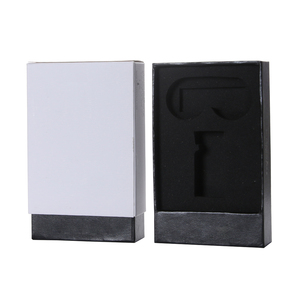
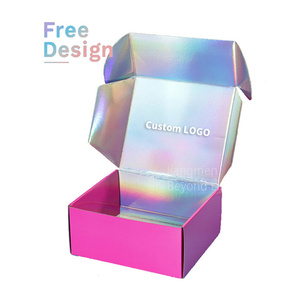
Full-lifecycle control from pigment synthesis and mold fabrication to customized private label luxury boxes.
Our facility operates Class 100,000 cleanroom workshops equipped with high-yield automated cast molding lines. We guarantee uniform edge roundness and eliminate edge-profile flaring to protect eyelid excursion margins.
Unlike factories restricting red lenses to plano (0.00) cosmetics, our tooling lines integrate corrective powers from -0.50D to -8.00D (including custom toric astigmatism runs), expanding your end-consumer market coverage by up to 45%.
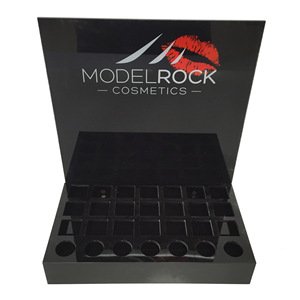
From magnetic drawer luxury boxes and blister foil thermo-printing to customized acrylic retail counter display stands, our design division provides turnkey packaging ready for immediate retail launch.
Key contractual, clinical, and regulatory clarifications for optical chain category managers and brand developers.
Consult with our optometry engineers and production coordinators. Request physical samples, verify regulatory compliance documents, and receive tailored B2B bulk quotations.
Get a Quote