Engineering High-Transmission Cosmetic Hydrogel & Silicone Matrices
In international optical retailing and medical distribution, cosmetic colored contact lenses have permanently evolved from novelty fashion accessories into strictly regulated Class IIa (EU MDR) and Class II (US FDA) medical devices. Velalens leads the optical export sector with certified production architectures, automated optical inspections (AOI), and biocompatible color encapsulation.
Precision Prescription Lenses & Optical Sourcing Solutions
Browse our core manufactured product series and dedicated supply chain integration hardware. Every lens is manufactured in cleanroom environments with full lot-number traceability from raw monomer to final hermetic packaging.
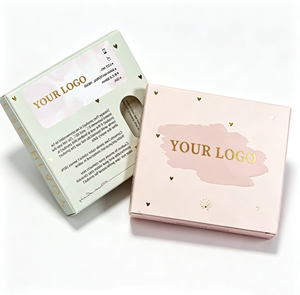
Custom Design Cardboard Soft Contact Lenses Packaging Paper Box
- Material Spec: FSC Recycled Board
- Print Process: UV Spot / Embossed Foil
- Compliance: MDR Labeling Ready
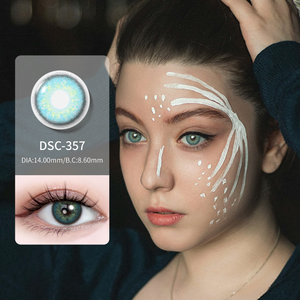
Crazy Cosplay Anime Halloween Party Accessories Colored Contact Lenses
- Base Curve: 8.60 mm (±0.05)
- Diameter: 14.50 mm
- Water Content: 38% - 42% HEMA
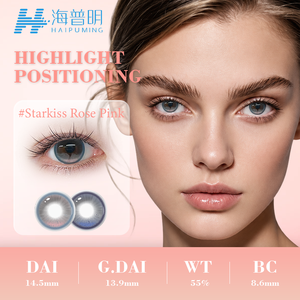
Daily Disposable Luminous Color Non Prescription Cosmetic Circle 14.5mm
- Modality: Daily Wear (1-Day)
- Color Tech: Luminous 3-Tone Tint
- Sterilization: Autoclave Steam 121°C
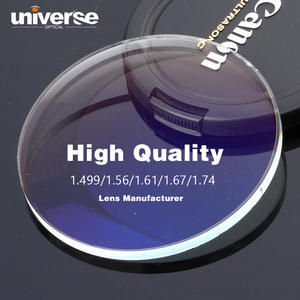
Fast Delivery Low Quantity 1.49 to 1.74 High Index Optical Lens Blanks
- Refractive Index: 1.49 / 1.56 / 1.60 / 1.67 / 1.74
- Coating: HMC / EMI / UV420 Bluecut
- Abbe Value: 32 - 58 High Dispersion
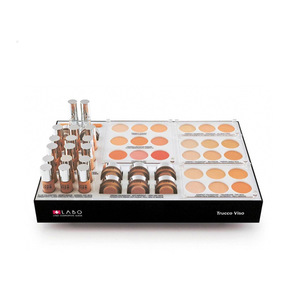
Retail Acrylic Contact Lenses & Cosmetic Display Counter Rack
- Structure: Optical-Grade Acrylic
- Design: Modular 3-Tier Tray
- Application: Boutiques & Optical Outlets
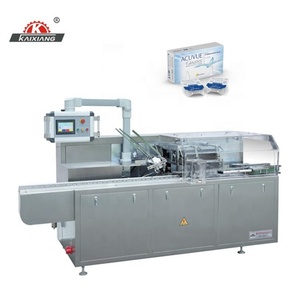
Automatic Eye Contact Lenses High-Speed Cartoning Packaging Machine
- Throughput: 60 - 120 Cartons / Min
- Automation: PLC Leaflet Inserter
- Inspection: Optical Barcode Reject
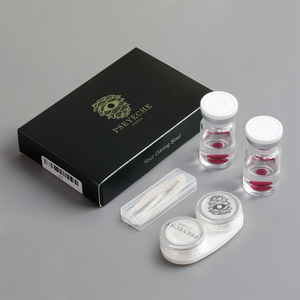
Prosthetic Red Green Colored Contact Lenses for Achromatopsia / Color Blindness
- Therapeutic Use: Color Contrast Filtration
- Pupil Aperture: 3.8 mm - 5.0 mm Clear
- Power Matrix: Plano to -8.00D Available
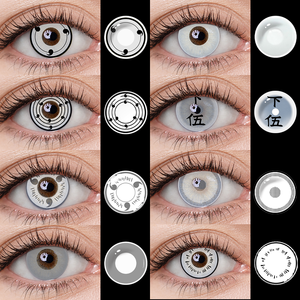
Anime Sharingan White Colored Soft Contact Lenses 40% Water Content 14.5mm
- Design Type: Opaque Graphic Covering
- Safety Standard: ISO 10993 Biocompatible
- Wear Life: Yearly / Half-Year Rep
Why Global Optical Chains & Brands Partner with Velalens
Founded on clinical engineering excellence, Velalens operates automated cast moulding, polymer synthesis, and blister packaging production complexes in strict accordance with the European Union Medical Device Regulation (EU MDR 2017/745) and international ISO 13485:2016 quality management systems.
Unlike conventional printing workshops that spray color directly onto the lens surface, our proprietary sandwich encapsulation process bonds FDA-cleared bio-pigments between two layers of hydrophilic polymer. This guarantees zero pigment exposure to the wearer's delicate corneal epithelium and prevents color fading during extended wear.
- Fully Enclosed Class 100,000 Cleanroom Casting & Class 10,000 Hydration Suites
- Double-Sided Automated Vision Inspection (AVI) eliminating edge tears and decentration
- Full Prescription Spectrum: Plano (0.00) to -10.00D with Custom Toric/Astigmatism capability
- Complete Export Dossiers: Free Sales Certificates (FSC), ISO 10993 Biocompatibility, CE Mark
Certified Lens Architecture Specs
Comparison of Lens Manufacturing Methods & Material Technologies
Choosing the correct polymer and pigmentation process directly impacts wearer corneal health, ocular wettability, shelf stability, and international customs clearance speeds.
| Evaluation Parameter | Velalens 3-Layer Sandwich Cast | Conventional Surface Printing | Lathe-Cut Colored Lenses |
|---|---|---|---|
| Pigment Isolation & Safety | Complete Encapsulation Color sealed within matrix core; zero ocular interaction. | Surface applied; high risk of corneal micro-abrasion and dye leakage. | Interlayer embedding; acceptable safety but thick profile causing lid sensation. |
| Oxygen Diffusion (Dk/t) | Optimal micro-pore alignment maintains balanced physiological oxygen flux to cornea. | Dye layer blocks surface pores, drastically reducing natural oxygen transmission. | Excessive center thickness reduces transmissibility, increasing hypoxia risk. |
| Edge Profile Precision | CNC sub-micron polished cast molds guarantee rounded, feather-light edge geometry. | Irregular rim thickness caused by secondary stamping and post-curing deformities. | Mechanical lathe cutting lines remain unless subjected to lengthy polishing cycles. |
| Power Accuracy (Diopters) | High-precision refractive curves within ±0.12D conforming strictly to ISO 18369. | Prone to power distortion during ink fixation and uncompensated thermal shrinkage. | Precise for high prescriptions, but slow and expensive for mass scalability. |
| B2B Production Scalability | Massive throughput with automated cleanroom demolding; millions/month capacity. | Moderate speed, but suffers from high reject rates due to print registration slippage. | Extremely labor intensive; unsuited for high-volume commercial brand distribution. |
Future Procurement Trends in Colored Prescription Optics (2025–2030)
Sourcing managers must proactively navigate shifting consumer expectations, evolving regulatory landscapes, and breakthrough polymer technologies. Our market research identifies four dominant trends shaping global orders over the next 5 years.
The Silicone Hydrogel Dominance
Cosmetic lens consumers are demanding the same clinical breathability found in premium clear lenses. While HEMA hydrogels remain the volume benchmark for affordability, global demand for colored silicone hydrogel (Si-Hy) is expanding at over 14.8% CAGR. Buyers are migrating to Si-Hy formulations providing oxygen transmissibility ratings above 80 Dk/t, allowing comfortable 12+ hour wear cycles without ocular redness or limbal hyperaemia.
Rapid Expansion of Daily Disposables
Historically dominated by yearly vials, European, North American, and East Asian markets are rapidly shifting toward Daily Disposable (1-Day) cosmetic lenses. Driven by eye-care professional recommendations and hygiene-conscious demographics, daily packs eliminate lens care solutions and deposit accumulation. Sourcing teams are shifting MOQ investments into 10-lens and 30-lens blister cartons for higher customer repurchase frequencies.
EU MDR & Global Traceability Mandates
The enforcement of the EU Medical Device Regulation (MDR 2017/745) under Annex IX has eliminated non-compliant gray-market imports. National authorities in the EU, UK, Middle East (SFDA), and Latin America require validated Unique Device Identification (UDI), comprehensive biocompatibility clinical dossiers, and notified body auditing. Suppliers without complete Class IIa technical files will face border seizures and supply chain cutoffs.
Realistic Multi-Layer 3D Iris Emulation
Opaque, artificial-looking "flat prints" are being rejected by modern digital-native consumers. Procurement portfolios now prioritize realistic iris emulation utilizing tri-tone color dot layering, translucent limbal gradients, and light-reflective starburst patterns. Subtle enhancements that blend natively with both dark brown and light eyes capture superior retail reorder rates compared to dramatized theatrical designs.
Toric & Multifocal Cosmetic Specialization
Over 35% of vision-corrected consumers require astigmatism correction, yet historically, colored contacts neglected the toric segment. Leading manufacturers are now introducing prism-ballasted or dynamic thin-zone toric colored lenses, as well as center-near multifocal cosmetic designs. Offering corrective powers alongside cosmetic tinting allows optical retailers to dominate underserved, high-margin consumer niches.
Sustainable Polypropylene & Foil Formats
Environmental scrutiny over disposable medical waste is transforming tertiary packaging. Leading global brands are requiring audited supply partners to minimize blister plastic volumes, switch to recyclable polypropylene (PP) shells, use solvent-free soy inks on FSC-certified outer cartons, and automate ultra-compact blister strips that lower international airfreight carbon footprints and shipping tariffs.
End-to-End Private Label Manufacturing Framework
From custom color rendering to validated clinical packaging, Velalens provides international distributors and eyewear brands with an accelerated, fully documented turnkey manufacturing pipeline.
1. Pattern & Tone Formulation
Provide reference eyes, mood boards, or Pantone codes. Our optical designers calibrate 1-tone, 2-tone, or 3-tone dot matrices, tuning graphic diameter (G.DIA) and pupil aperture dimensions for flawless aesthetic harmony.
2. Mould Tooling & Rapid Sampling
Utilizing high-precision optical steel inserts, trial cast moulds are created. In-stock series samples dispatch within 3 to 7 days; customized pattern prototypes are fully hydrated and delivered for client wear-testing in 2 to 3 weeks.
3. Automated Cleanroom Casting
Precision monomer injection, sandwich pigment deposition, UV/thermal polymerization, and de-molding occur in Class 100,000 cleanrooms. Lenses undergo multi-stage ultrasonic extraction to strip residual monomers.
4. Sterile Blister & Cartoning
Lenses are sealed in medical-grade buffered saline with hyaluronic acid (HA) lubricating agents. Batches undergo terminal moist heat autoclave sterilization at 121°C for 30 minutes, backed by full lot documentation.
Frequently Asked Questions for B2B Importers & Optical Buyers
Direct technical and operational answers to the most critical regulatory, quality, and commercial inquiries encountered by international sourcing teams.
What is the standard Minimum Order Quantity (MOQ) for custom private label colored contacts?
For existing catalog colorways utilizing our pre-validated molds and your custom brand artwork (blister foil and outer retail paper box), our starting trial MOQ begins at just 300 pairs per SKU. For fully custom-developed patterns requiring custom printing plates, specialized iris graphic diameters, or exclusive national exclusivity agreements, the standard initial run is typically 1,000 to 3,000 pairs depending on the power distribution matrix.
How does your factory verify pigment safety and rule out corneal toxicity?
We deploy a proprietary Cast-in-Mould sandwich encapsulation architecture. The color pigments—composed strictly of non-toxic, cosmetic-grade iron oxides, titanium dioxide, and phthalocyanine compounds—are sealed within an internal pocket between the anterior and posterior hydrogel layers. Each batch is validated under ISO 10993 biological evaluations (cytotoxicity, ocular irritation, systemic toxicity, and delayed hypersensitivity), ensuring that color particles never make mechanical or chemical contact with the cornea.
What documentation and certifications are provided for national customs clearance and registration?
Every commercial consignment is supported by our comprehensive regulatory export dossier. This includes CE certificates under Medical Device Directives/Regulations (CE 0197 / CE 0123), ISO 13485:2016 Quality Management accreditation, Certificate of Analysis (COA) per production lot, Free Sales Certificates (FSC) legalized by relevant trade bodies, sterilization validation reports (ISO 17665), and accelerated real-time 3-year to 5-year stability testing records.
Can you supply both Plano (0.00D) fashion lenses and wide-spectrum myopic prescription powers?
Yes. As a certified medical device manufacturer, we manufacture Plano (0.00 zero diopter) for cosmetic retail, as well as full corrective sphere ranges from -0.50D down to -6.00D in 0.25D increments, and from -6.50D to -10.00D in 0.50D increments. Astigmatic toric variants (combining cylinder and axis alignment) and hyperopic positive powers (+0.50D to +4.00D) can also be scheduled on specialized contract casting lines.
What is the typical production lead time from order sign-off to international dispatch?
Standard warehouse catalog designs with rapid private-label over-printing dispatch within 10 to 14 business days. Custom bulk OEM manufacturing runs—incorporating tailored diopter spectrums, client-branded primary blister sealing foils, barcode cartoning, and batch sterilization validation—typically complete production in 4 to 6 weeks. Express airfreight via DHL, FedEx, or dedicated air-cargo partners delivers in 3 to 7 transit days worldwide.
What Harmonized System (HS) tariff codes apply to colored contact lens consignments?
Soft prescription and cosmetic colored contact lenses are universally classified under Harmonized System Tariff Code HS 9001.30.00 (Contact Lenses). Auxiliary items such as retail acrylic display fixtures are classified under HS 3926.90, packaging paper boxes under HS 4819.20, and automated cartoning machinery under HS 8422.30. Our logistics export documentation ensures precise itemized customs declarations to streamline import clearance.
Scale Your Optical Brand with a Direct Factory Partner
Whether you are an established optical retailer expanding into daily disposable color series or a cosmetic brand launching private label lenses, Velalens provides the clinical safety, regulatory accreditation, and production agility required to dominate your local market.