Wholesale
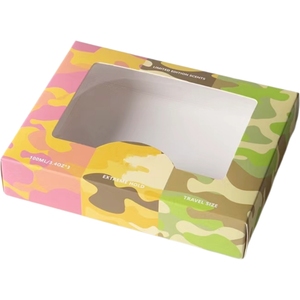
Precision hydrogel and silicone-hydrogel colored lenses, automation machinery, and bespoke packaging configurations ready for immediate global deployment.
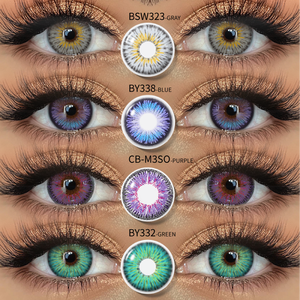
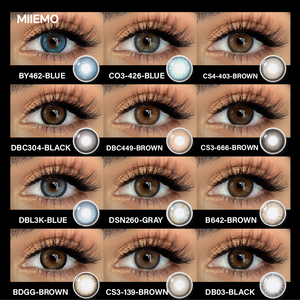
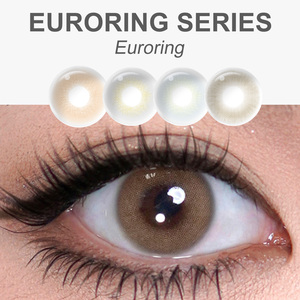
Why leading optical brands, regional distributors, and medical device importers trust our automated cleanroom facilities over conventional trading houses.
Unlike budget cosmetic lenses that print color directly onto the outer surface, our proprietary cast molding isolates microscopic colorants safely between two layers of bio-inert hydrogel polymers. This eradicates direct corneal friction and guarantees that color micro-pigments never touch the ocular surface or compromise tear break-up time (TBUT).
Compliance cannot be an afterthought in ophthalmic distribution. Velalens maintains ISO 13485 quality management systems, alongside CE certification verified against strict international medical standards. Every lot shipped comes backed by sterile validation data, biocompatibility reports, cytotoxicity testing, and complete raw material traceability.
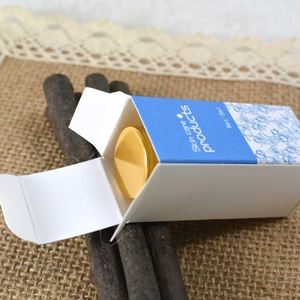
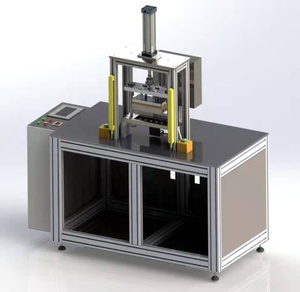
From custom CNC optical mold tooling (ensuring sub-micron edge precision) to cleanroom cast-molding, automated blister filling, saline buffering, PP cup heat sealing, and outer medical cartoning, our integrated process prevents third-party contamination risks and maintains tight diopter power tolerances down to ±0.05 D.
We believe scalable margins should not be locked behind unmanageable capital barriers. While traditional contract manufacturers demand 5,000+ units per color code, Velalens supports emerging beauty entrepreneurs, clinical optometry chains, and regional wholesalers with tailored low-MOQ programs starting at just ~300 pairs per shade. Concurrently, our high-speed blister sealing lines easily expand to support multi-million-pack seasonal orders without sacrificing delivery schedules.
Natural colored contacts demand an exact equilibrium between cosmetic enhancement and physiological safety. A lens that obscures too much of the pupillary aperture will impede peripheral vision under mesopic conditions, whereas insufficient pigment concentration looks unnatural on darker brown irises. Below is the technical specification baseline enforced across Velalens cosmetic series.
| Parameter | Standard Hydrogel Range | Silicone Hydrogel (SiHy) Range | Clinical Significance |
|---|---|---|---|
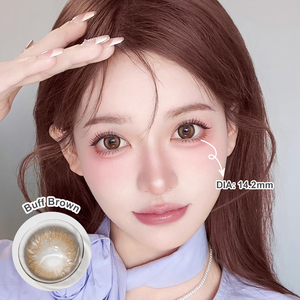
| Total Diameter (DIA) | 14.0 mm – 14.5 mm (±0.1 mm) | 14.2 mm (±0.1 mm) | Maintains corneal coverage without limbal compression. |
| Base Curve (BC) | 8.5 mm – 8.7 mm | 8.6 mm – 8.8 mm | Optimizes dynamic movement (0.2–0.5 mm) for tear exchange. |
| Graphic DIA (G.DIA) | 12.8 mm – 13.8 mm | 13.1 mm – 13.5 mm | Determines natural vs. enlarging effect while leaving optical center clear. |
| Water Content | 38% – 42% (Low hydration) | 45% – 55% (High equilibrium) | Prevents lens de-swelling and ocular drying in air-conditioned environments. |
| Oxygen Permeability (Dk/t) | 18 – 28 × 10⁻⁹ | 80 – 120 × 10⁻⁹ | Protects corneal epithelial respiration during extended daily wear cycles. |
| Center Thickness (CT) | 0.06 mm – 0.08 mm (@ -3.00D) | 0.07 mm – 0.09 mm | Maximizes comfort without tearing during handling and cleaning. |
How the convergence of clinical eyecare, aesthetic cosmetics, and international regulation is transforming colored lens supply chains.
While yearly and half-yearly lenses historically dominated Asian and Middle Eastern retail due to low cost-per-day, global markets are rapidly migrating toward 10-pack and 30-pack daily disposables. Heightened awareness of Acanthamoeba keratitis, biofilm accumulation, and lens cleaning non-compliance is driving consumers toward single-use daily lenses. Brand owners sourcing daily formats see recurring replenishment revenues and vastly reduced customer service complaints.
Historically, embedding colored pigments inside high-Dk silicone hydrogel was challenging due to surface wettability issues, lipid attraction, and matrix rigidity. Cutting-edge plasma surface treatments and internal wetting agents (such as PVP) now allow manufacturers to create silicone hydrogel cosmetic lenses that provide 3x–4x greater oxygen transmissibility than conventional PolyHema, capturing the high-value clinical prescribers market.
Gray-market imports are disappearing as border authorities enforce strict medical device classifications for plano (zero diopter) fashion lenses. Importers must supply complete technical documentation, unique device identifiers (UDI), ISO-compliant labeling, and designated authorized representatives (EC REP). Working with a manufacturer equipped with pre-compiled technical dossiers reduces regulatory approval times from 18 months down to mere weeks.
The "doll-eye" cartoon look of the early 2010s has been replaced by demand for hyper-realistic iris integration. Sourcing directors now specify sub-micron 3-tone gradient printing: a muted pupillary transition ring that prevents harsh cut-offs, an irregular fibrous stroma layer that replicates human melanin dispersion, and a semi-translucent feathered limbal perimeter. This delivers striking aesthetic transformation under natural daylight while remaining virtually indistinguishable from genuine eye color.
Direct answers covering MOQs, sterile testing, custom toolmaking, shelf life stability, and international supply contracts.
Speak directly with our technical sales engineers. Receive comprehensive product catalogs, regulatory documentation sets, and customized OEM quotation tiers within 24 hours.
Get a Quote