Colored contacts are contact lenses designed to change or enhance the apparent color of the iris. Their tinted patterns may create a subtle shift or a striking new look. Many have a clear area over the pupil, but the colored pattern can still affect comfort or vision if a lens fits poorly. They are medical devices, not costume jewelry. In the United States, the FDA requires a prescription for contact lenses, including decorative lenses; rules differ elsewhere.
There is a practical reason to take fit seriously. A CDC report in Morbidity and Mortality Weekly Report estimated nearly one million contact-lens-related outpatient and emergency visits annually in the United States, including about 58,000 emergency visits. Those figures cover contact lens wear generally, not colored contacts alone. Still, they show why appearance should not be the only buying criterion. A lens that feels scratchy is not “just getting used to your eyes.”
Ophthalmologist Thomas Steinemann has warned, “The biggest misconception is that they are just a fashion accessory and don't need to be prescribed.” His point is easy to overlook when a lens is displayed beside makeup or party accessories. Yet a proper fitting helps check how the lens sits and moves on the eye. Color can also look different in daylight than it does on a package. That small surprise is worth considering before choosing a shade.
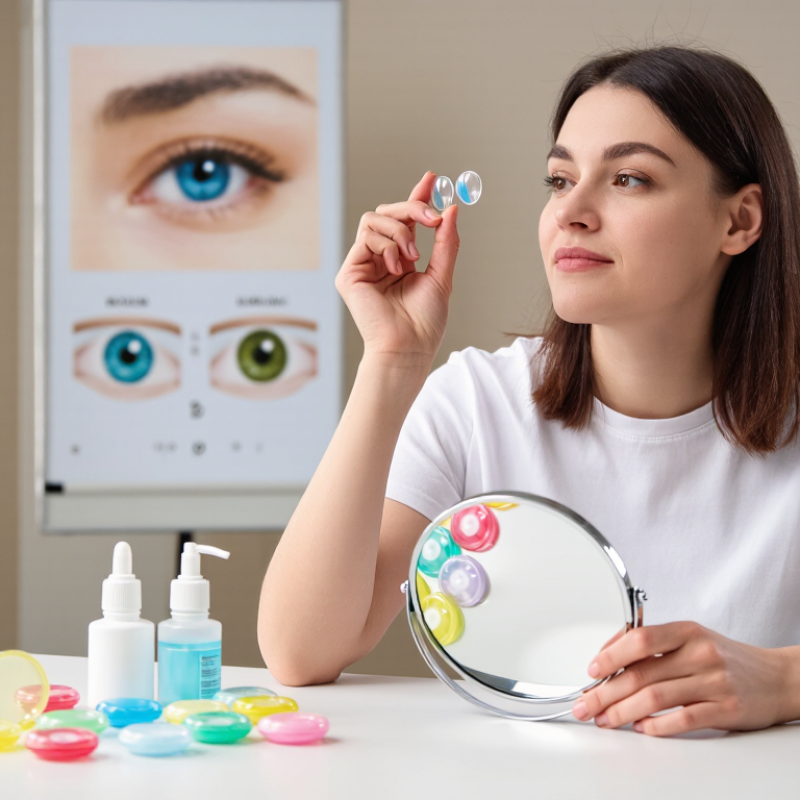
Colored contact lenses are thin, curved lenses that sit over the eye’s clear front surface. A colored pattern changes how the iris appears. Some lenses add a soft tint to existing eye color; others use a more opaque design for a stronger change. The center is usually clear, allowing light through the pupil. That detail matters. In bright daylight, the printed pattern may look more noticeable than it does indoors. The result also depends on your natural eye color, lighting, and lens fit, so a photo may not predict the exact effect.
Follow the care instructions, wash and dry your hands before handling lenses, and never share them. If your eyes become painful, red, or unusually sensitive to light, remove the lenses and seek professional advice. Comfort varies. It is easy to focus on color and overlook how the lens feels after several hours.
Colored contacts change the iris’s visible pattern, not the eye’s actual color. A clear pupil opening preserves central vision, while tinted areas add color around it. Enhancement tints can deepen a light iris; opaque designs can create a more noticeable shift on darker eyes. The result depends on your natural color, lens pattern, and lighting. A shade that looks subtle indoors may appear stronger in daylight.
Tips: Check the lens color in natural light before deciding whether the effect feels right. Follow an eye-care professional’s fitting and cleaning instructions, and never share lenses. CDC estimates contact lens-related eye problems lead to nearly one million U.S. outpatient and emergency visits each year. That figure covers contact lenses generally, not colored lenses alone.
Colored lenses can also alter how the iris’s fine details appear, such as brown flecks or a darker outer ring. Comfort and appearance are separate questions: a lens may look natural but still feel dry or poorly fitted. The CDC’s MMWR report on contact lens-related eye problems supports taking fit and hygiene seriously. One limitation is that photographs rarely predict the exact result on every eye. Visibility, pupil size, and room lighting can all change the look.
Colored contacts are lenses with tinted areas designed to subtly enhance or more noticeably change the appearance of the iris. The amount of visible change depends on the tint style, natural eye color, lighting, and fit.
Illustrative qualitative scale from 0 (little or no color change) to 5 (more pronounced change); these values are not clinical measurements. Visibility tints are intended to help locate a lens and generally do not change eye color. Follow an eye-care professional’s guidance when choosing and wearing contact lenses.
Colored contact lenses are commonly classified by tint and visual effect, rather than shade alone. FDA guidance describes three basic tint types: visibility, enhancement, and opaque. Visibility tints are faint, often blue or green, and help users locate a lens without noticeably changing eye color. Enhancement tints deepen an existing color. Opaque tints cover the natural iris, making them a better-known option for a marked change. Some designs use printed patterns or enlarge the iris’s appearance. Subtle, not dramatic.
Tint is only one way to compare lenses. Color coverage, material, replacement schedule, and corrective power are separate features. A lens that looks soft in a product image may appear stronger against a person’s natural eye color. The labels can make choosing sound easier than it is. A qualified eye-care professional can assess fit and vision needs; appearance alone cannot show whether a lens fits safely.
Scale matters, too. The CDC’s 2015 overview estimated that about 45 million people in the United States wore contact lenses. That figure covers contact lenses generally, not colored lenses specifically. The FDA treats decorative contacts as medical devices in the United States, including lenses worn only for appearance. Its guidance warns that poorly fitted lenses can cause eye injury or infection. References: U.S. Food and Drug Administration, “Decorative Contact Lenses”; Centers for Disease Control and Prevention, “Contact Lens Wear and Care,” 2015.
| Type | What It Does | Typical Use | Things to Know |
|---|---|---|---|
| Visibility tint | Adds a faint tint, often to make the lens easier to see while handling it. | Handling and insertion assistance. | Usually does not noticeably change the wearer’s eye color. |
| Enhancement tint | Uses a translucent tint to deepen or emphasize the natural iris color. | A subtle change, particularly on lighter-colored eyes. | Because the tint is translucent, the natural eye color shows through and affects the result. |
| Opaque color tint | Uses a more solid iris pattern designed to change or cover the natural eye color. | A more noticeable color change; the final appearance depends on the lens design and natural eye color. | The printed pattern is designed to leave the pupil area clear for vision. |
| Special-effect (costume) tint | Uses an opaque or patterned design to create a dramatic, stylized appearance. | Costumes, performances, or temporary looks. | Decorative appearance does not remove the need for a proper fit and safe lens care. |
Important: Colored lenses may be made with or without vision correction. Replacement schedules such as daily or monthly describe how often lenses are replaced, not the tint type. Contact lenses should be fitted by an eye-care professional and worn and cared for according to their instructions. Never share lenses.
Colored contacts begin with measurements, not pigment. Designers consider lens diameter, base curve, thickness, and the clear optical zone over the pupil. These dimensions help the lens sit comfortably and preserve usable vision. Small details matter. A color pattern must look natural at different distances, while leaving the central viewing area clear.
In many soft lenses, color is applied as tiny printed dots or a patterned layer, then enclosed within the lens material. This helps keep the pigment from directly touching the eye. The lens itself may be formed in a mold, hydrated, and checked for shape and power. Production methods vary, so not every colored lens is made in exactly the same way. The process sounds precise, though no design fits every eye equally well.
After shaping, lenses are inspected for flaws such as rough edges, trapped particles, or uneven color. They are packaged in sterile solution and undergo quality checks before distribution. A vivid pattern can look subtle on one iris and quite different on another; lighting changes the effect, too. That part is easy to underestimate. Lens appearance is only one consideration: an eye-care professional can assess fit and vision needs, since a lens that looks right may still feel wrong.
Colored contacts change the appearance of the iris and may or may not correct vision. They are still contact lenses, not makeup. Fit matters. An eye-care professional should check the lens on your eye, assess movement, and confirm that vision remains clear. A lens that pinches, shifts, or leaves your eye red may be poorly fitted, even if the color looks right.
In the United States, the FDA classifies decorative lenses as medical devices and advises people to get professional fitting and instructions. It is easy to treat a cosmetic lens like an accessory; that assumption deserves a second thought. Ask how long to wear your specific lenses and when to replace them. Remove them if you feel pain, unusual light sensitivity, or blurred vision, and contact an eye-care professional promptly.
Clean and dry your hands before handling lenses. Rub and rinse them with fresh contact lens disinfecting solution, then store them in a clean case. No water. Do not share lenses, and avoid sleeping in them unless your eye-care professional specifically directs you to. A CDC survey published in 2014 found that 99% of contact lens wearers reported at least one risky hygiene behavior. That figure covers contact lens users generally, not colored lenses alone. Busy nights can disrupt careful routines, so make lens care simple and consistent.
They are thin, curved lenses that sit over the clear front surface of the eye. Their printed pattern changes how the iris appears.
No. They change the iris’s visible appearance, not its actual color. The pupil opening usually remains clear.
Enhancement tints can deepen a light iris. Opaque designs may create a stronger shift, especially on darker eyes.
Not always. A pattern may look subtle indoors but more noticeable in bright daylight. Natural eye color and lighting also affect the result.
Usually not. Pupil size, lighting, and individual eye details can change the effect. Photos can mislead.
Yes. An eye-care professional can check whether a lens suits your eyes. Appearance and comfort are separate questions.
Wash and dry your hands before handling them. Follow the care instructions, and never share lenses. Small habits matter.
Remove the lenses if your eyes become painful, red, or unusually sensitive to light. Seek professional advice. Comfort varies.
Colored contacts are contact lenses designed to change or enhance the appearance of the eyes. Some create a subtle shift in natural eye color, while others offer a more noticeable transformation. Their effect depends on the lens’s color pattern, opacity, and how it sits over the iris. Common options include enhancement tints, which add depth to lighter eyes, and opaque designs intended to provide greater color coverage. Certain lenses also correct vision, while others are made primarily for cosmetic use.
A colored contact lens is typically built from a clear lens material with a printed or layered color design that leaves the central area clear for vision. Choosing a suitable lens involves more than selecting a shade: fit, comfort, and eye health matter too. Have an eye-care professional assess your eyes and guide you on appropriate lenses, even if they do not correct vision. Follow the recommended wearing schedule, clean and store reusable lenses as directed, and never share them. Remove lenses if irritation or discomfort occurs, and seek professional advice when needed.